My first results

Posts
23,482
Likes
52,207
I agree. I have some really nice watches with signs of past rotor rub inside the back, but the rotors must have been subsequently replaced as there is no further problem. Rotors were often replaced during services, so it would be massively overreacting to reject a watch just on account of rotor rub signs.

I agree that rotors are sometimes replaced, but the underlying problem that causes rotor rub can generally be addressed by replacing the bearing/bushing I believe. So the rotor itself can be preserved.

 
Posts
29,244
Likes
75,639
Replacing the rotor pinion is easily done - I do it all the time...some photos to show the process.

Old pinion is removed using the Horia tool:


Pressing the old pinion out:


New pinion:


Pressing it in:


The inner diameter of the pinion is undersized, so it must be reamed to fit the axle. There are two reamers available from Omega for this, but most of the time one does the job. I do this often enough that I have the reamer set-up in a staking set base dedicated to this one task:


After reaming out, the fit is checked with the axle:


Both parts are cleaned again:


The automatic winding system can then be fully assembled:


This task takes just a few minutes...

Cheers, Al
 
Posts
16
Likes
7
I just wanted to say that modest signs of rotor rub needn't be a reason to completely avoid a watch. The underlying issue is not usually difficult to repair, and in fact it may have already been fixed. If the watch is otherwise good, and the price is right, I wouldn't make modest rotor rub a deal-breaker.
Thank you very much. I will take it into account. I will adjust my "hunting mode": while a not original dial and a case made from parts of mixed models are avoid issues, the rotor rub is only a matter of price discount, when confirmed from an expert like you the rest is ok.

Thanks a lot as always!
 
Posts
16
Likes
7
I agree. I have some really nice watches with signs of past rotor rub inside the back, but the rotors must have been subsequently replaced as there is no further problem. Rotors were often replaced during services, so it would be massively overreacting to reject a watch just on account of rotor rub signs.
Thank you very much for your help, lindo. Is a pleasure learning from all of you!
 
Posts
16
Likes
7
Replacing the rotor pinion is easily done - I do it all the time...some photos to show the process.

Old pinion is removed using the Horia tool:


Pressing the old pinion out:


New pinion:


Pressing it in:


The inner diameter of the pinion is undersized, so it must be reamed to fit the axle. There are two reamers available from Omega for this, but most of the time one does the job. I do this often enough that I have the reamer set-up in a staking set base dedicated to this one task:


After reaming out, the fit is checked with the axle:


Both parts are cleaned again:


The automatic winding system can then be fully assembled:


This task takes just a few minutes...

Cheers, Al
Wow!! Thanks a lot!! Yes... with your expirience, knowledge, and tools... it's easy!

Please, let me know if you move to Spain in the future!! It would be fantastic to be near a watchmaker like you!!

Thank you very much for the lesson!!!
 
Posts
16
Likes
7
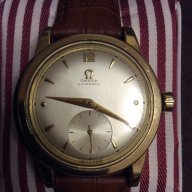
Hello everybody,

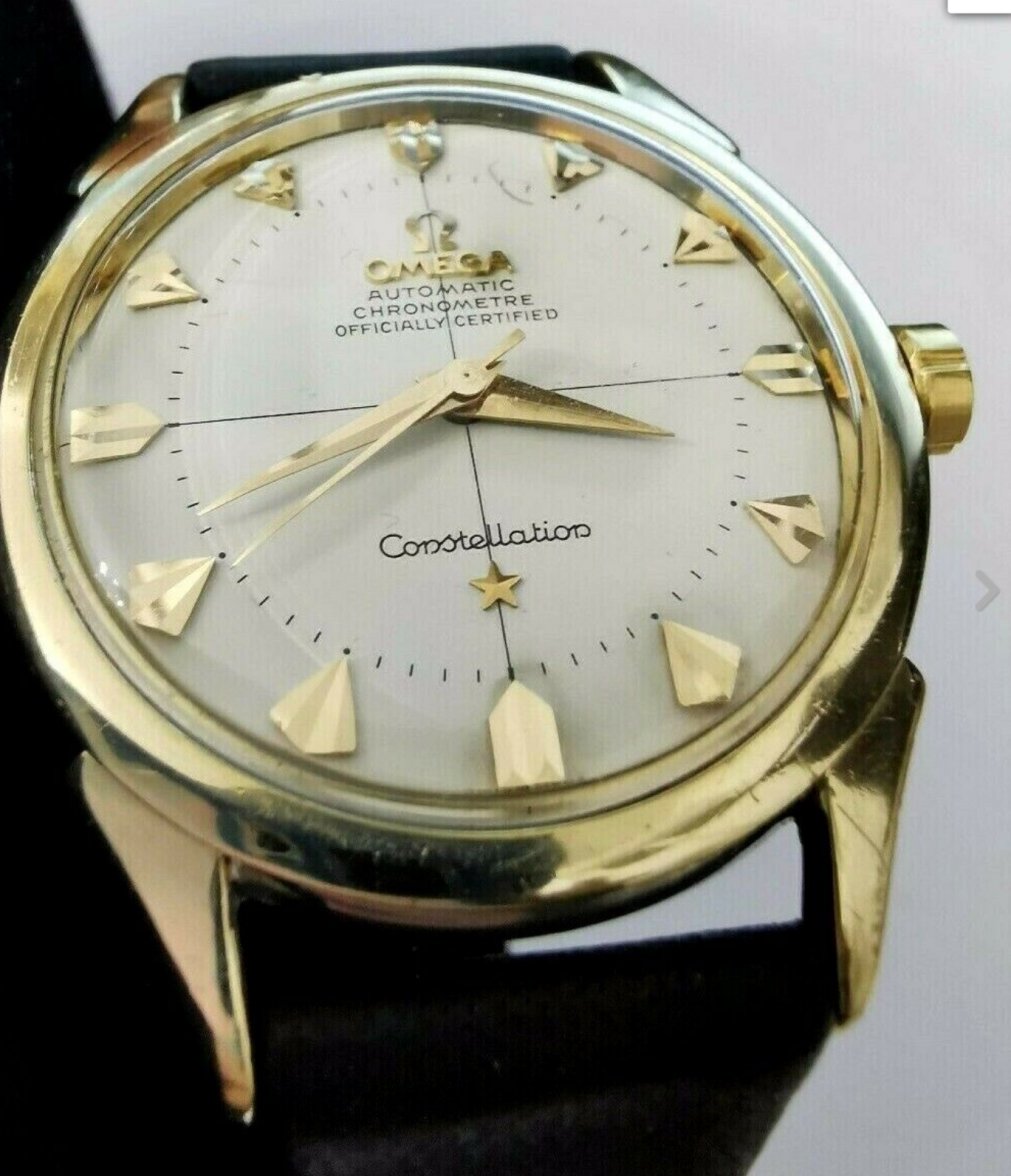
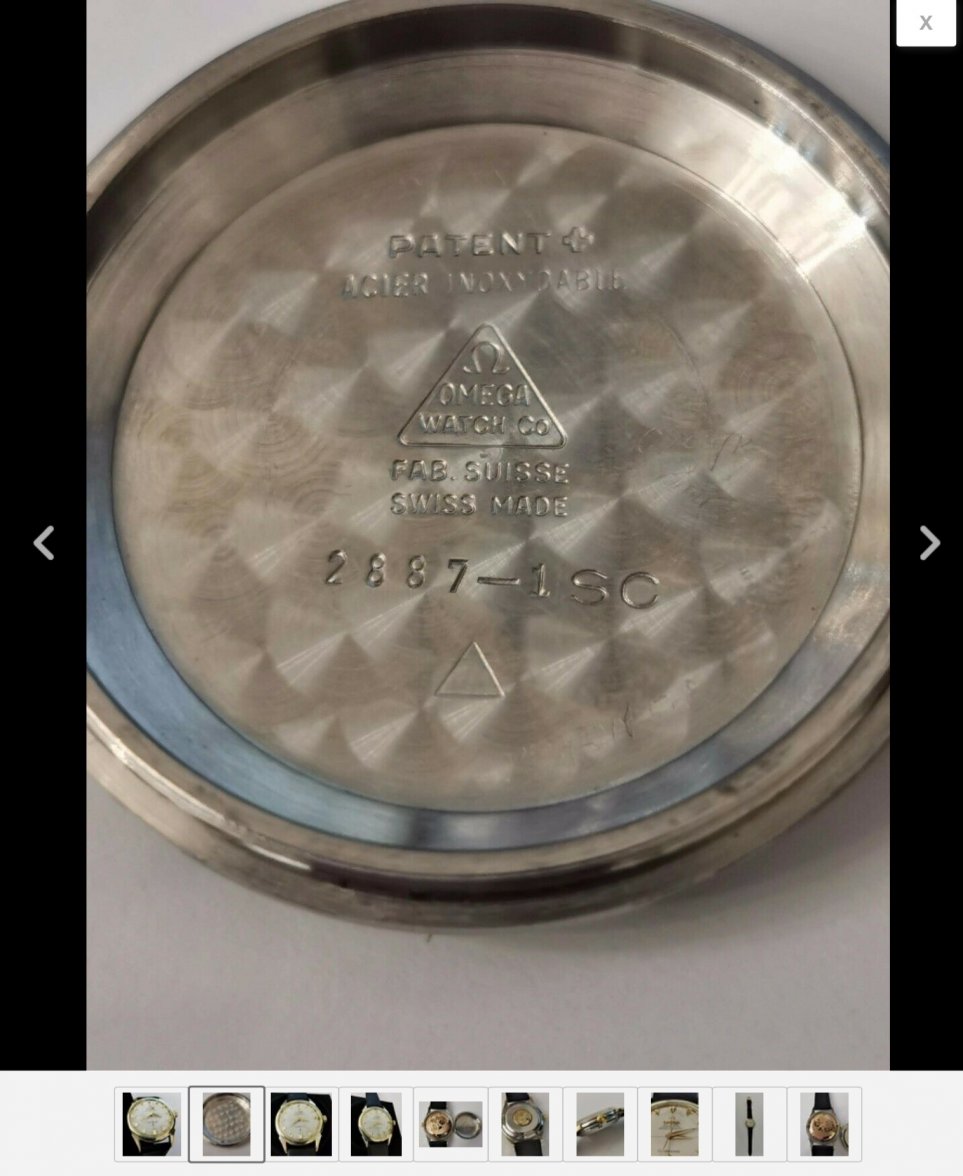
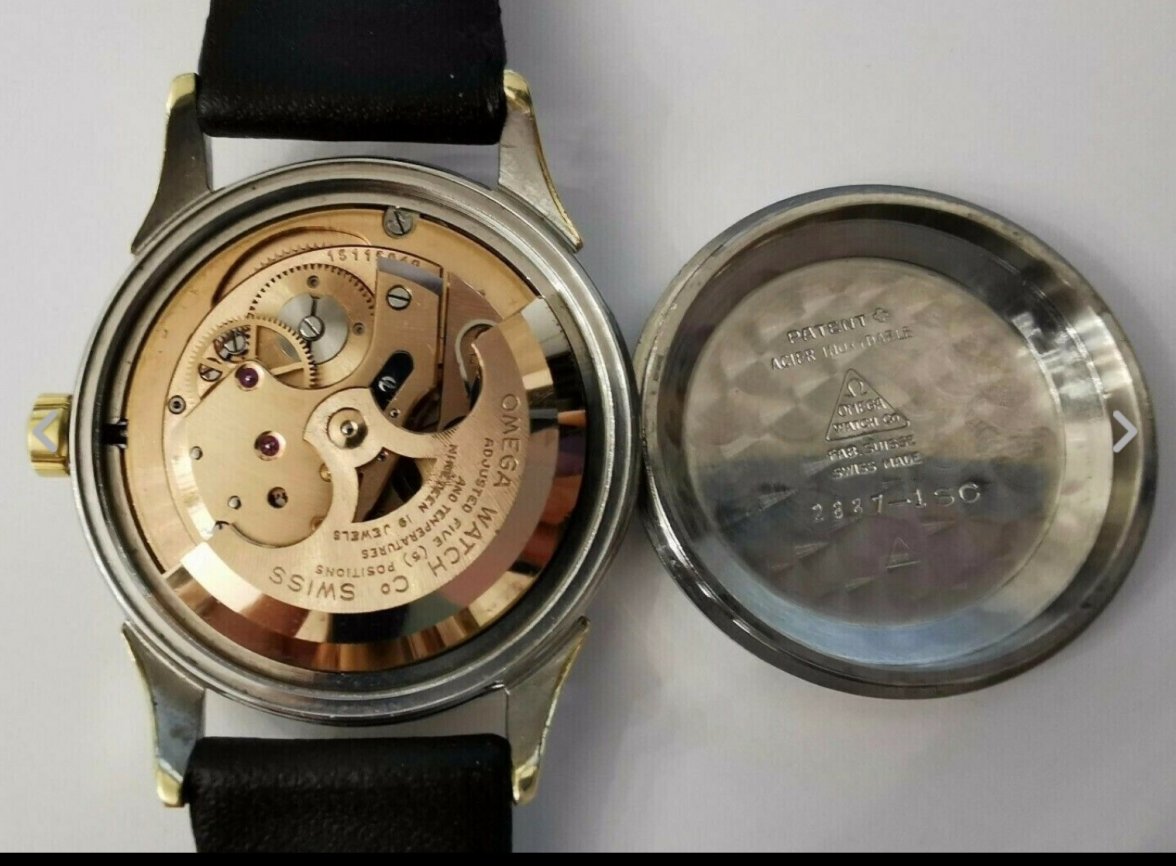
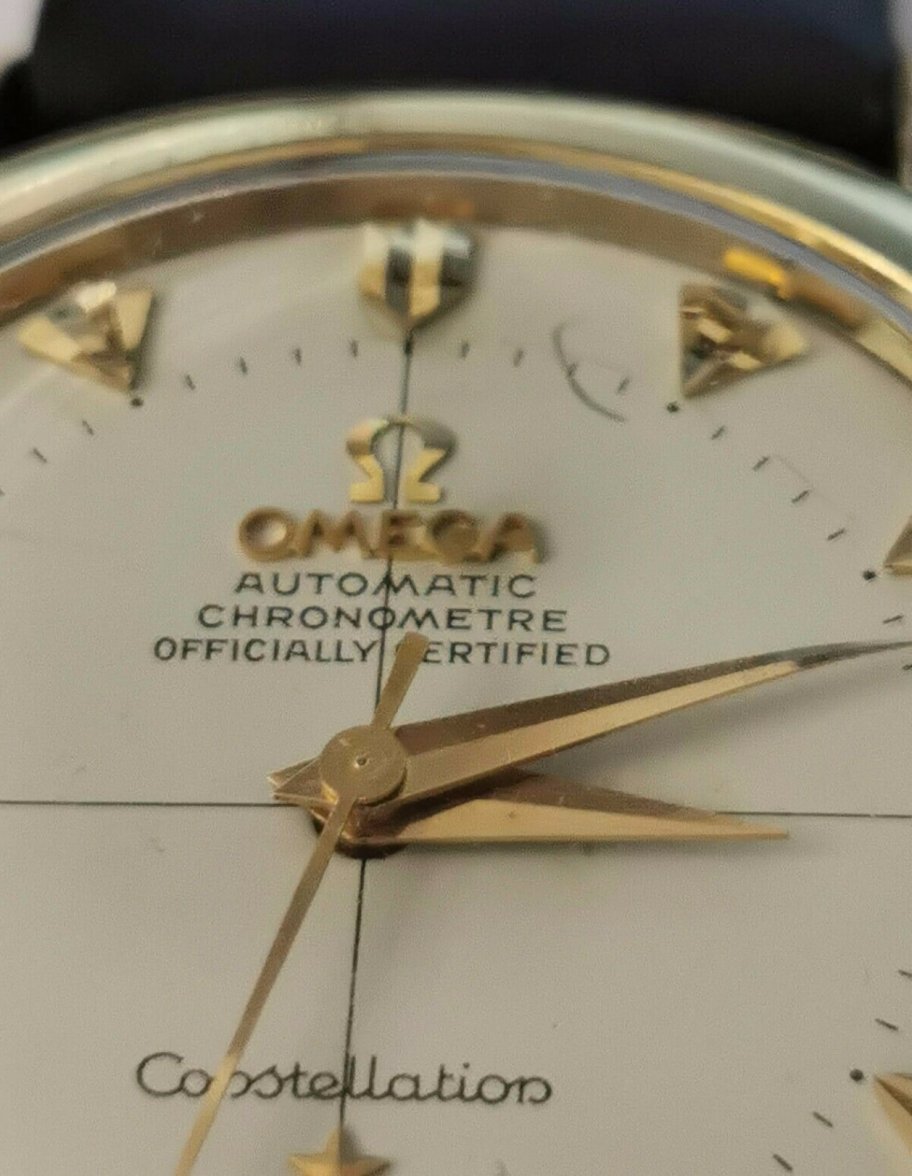
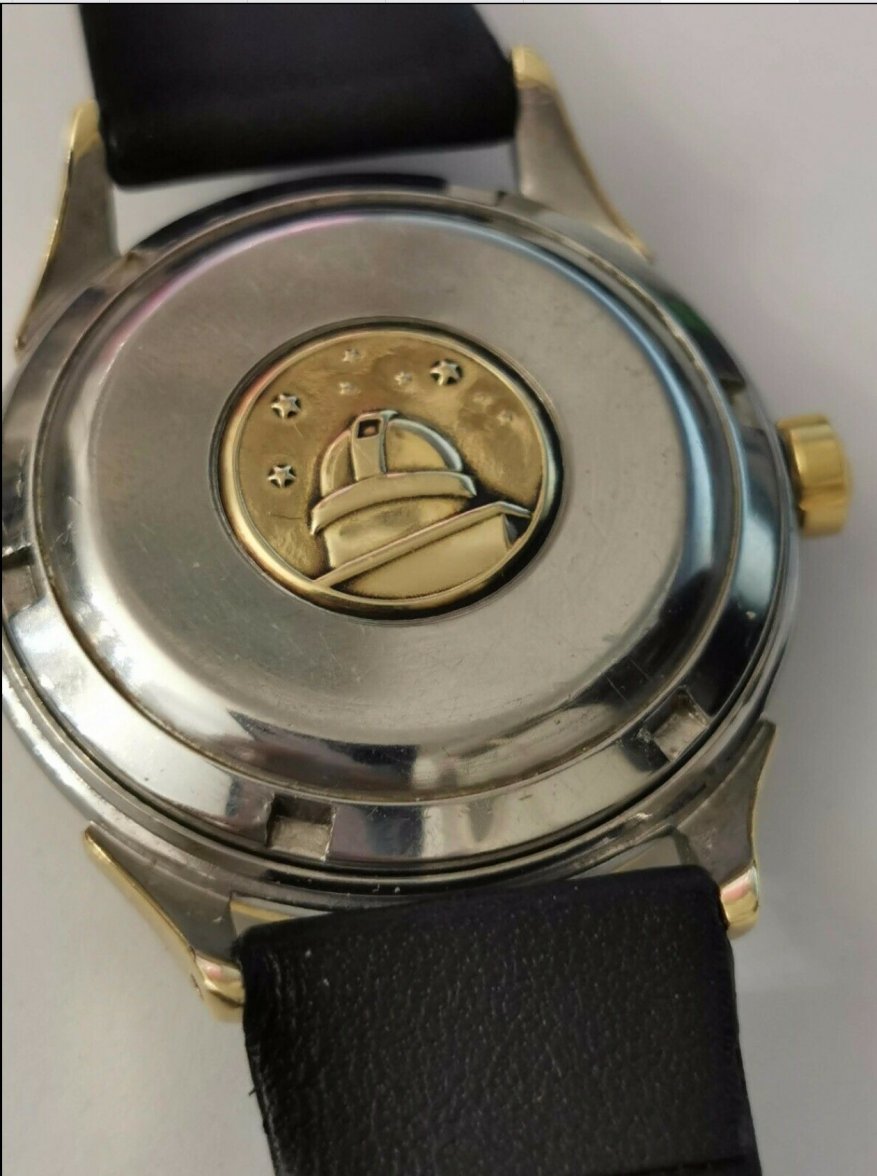
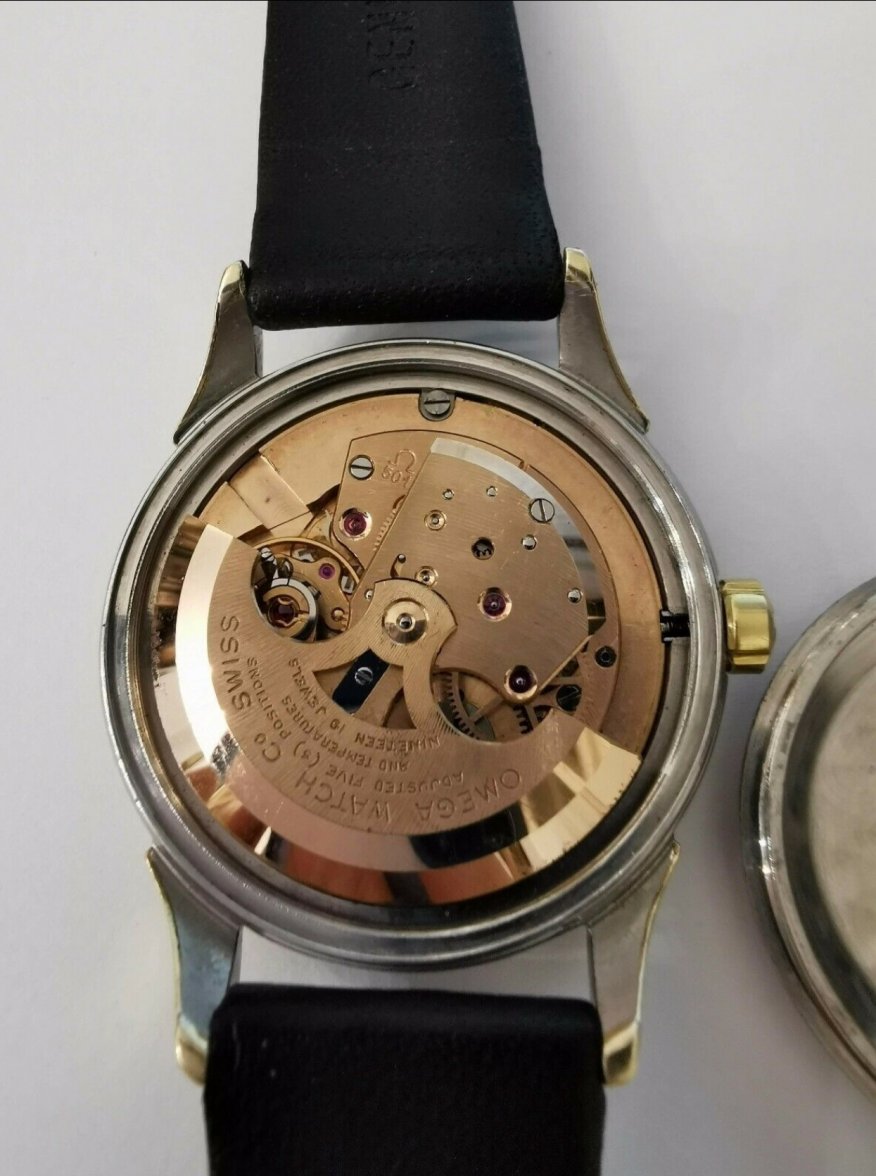
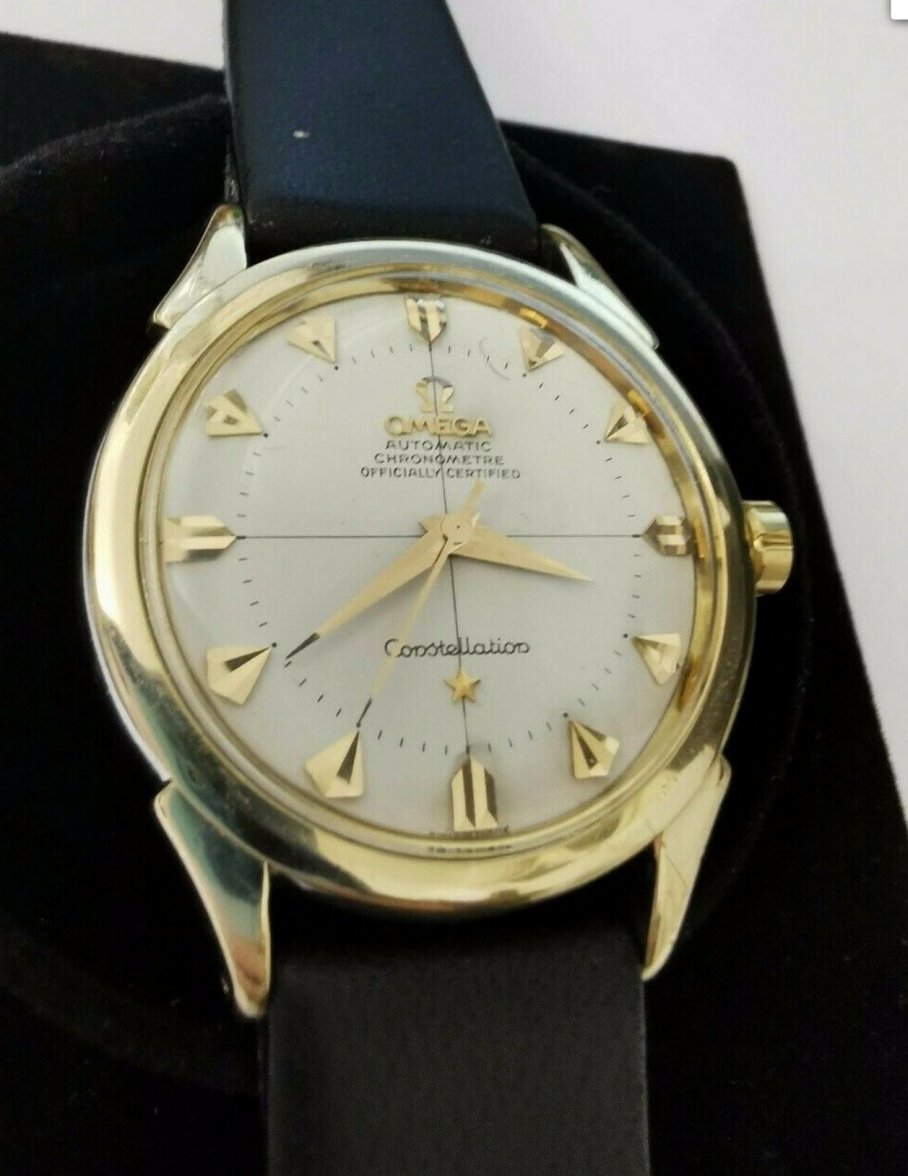
Continuing with my research and my learning, I found this one. What do you think about it?

As far as I know, references from the case and the movement are correct. Movement looks ok. Dial seems original... but I have a doubt with the M of chronometre that makes me doubt about the whole: in my investigations, I have learned that, when the word chronometre is in french, the M in this word is wider At the bottom and narrower at the top (like the M of Omega and Automatic). This is different when Chronometer is in English, because then the M in chronometer is a straight M (I am studying ).

But in this one, we have the word chronometre in french and the M as it appears in the dials with the English chronometer. After looking some hundreds of dials, my theory was correct until finding this piece... or may be is the piece which is incorrect? If it is a redial, from my amateur point of view, it is very good...

Thank you for your help and time as always.
 
Posts
267
Likes
725
Replacing the rotor pinion is easily done - I do it all the time...some photos to show the process.

Old pinion is removed using the Horia tool:


Pressing the old pinion out:


New pinion:


Pressing it in:


The inner diameter of the pinion is undersized, so it must be reamed to fit the axle. There are two reamers available from Omega for this, but most of the time one does the job. I do this often enough that I have the reamer set-up in a staking set base dedicated to this one task:


After reaming out, the fit is checked with the axle:


Both parts are cleaned again:


The automatic winding system can then be fully assembled:


This task takes just a few minutes

Cheers, Al
Thanks for showing very nice pictures and detailing the process so well. Do you happen to know what the part/tool numbers are for the reamers?

Cheers,
Chris
 
Posts
29,244
Likes
75,639
Thanks for showing very nice pictures and detailing the process so well. Do you happen to know what the part/tool numbers are for the reamers?

Cheers,
Chris

5160072 | HARD METAL REAMER Ø 0.702 MM OMEGA SPEC

5160125 | HARD METAL REAMER Ø 0.703 MM