Fun With Radium

Posts
9,736
Likes
54,431
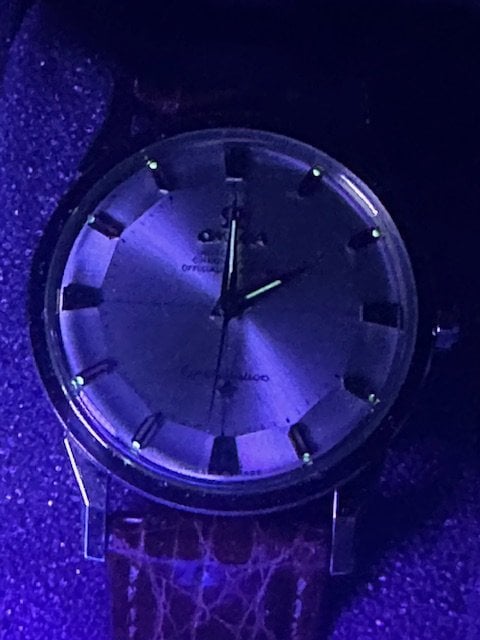
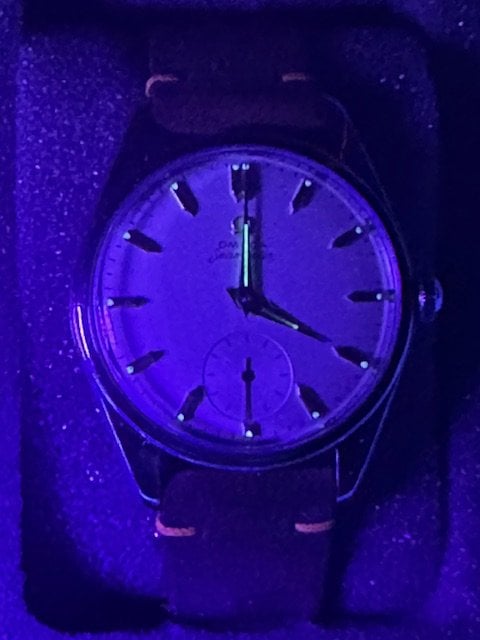
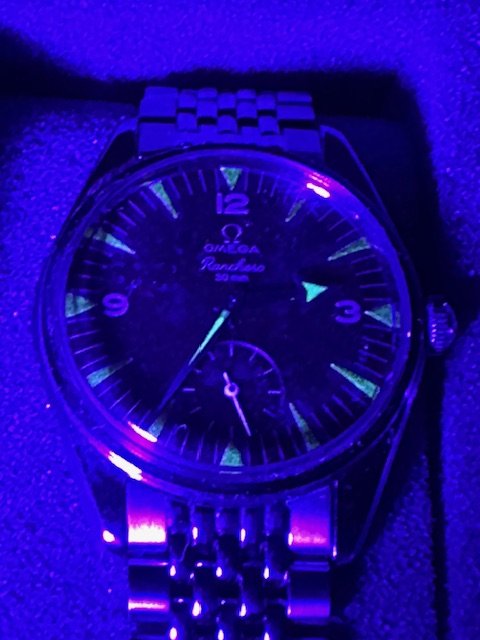
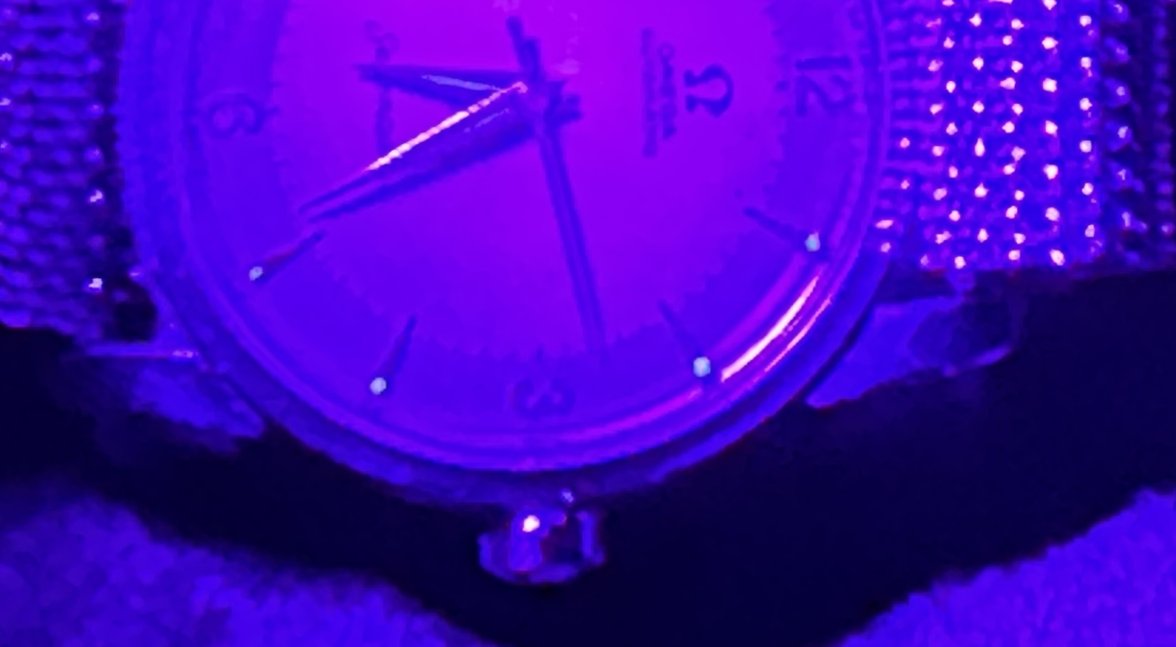
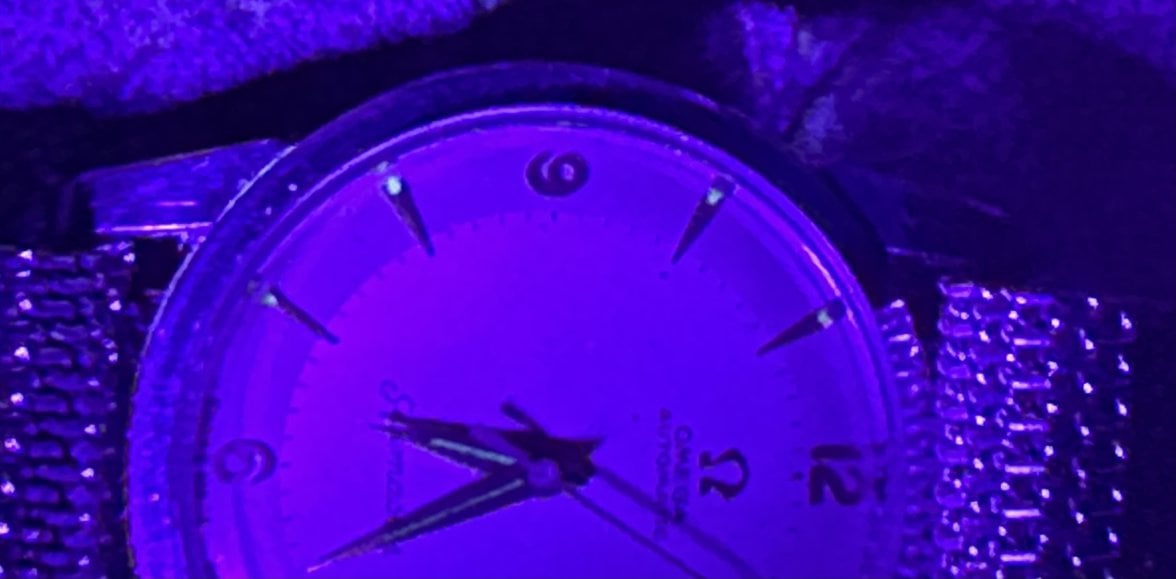
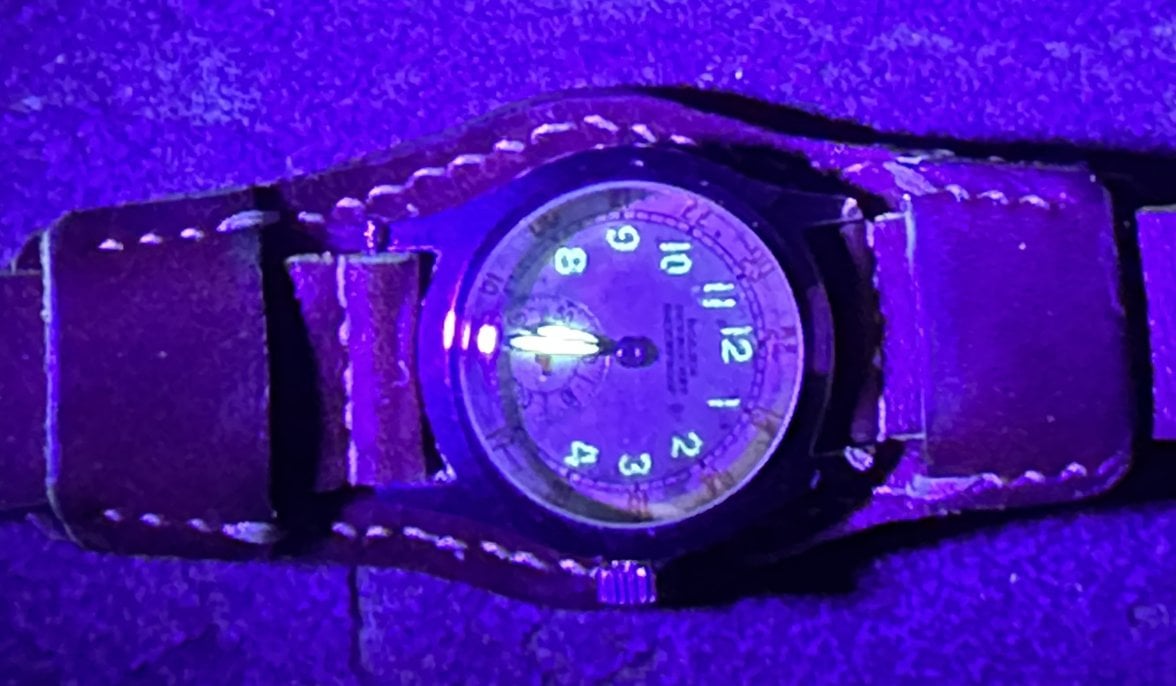
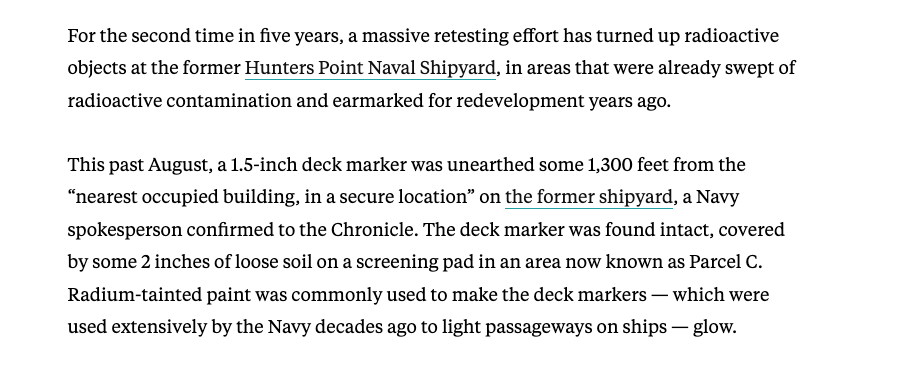
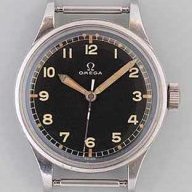
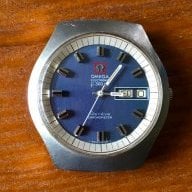
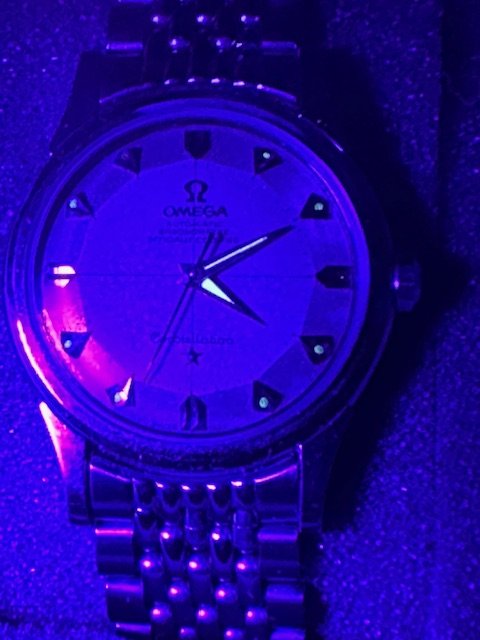
So I thought that it would be interesting to take photos of some of my watches that have radium based lume under UV light. Here are the results. Sorry the photos aren't better, but it's both interesting and sobering when you realize how radioactive radium actually is - with a 1600 year half-life, it’s still every bit as potent (and dangerous) as it was when these watches were manufactured. Compare that to tritium which is far less radioactive and has a half life of only 12 years. Although the phosphorescent material in the lume on these watches has long since degraded, the radium component is producing as much energy as when the watches were new.
Edited:

 
Posts
3,196
Likes
33,329
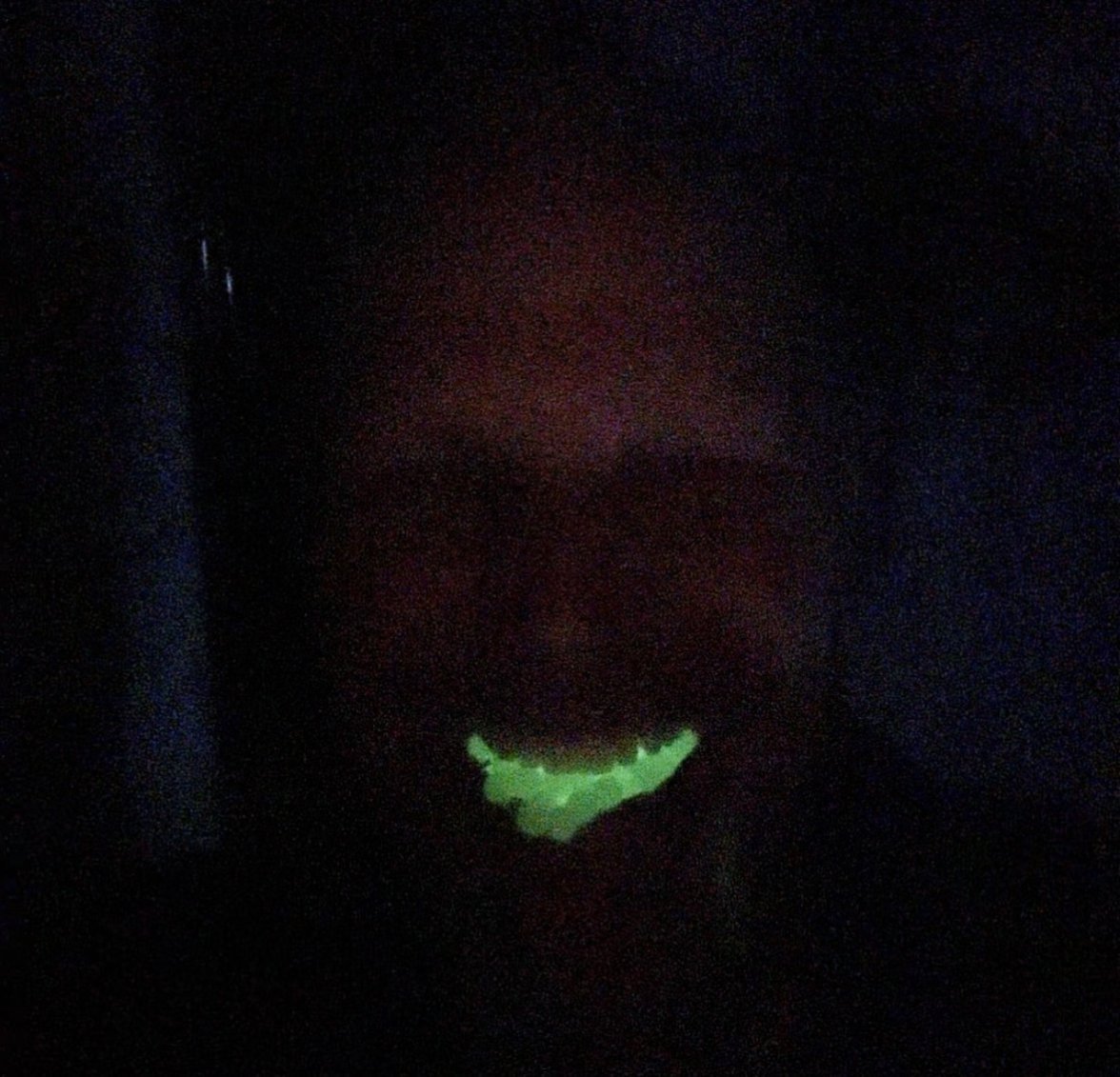
Isn’t that stuff dangerous Greg? My Seamaster. Needed two photos. My Sky-Rocket. Hands are not radium. Some sort of really good concoction by Canuck. Will post the Jardur Seatimer when I get it out of the lead box.
Edited:

 
Posts
9,736
Likes
54,431
It's certainly dangerous if you lick your radium lumed watch dials or decide to service the watches yourself and breathe in radium dust from disintegrated lume. The conventional wisdom is that it's safe as long as the watch case is intact and you don't do the foregoing. My Geiger counter shows all of my radium watches to have relatively low levels of emissions.
 
Posts
3,065
Likes
19,406
The conventional wisdom is that it's safe as long as the watch case is intact and you don't do the foregoing.
But where is the fun in that?!
 
Posts
2,577
Likes
7,119
Radium does not glow. It is the phosphor compound that glows under UV.
😉
 
Posts
9,736
Likes
54,431
Radium does not glow. It is the phosphor compound that glows under UV.
😉
Yes, of course. I said nothing to the contrary in my post. My point was more about how radioactive radium actually is and how long it takes to decay. If I remember correctly, tritium has a half life of 12 years and is far less radioactive.
 
Posts
2,577
Likes
7,119
Sorry I missed the connection between the pics and your radium comment.
Just take it as a public service announcement.
 
Posts
7,680
Likes
14,204
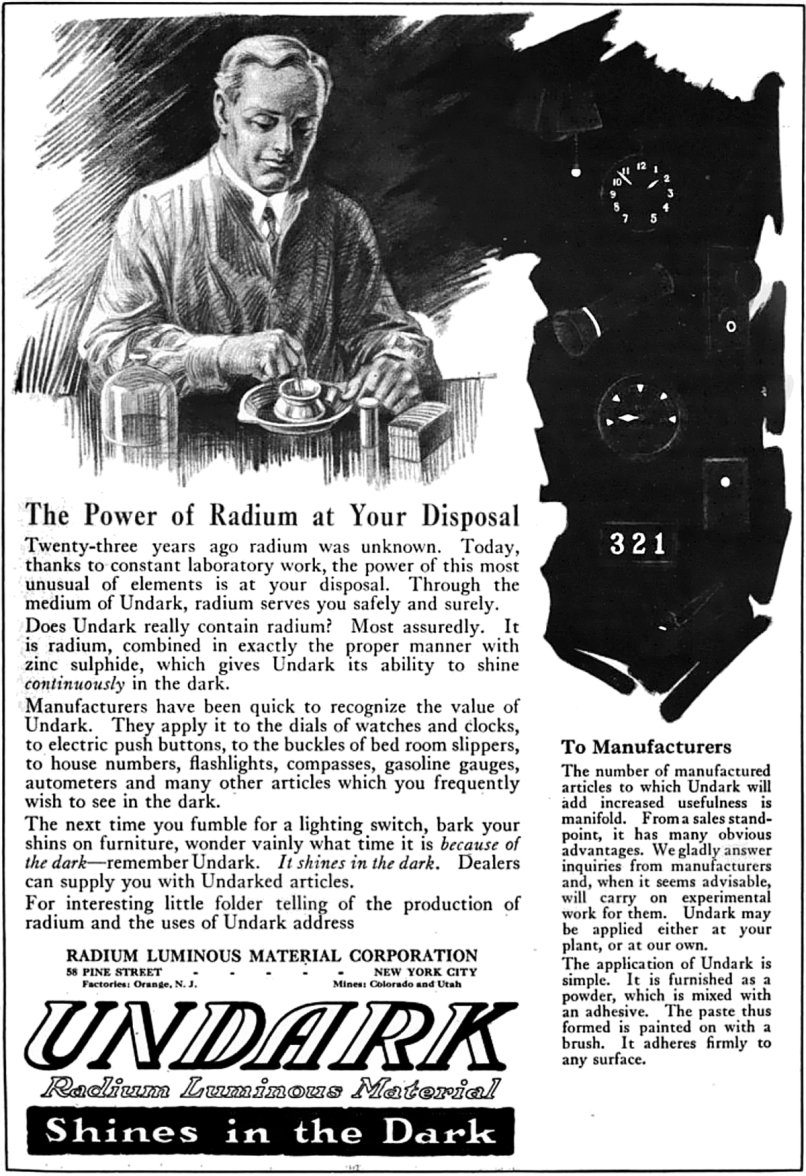
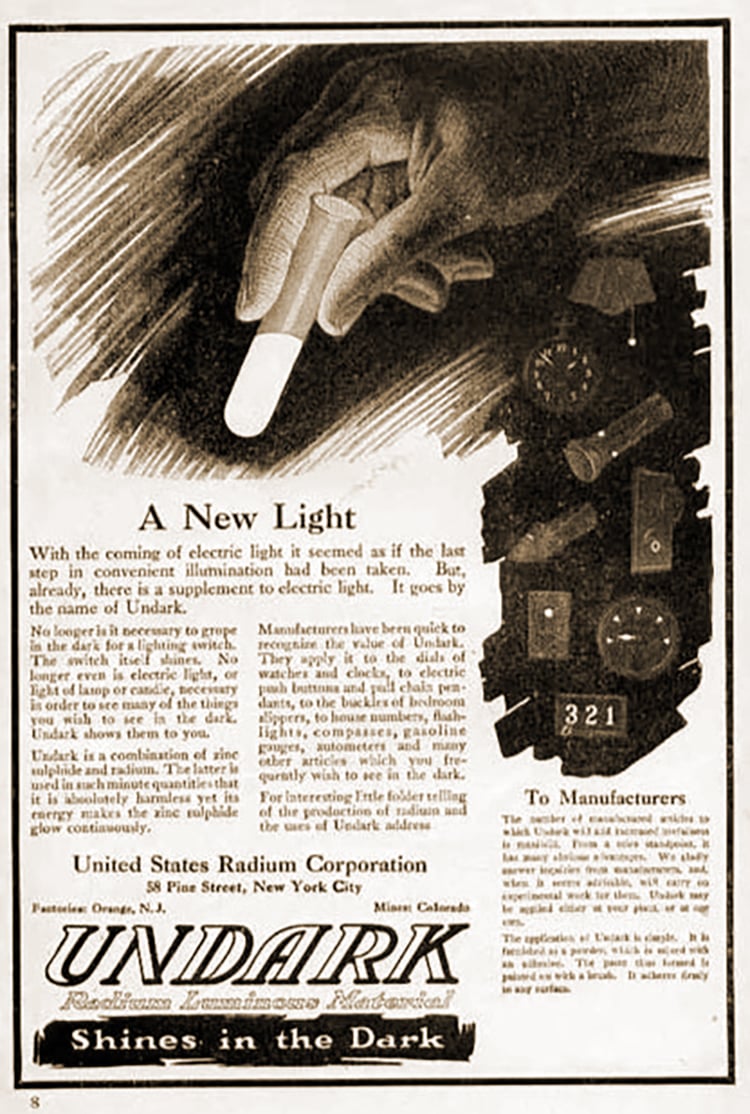
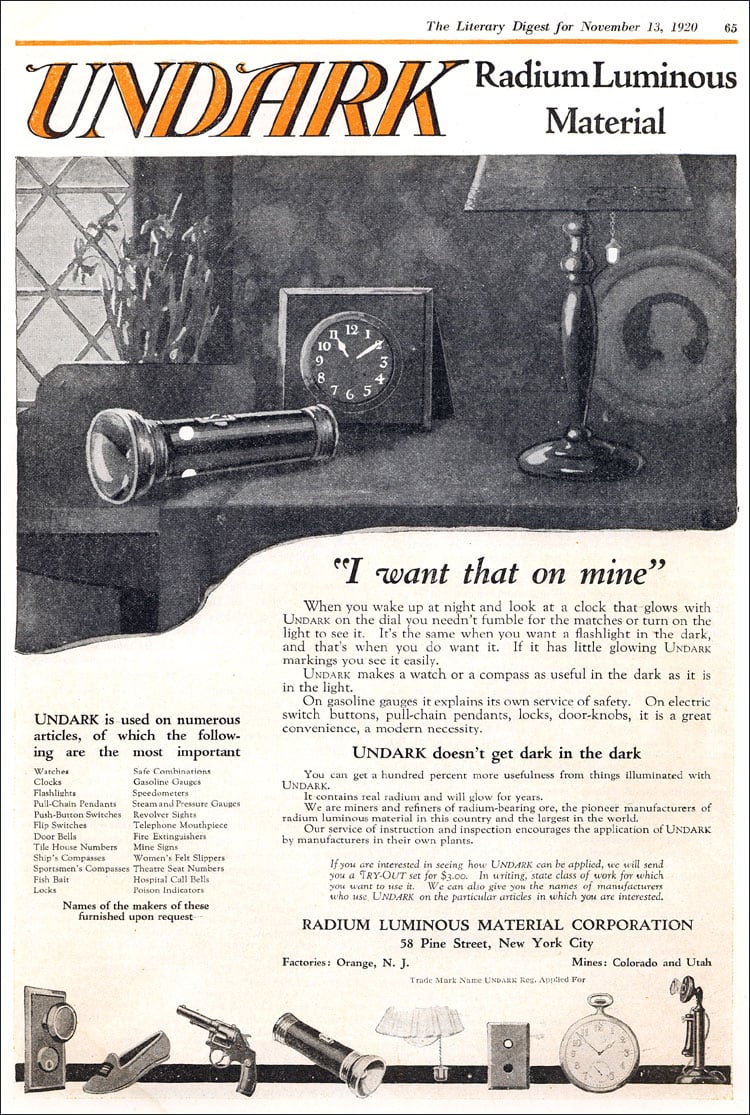
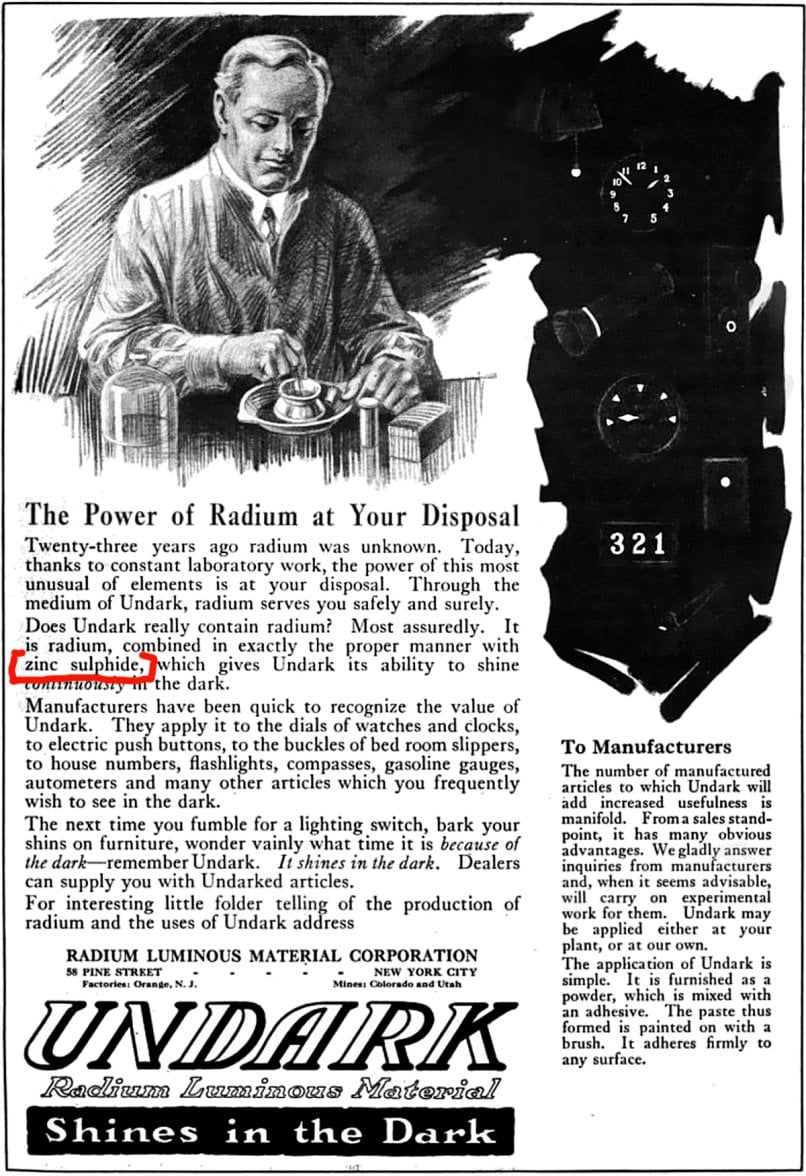
Radium was the wonder material a hundred years ago. Until it wasn't. Who wouldn't want radium on their slippers, revolver, telephone mouth piece and other daily items? And no surprise their factories were in New Jersey.
Edited:

 
Posts
3,554
Likes
7,591
It is the phosphor compound that glows under UV.

Sorry, this is not correct - it is zinc sulphide which glows (charged by the energy from Radium)
 
Posts
2,577
Likes
7,119
Sorry, this is not correct - it is zinc sulphide which glows (charged by the energy from Radium)

I stand corrected!😲
I surely meant to say phosphorescence material 😉
Edited:
 
Posts
2,074
Likes
4,231
JERSEY! 😀

Nice uv light greg, which one did you end up getting? my v1 beast is still a really good one but the v3 has a better range.
 
Posts
9,736
Likes
54,431
Not sure, Erric. Whichever one Amazon had on sale! It did come highly rated.
 
Posts
24,242
Likes
53,989
Your posts are a bit cryptic, @mac_omega , but yes, zinc sulfide (ZnS) is a phosphor, or specifically doped zinc sulfide. So you are both correct! A phosphor is a substance that is excited by the radiation emitted by the radium and then emits light via luminescence. All luminous compounds used on vintage watch dials, whether powered by radium or tritium, contain some sort of phosphor.

Through the 1960s, ZnS was often used as a phosphor on watch dials, in modern times I believe that strontium-based phosphors are more common. The different phosphors have different excitation spectra, which is why you will find that some lume emits strongly when excited by a blacklight (UVA), and some do not.
Edited:
 
Posts
24,242
Likes
53,989
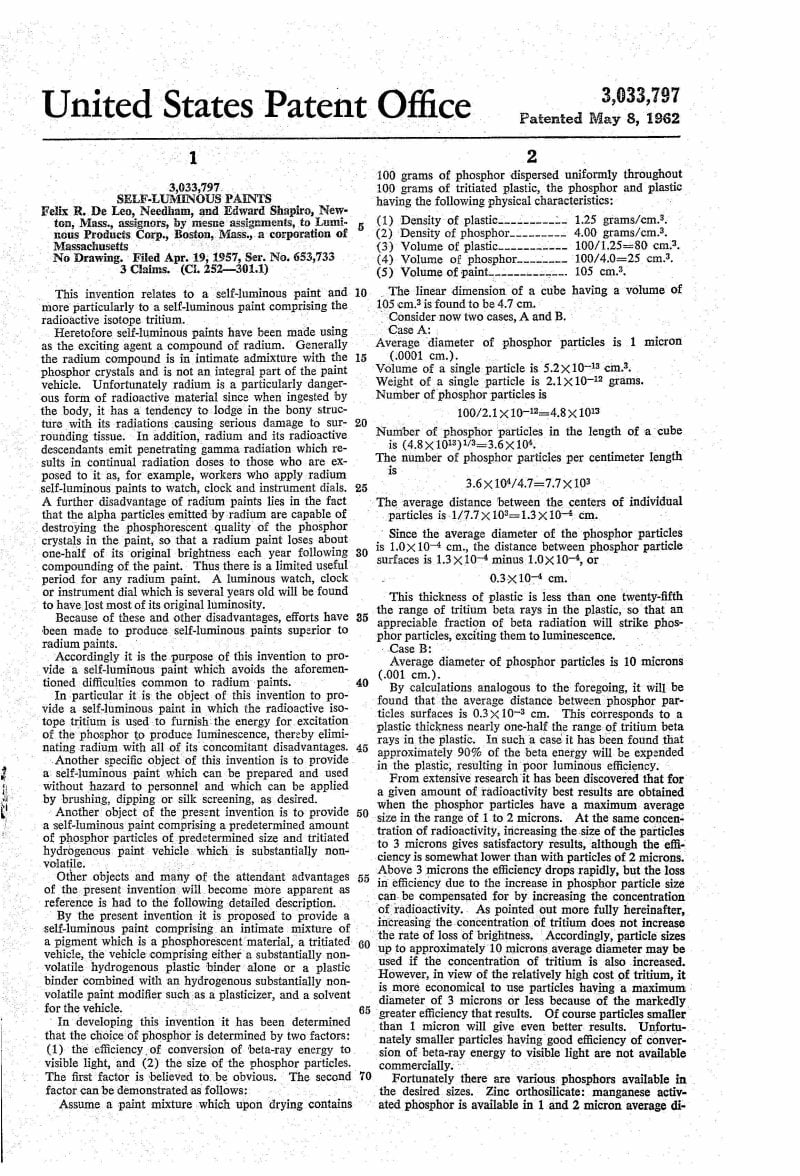
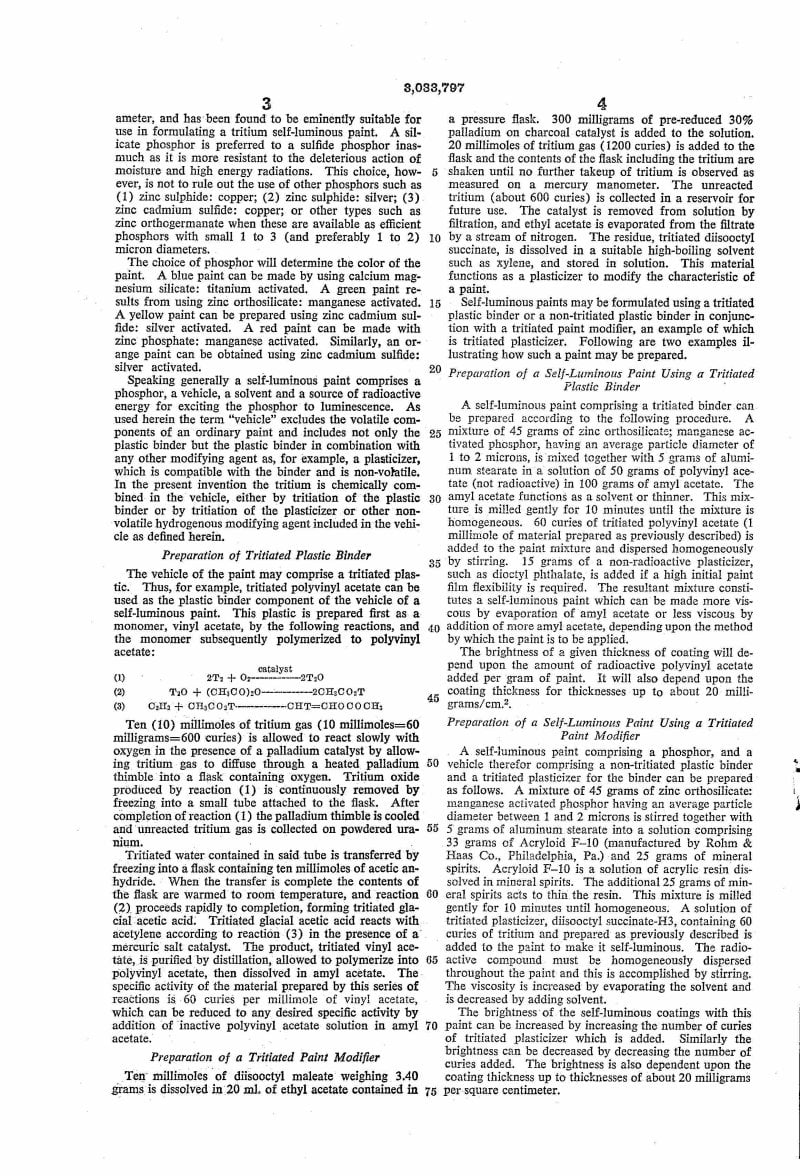
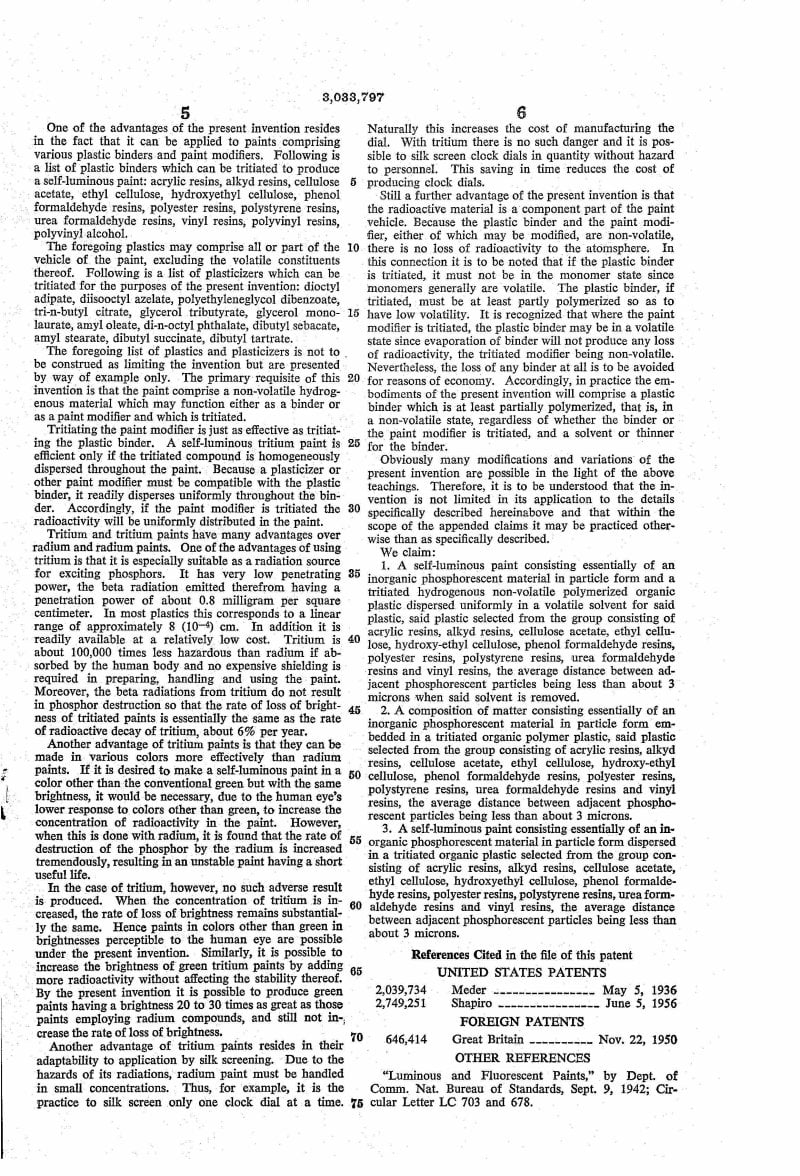
This may be more than some people want to read, but this is one of the early patents for tritium based lume. On the second column of the first page and spilling onto the second page, there is a lengthly discussion of phosphors, including optimal particle sizes and phosphor compositions that are optimized for excitation by tritium beta emission.

I think that another aspect of this patent that is interesting is the way it explained how tritium is incorporated into the luminous compound, by tritiation of the polymer binder component (i.e. substituting radioactive H-3 for some of the H-1 atoms in the polymer structure), which is obviously quite different than the way that radium was incorporated.