Flightmaster Consideration - Thoughts?

Posts
1,399
Likes
17,100
Looks like Tanner Moorehouse got a hold of it🤮.

LOL, we have already established that you have problems seeing!
 
Posts
3,960
Likes
6,782
LOL, we have already established that you have problems seeing!
“When the debate is lost, slander becomes the tool of the loser.”
 
Posts
1,399
Likes
17,100
“When the debate is lost, slander becomes the tool of the loser.”
A statement has to be false to be slander. You seem very invested in this watch. Are you the seller by chance?
 
Posts
197
Likes
311
I suppose it all depends on what you want from the watch.
The youngest vintage Flightmasters are going to be knocking on half a century old.
They are tool watches, they were very often used for their intended purpose.
If you are buying into that history and heritage, do you want a piece that looks like it came from a shop yesterday, or do you want something that looks like it is a relic of a bygone age that was used as its makers intended?

The Japanese concept of wabi-sabi is often invoked here, encouraging the embracing of imperfections in an object of value and beauty.
Originality is not just in terms of the configuration of the object, it is also in terms of its condition.
Is it worn in a manner consistent with intended use?

This is not a fluted bezel dress watch made form precious metals and bejewelled with sparklies!

Personally, if I hunt down a vintage watch, especially a tool watch, I tend towards the usable classic - get it mechanically sorted but take a minimal approach to restoration beyond that. Preserve its unique, original features, but also preserve its individual heritage.
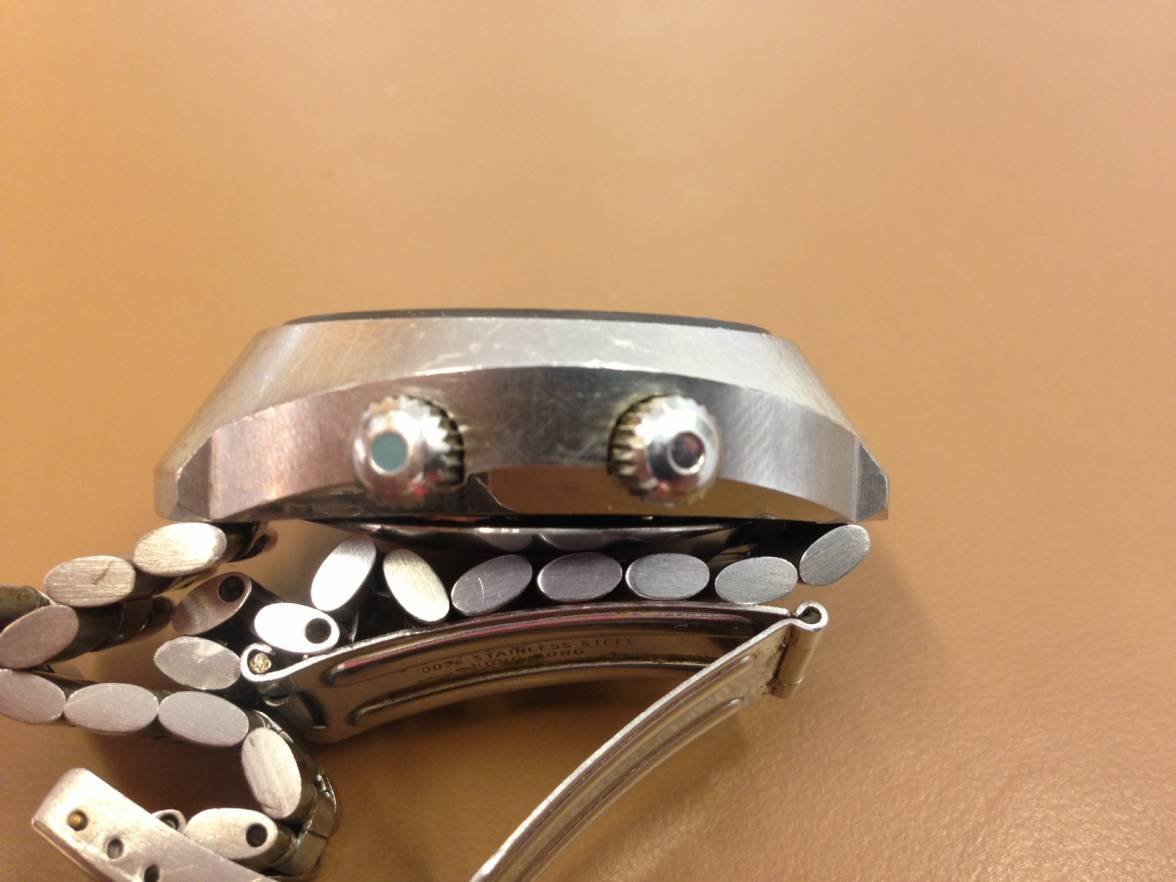
I love the way that the case back has lost some of its definition - through wearing.

Sort it out with its proper pushers, hands, etc, but beyond that, be kind to it. It is a relic of an older time and a powerful artefact that you can own and enjoy, if that means something to you.

That's my tuppence. I'll get me coat.

😉

 
Posts
21
Likes
171
I suppose it all depends on what you want from the watch.
The youngest vintage Flightmasters are going to be knocking on half a century old.
They are tool watches, they were very often used for their intended purpose.
If you are buying into that history and heritage, do you want a piece that looks like it came from a shop yesterday, or do you want something that looks like it is a relic of a bygone age that was used as its makers intended?

The Japanese concept of wabi-sabi is often invoked here, encouraging the embracing of imperfections in an object of value and beauty.
Originality is not just in terms of the configuration of the object, it is also in terms of its condition.
Is it worn in a manner consistent with intended use?

This is not a fluted bezel dress watch made form precious metals and bejewelled with sparklies!

Personally, if I hunt down a vintage watch, especially a tool watch, I tend towards the usable classic - get it mechanically sorted but take a minimal approach to restoration beyond that. Preserve its unique, original features, but also preserve its individual heritage.
I love the way that the case back has lost some of its definition - through wearing.

Sort it out with its proper pushers, hands, etc, but beyond that, be kind to it. It is a relic of an older time and a powerful artefact that you can own and enjoy, if that means something to you.

That's my tuppence. I'll get me coat.

😉
Very well said, and I generally always purchase pre-owned as I am much more comfortable not being the first to ding a watch. Odd, but have always been that way with watches and certain eras of furniture.

My main concern was components that may not be original as there are quite a few versions out there for such a limited (in terms of years) watch.

Appreciate the comments from everyone, great to hear different opinions.
 
Posts
899
Likes
1,723
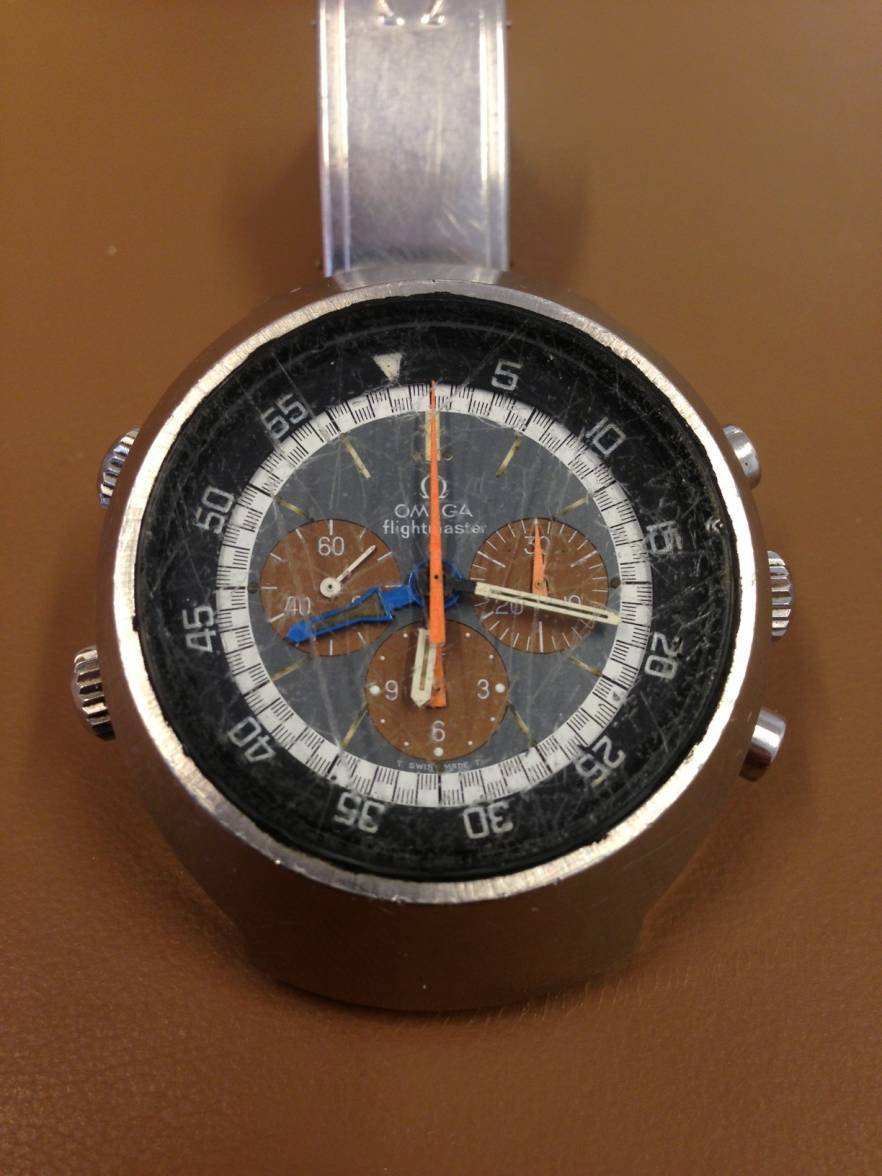
If I can add to the conversation re polishing old watches. I’ve a circa 1970 Flightmaster so again it’s 50 years old. I presume my watch is pretty representative of many in that no doubt there have been long periods when the watch was not worn. Personally I’ve had mine in a drawer since I bought it in 2009. It needs a service and it just hasn’t happened since bought it!! Too many watches. It’s a 145.026 and has plenty f wear to the crystal and maybe the inner bezel but the case looks and feels nice and sharp. It’s about about whether a case has been polished. I’ve a 1977 176.005 (Seamaster chronograph) and the case lines are soft as butter as someone else aptly described very over polished cases!!
 
Posts
3,998
Likes
9,018
Personally, if I hunt down a vintage watch, especially a tool watch, I tend towards the usable classic - get it mechanically sorted but take a minimal approach to restoration beyond that. Preserve its unique, original features, but also preserve its individual heritage.

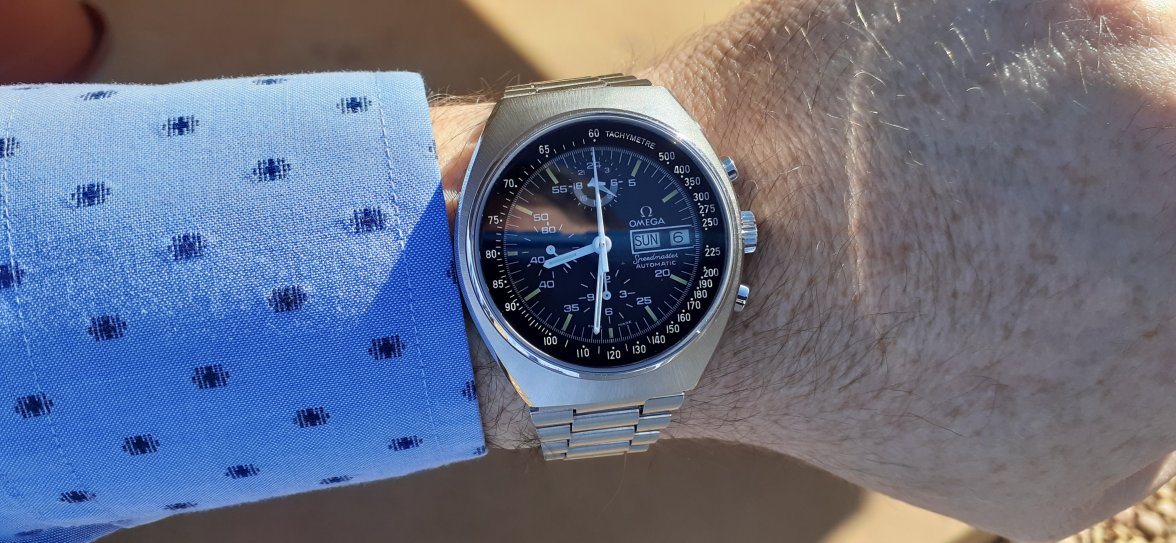
Here are three I’ve owned, one being among the rarest configurations ever produced (can you spot it?), and all I deeply regret selling (but it was the right decision at the time)


They all have wabi sabi, and the dings/scratches of a 50 yr old watch - none, however, are sticks of butter!
 
Posts
1,399
Likes
17,100
I suppose it all depends on what you want from the watch.
The youngest vintage Flightmasters are going to be knocking on half a century old.
They are tool watches, they were very often used for their intended purpose.
If you are buying into that history and heritage, do you want a piece that looks like it came from a shop yesterday, or do you want something that looks like it is a relic of a bygone age that was used as its makers intended?

The Japanese concept of wabi-sabi is often invoked here, encouraging the embracing of imperfections in an object of value and beauty.
Originality is not just in terms of the configuration of the object, it is also in terms of its condition.
Is it worn in a manner consistent with intended use?

This is not a fluted bezel dress watch made form precious metals and bejewelled with sparklies!

Personally, if I hunt down a vintage watch, especially a tool watch, I tend towards the usable classic - get it mechanically sorted but take a minimal approach to restoration beyond that. Preserve its unique, original features, but also preserve its individual heritage.
I love the way that the case back has lost some of its definition - through wearing.

Sort it out with its proper pushers, hands, etc, but beyond that, be kind to it. It is a relic of an older time and a powerful artefact that you can own and enjoy, if that means something to you.

That's my tuppence. I'll get me coat.

😉

Many collectors will agree with you. I am not a fan of wabi-sabi or patina. I want a watch that looks like it was in a time capsule. I wouldn't drive a classic car with dented body panels and a faded paint job. I want one that looks like it just came off the dealer's floor. I wear mine 3 or 4 days a week and get a lot of complements. I work with Air Force pilots and they like shiny chronographs.

Edited:
 
Posts
29,757
Likes
77,035
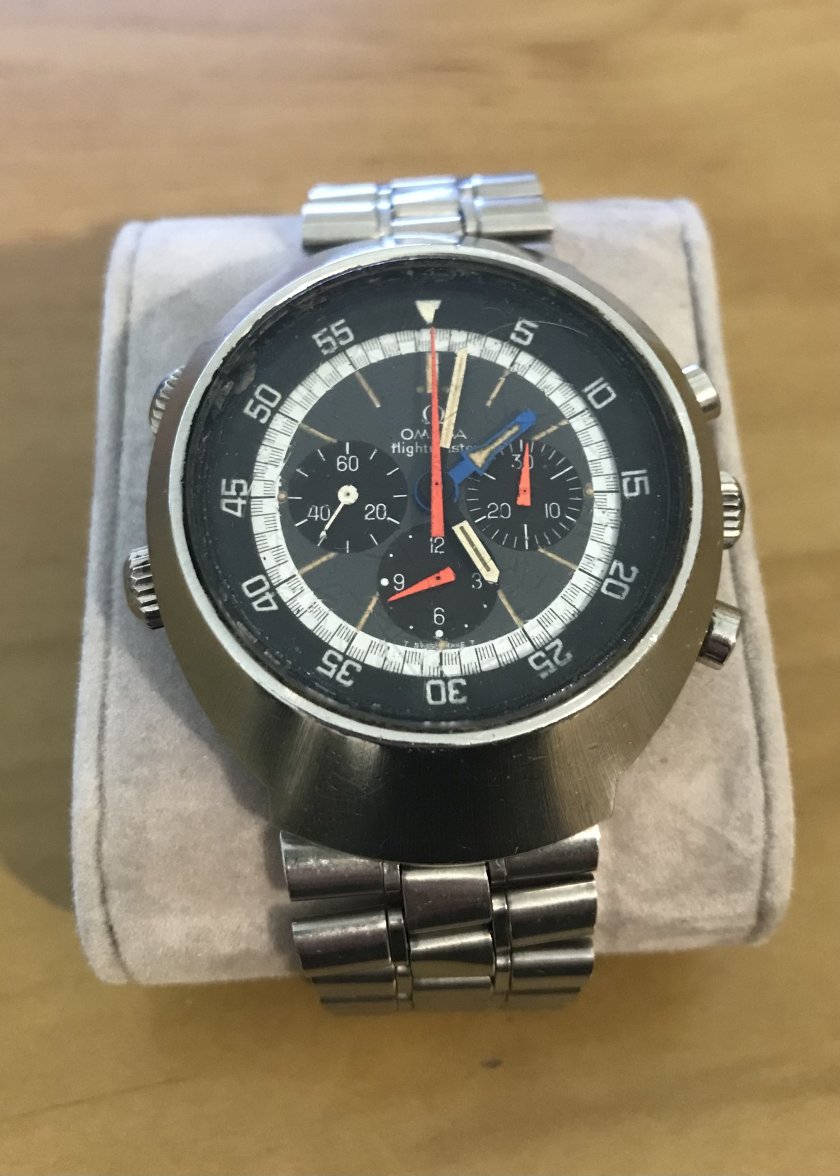
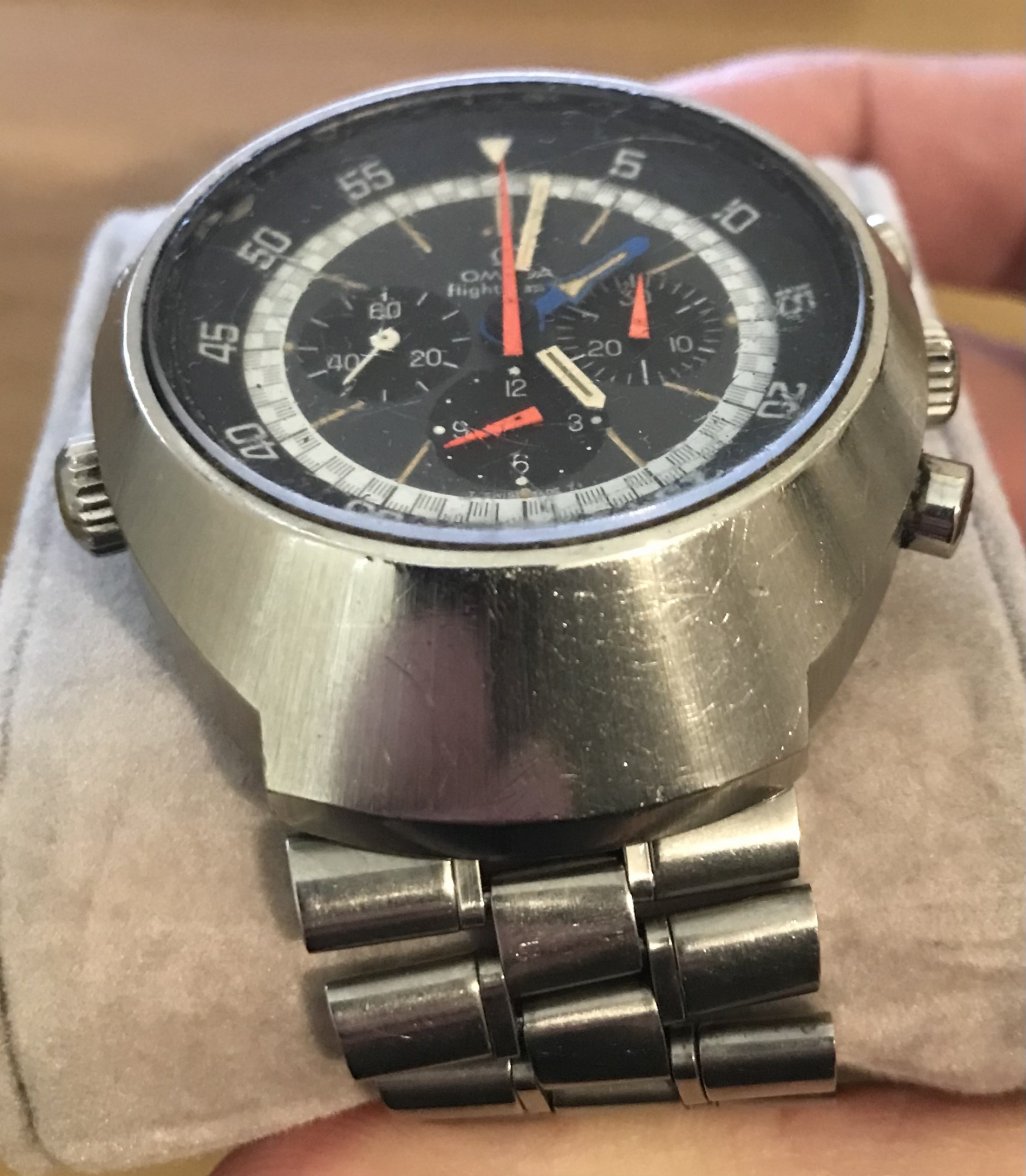
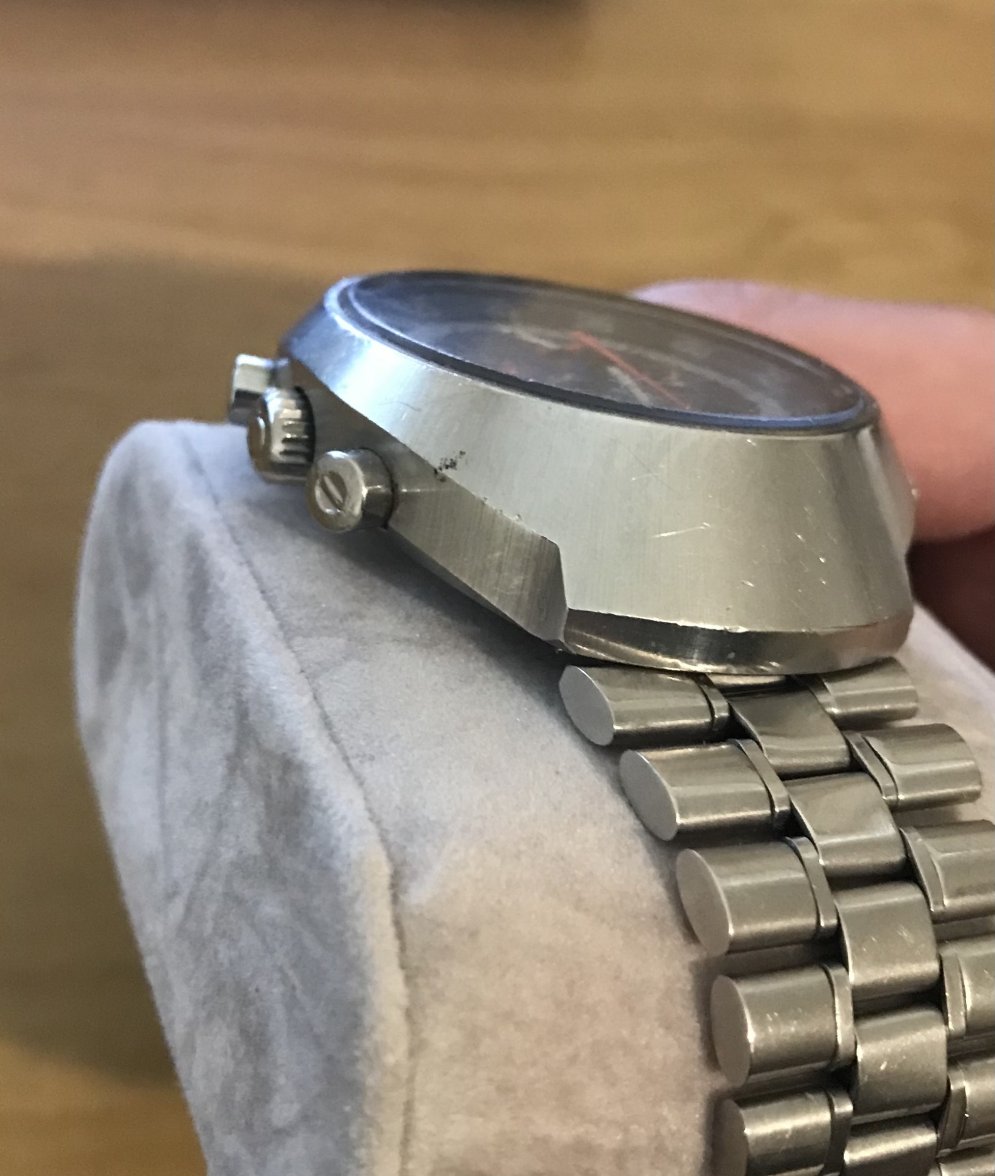
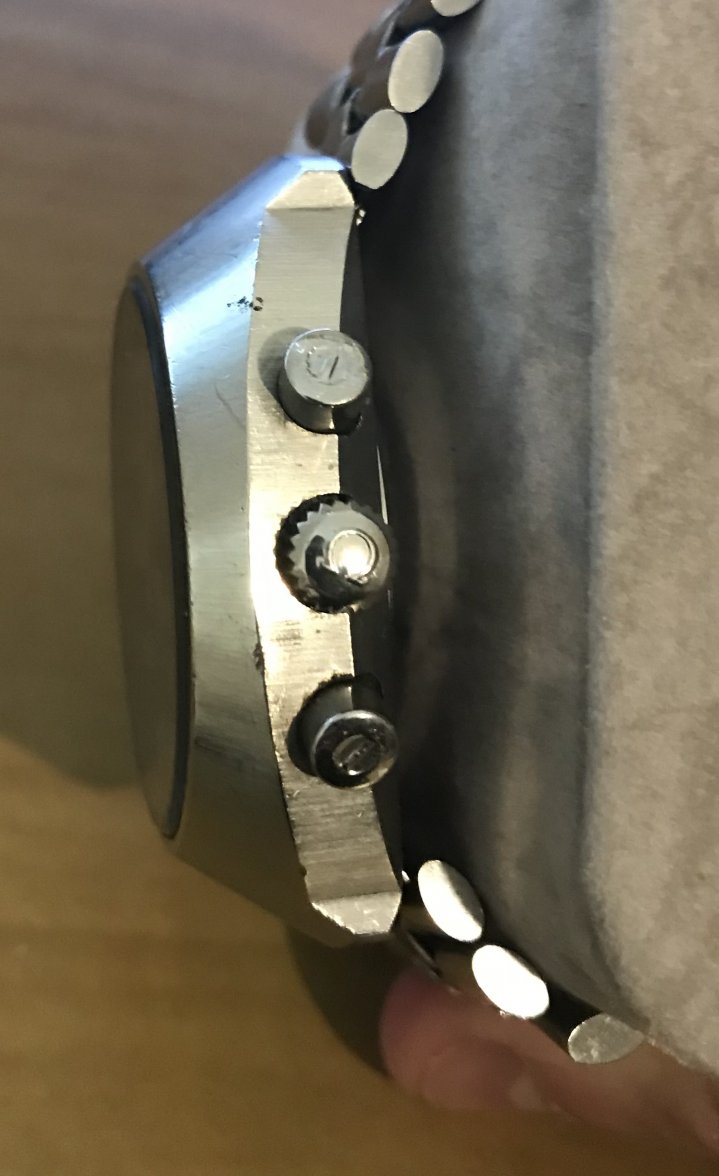
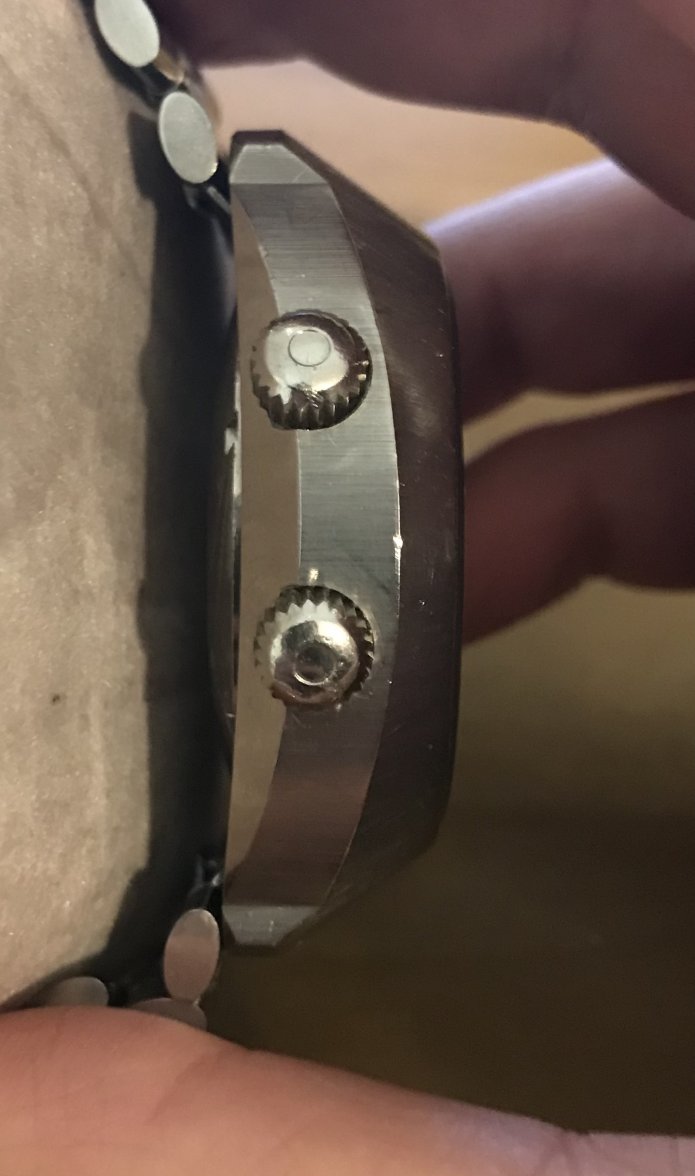
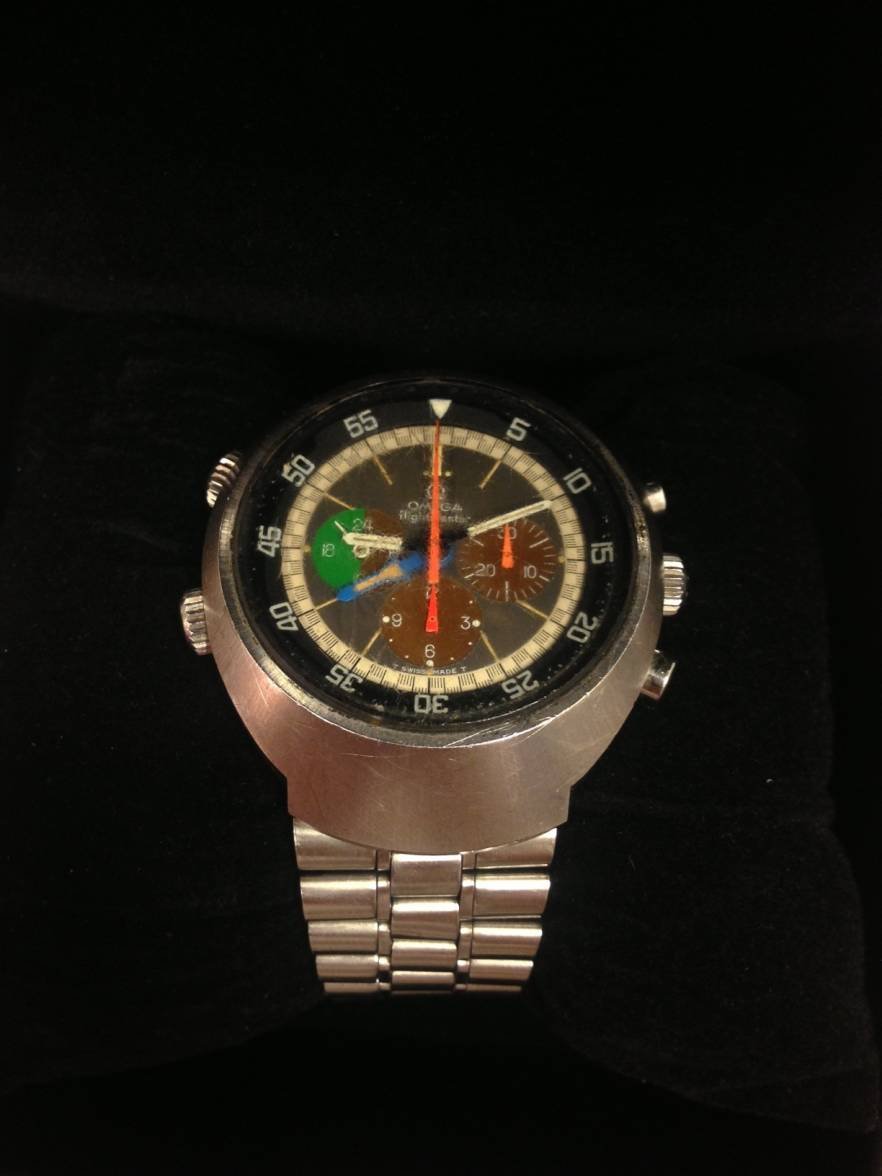
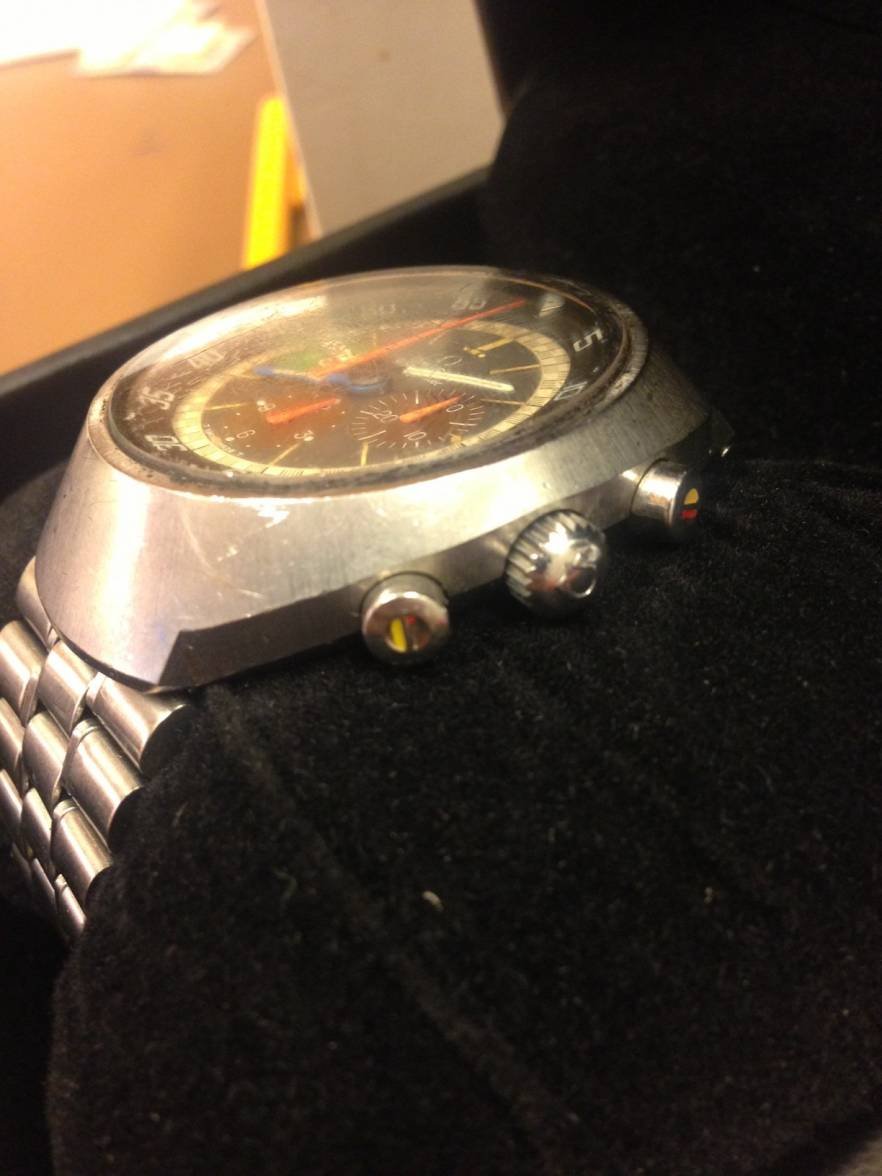
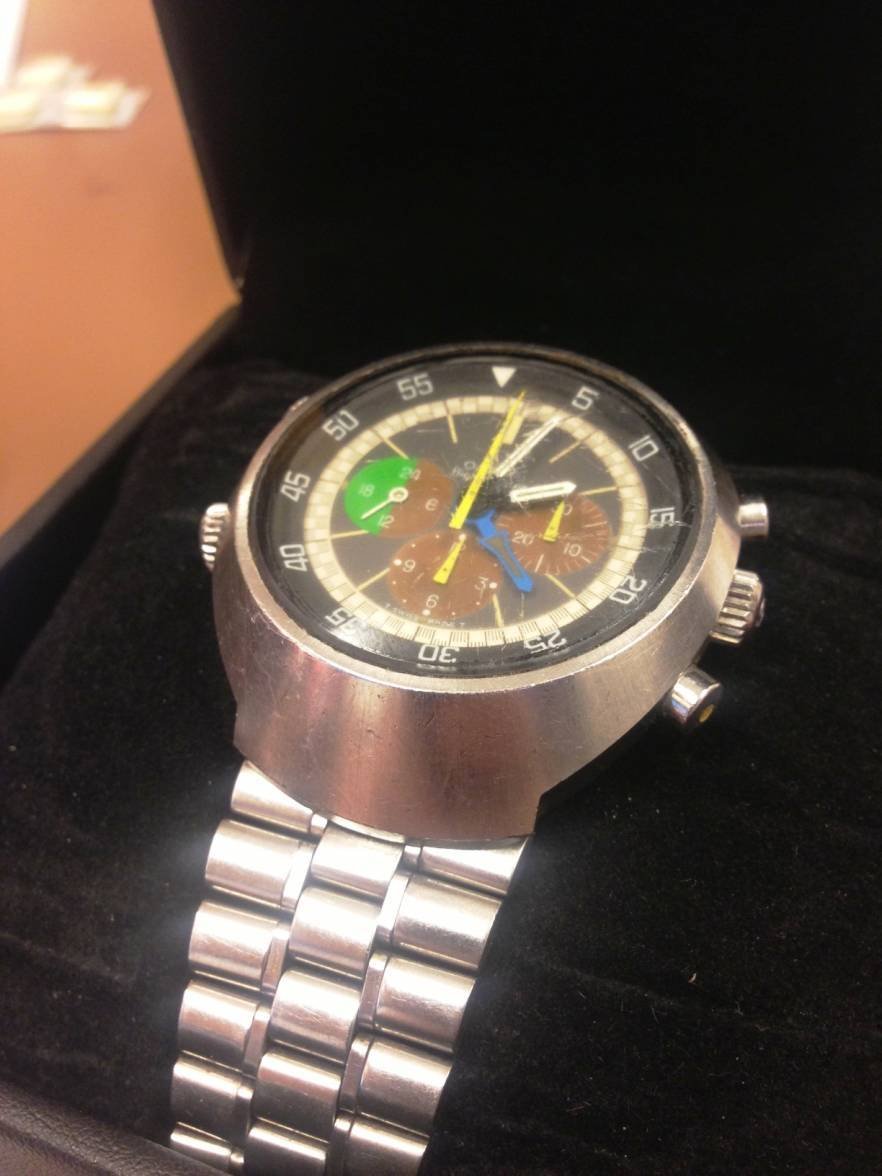
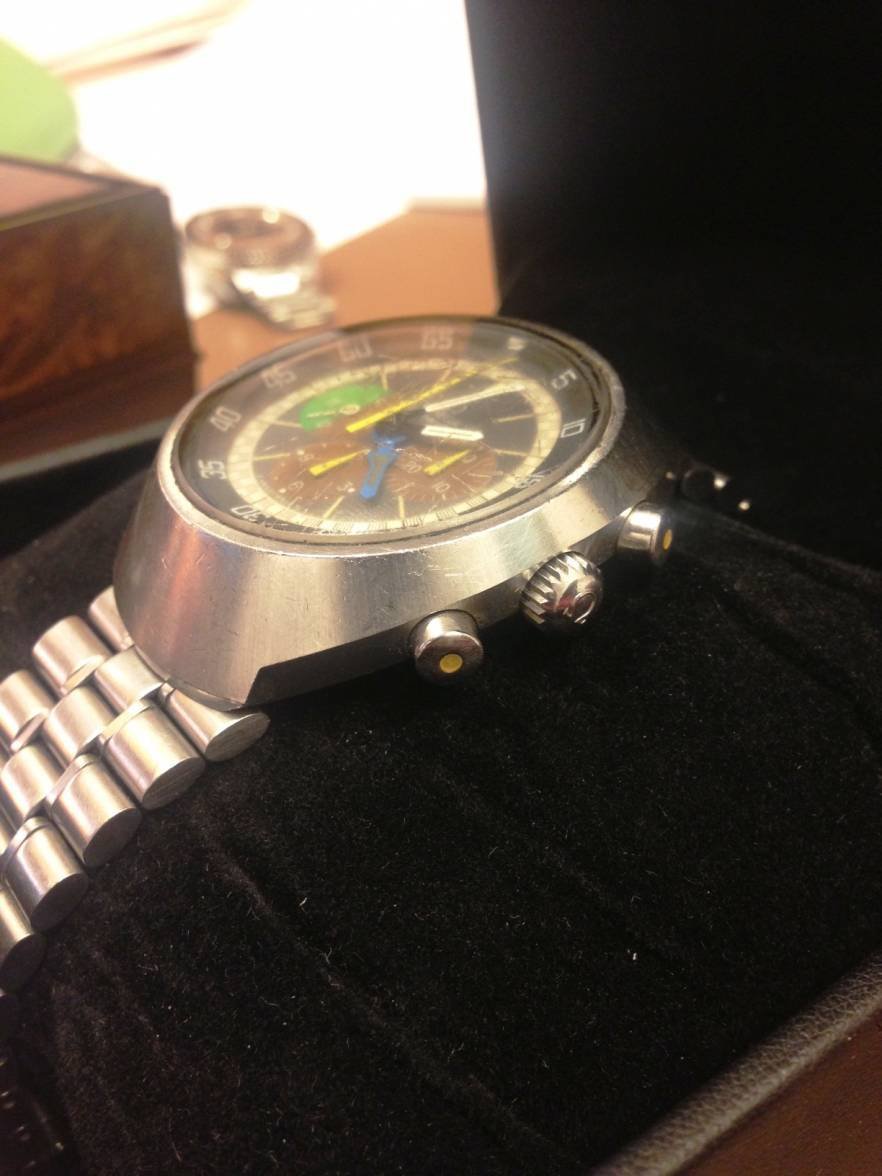
Whatever one chooses to call a case that is now uniformly marble-smooth at all edges and even recessed nooks, where it was once before a razors edge, that is this watch. Calling it “polishing” or “wear” is perhaps neither here nor there.

But to me, the “wear” to the case back instead emphasizes a contrast against a case that has been polished.

Agreed. The fact that the "wear" is so uniform at rounding off all the edges, to me signals it's not "wear" but a rather poor attempt at refinishing.
 
Posts
899
Likes
1,723
I am not a fan of wabi-sabi or patina. I want a watch that looks like it was in a time capsule. I wouldn't drive a classic car with dented body panels and a faded paint job. I want one that looks like it just came off the dealer's floor.

I hear you but what’s better than having both!! There’s room in everyone’s wardrobe for casual and smart - mix it up; take a chance!
 
Posts
1,071
Likes
2,167
The edges and case look crappy because the pictures are taken with a potato lens iPhone 3g and processed 17 times being filtered through the internet. There simply is not enough resolution in these pictures to make a determination.
If that's true, why do the crowns look so sharp?