- Posts
- 4
- Likes
- 2
Ossicino63
·Hello everyone,
My name is Alessandro, and I run an Italian business specializing in Omega watches.
I have been researching vintage Omega watches for many years, but this early Constellation has raised a question that I have not been able to answer, despite quite extensive research.
The watch is an:
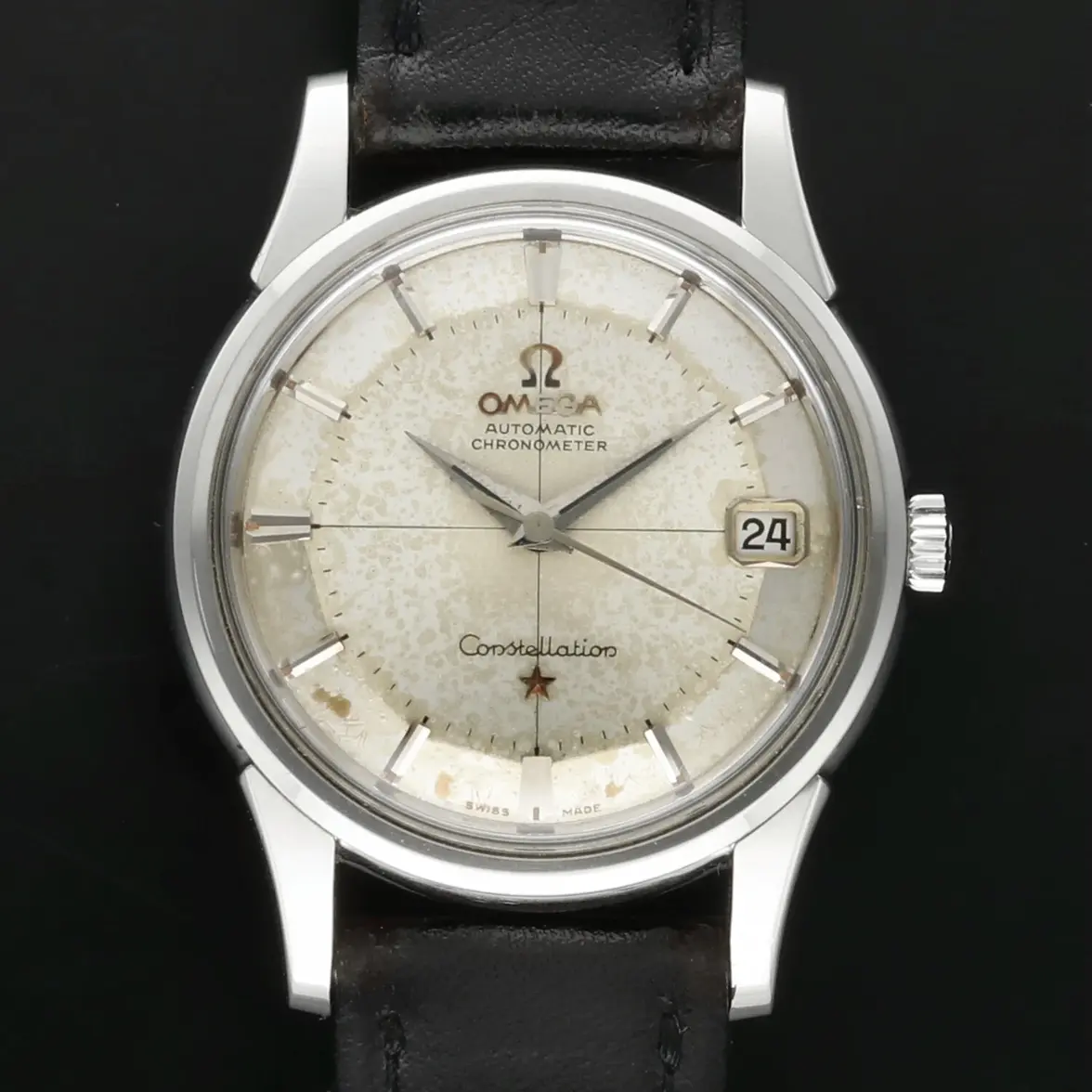
Omega Constellation Chronometer
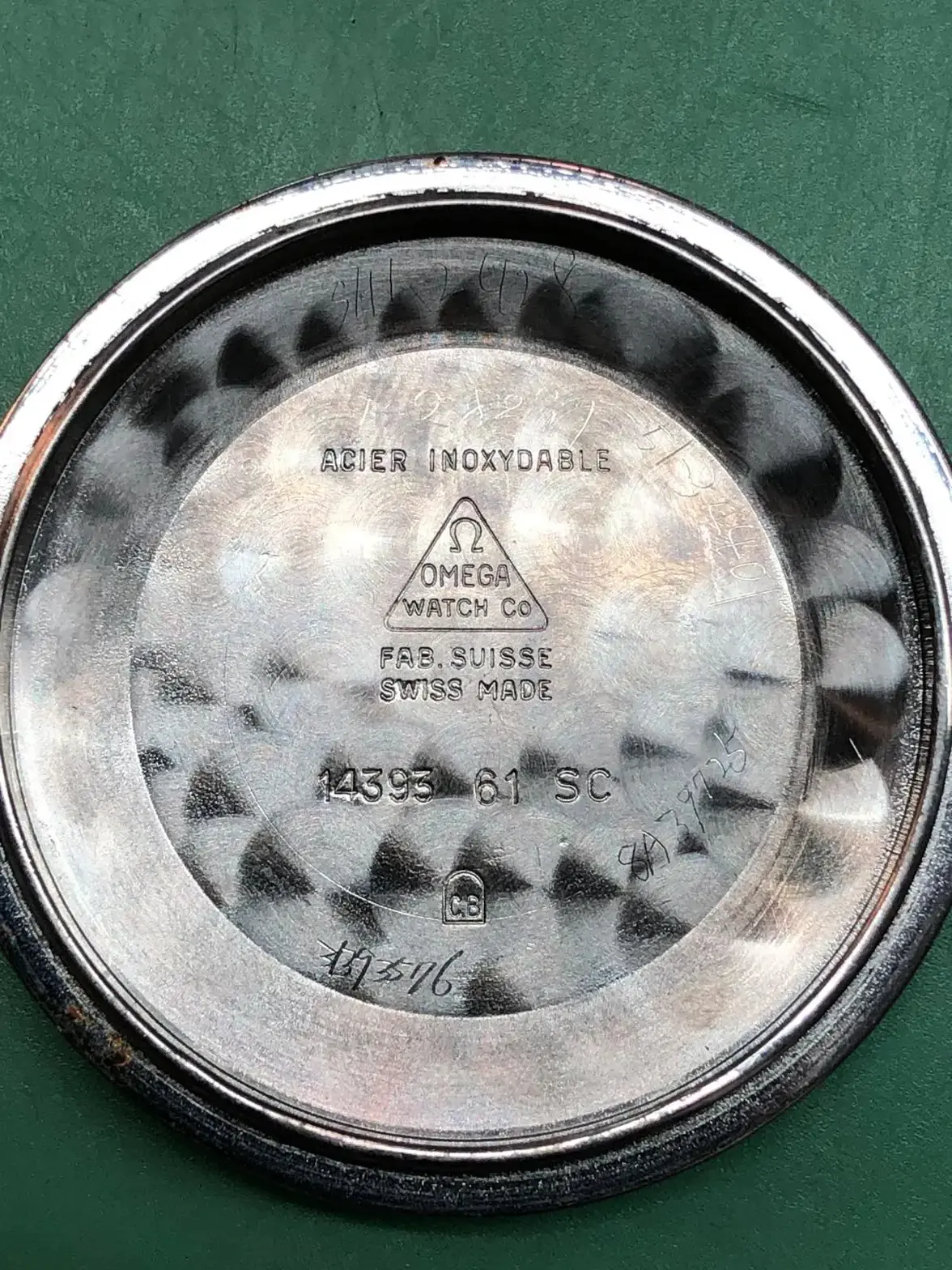
Ref. 14393-61 SC
Calibre 561
Serial 17.42xxxx (approximately 1959)
The watch has just been fully serviced by an Official Omega Service Centre, so I have no reason to question the movement itself. My goal is simply to understand a historical detail so that I can document the watch accurately for future collectors and clients.
After comparing many Cal. 561 movements, I noticed two details.
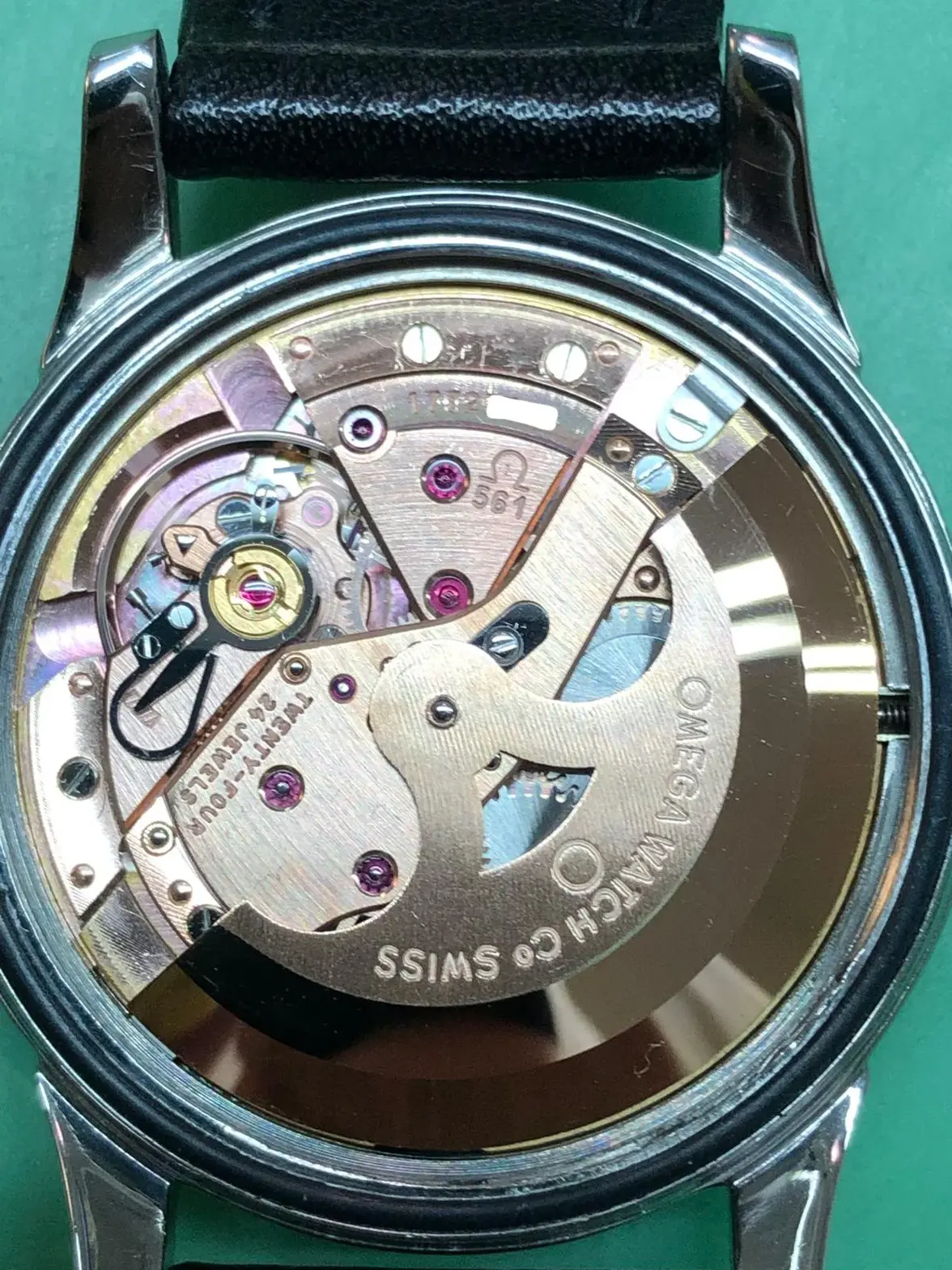
1) Automatic winding bridge
The automatic bridge is engraved only:
"24 JEWELS"
It does not carry the usual inscription:
"ADJUSTED FIVE (5) POSITIONS AND TEMPERATURE"
that seems to appear on almost every Cal. 561 I have been able to find.
2) Rotor retaining screw
The rotor retaining screw also appears slightly different from many later examples.
I have already searched Omega Forums, old technical documentation and several online archives.
I found discussions confirming that the automatic bridges of the 55x family were available separately from Omega and could be replaced during service, but I have not been able to find another Cal. 561 bridge engraved only "24 JEWELS".
My questions are therefore:
Could this be an early production variation from 1959?
Could it be an original Omega service replacement bridge supplied later?
Does the rotor screw appear correct for an early Cal. 561?
The movement appears remarkably coherent throughout:
identical copper colour across all bridges
identical ageing and finish
no obvious mismatch between components
Since it has just been serviced by an Official Omega Service Centre, I assume that the movement was considered mechanically correct, which makes this even more interesting from a historical perspective.
I have attached:
photographs of the complete watch
movement photographs
inside caseback photograph
I would especially appreciate the opinion of @Archer, but I would be grateful for any thoughts from members who own or have serviced very early Cal. 561 movements.
Many thanks in advance for your time.
Alessandro
My name is Alessandro, and I run an Italian business specializing in Omega watches.
I have been researching vintage Omega watches for many years, but this early Constellation has raised a question that I have not been able to answer, despite quite extensive research.
The watch is an:
Omega Constellation Chronometer
Ref. 14393-61 SC
Calibre 561
Serial 17.42xxxx (approximately 1959)
The watch has just been fully serviced by an Official Omega Service Centre, so I have no reason to question the movement itself. My goal is simply to understand a historical detail so that I can document the watch accurately for future collectors and clients.
After comparing many Cal. 561 movements, I noticed two details.
1) Automatic winding bridge
The automatic bridge is engraved only:
"24 JEWELS"
It does not carry the usual inscription:
"ADJUSTED FIVE (5) POSITIONS AND TEMPERATURE"
that seems to appear on almost every Cal. 561 I have been able to find.
2) Rotor retaining screw
The rotor retaining screw also appears slightly different from many later examples.
I have already searched Omega Forums, old technical documentation and several online archives.
I found discussions confirming that the automatic bridges of the 55x family were available separately from Omega and could be replaced during service, but I have not been able to find another Cal. 561 bridge engraved only "24 JEWELS".
My questions are therefore:
Could this be an early production variation from 1959?
Could it be an original Omega service replacement bridge supplied later?
Does the rotor screw appear correct for an early Cal. 561?
The movement appears remarkably coherent throughout:
identical copper colour across all bridges
identical ageing and finish
no obvious mismatch between components
Since it has just been serviced by an Official Omega Service Centre, I assume that the movement was considered mechanically correct, which makes this even more interesting from a historical perspective.
I have attached:
photographs of the complete watch
movement photographs
inside caseback photograph
I would especially appreciate the opinion of @Archer, but I would be grateful for any thoughts from members who own or have serviced very early Cal. 561 movements.
Many thanks in advance for your time.
Alessandro