
- Posts
- 101
- Likes
- 168
Harry jenkins
·What is the score with these old Doxa Chronographs?
I have seen them, primarily on Czech internet based selling platforms, but elsewhere also.
There seem to be many variations. I can’t tell if they are legitimate Doxa creations or are reassembled from parts after or during the war. Some people I have heard from say that re-casing was frequent in Eastern Europe after the WW2. Some examples I have seen pictures of, seem to be from Germany.
The lugs and case shape design seem to share much in common with German WW2 pilot watches (usually with 1928 pattern dials). Fixed lugs - usually around the 20mm mark and cases usually around 40-41mm. (Similar to the Zenith ‘special’ pilots watches, said to be used by the fledgling Luftwaffe, and those made by Helvetia, Roamer, Omega, Sita, Lanco etc)
What I don’t understand is the variation and progression, and what the hallmarks of a watch made from reassembled parts are in this case.
Here is an example of the standard pilot Doxa’s, typical of the late 30s - 40s, which nobody seems to question.
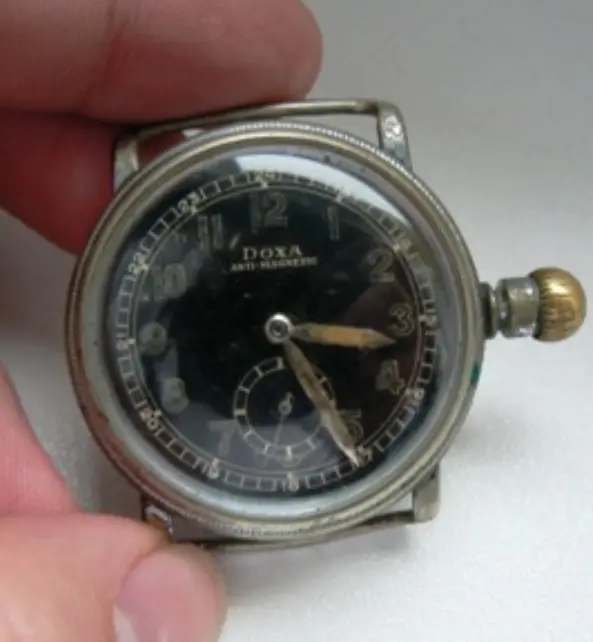
However, the chronographs I’m talking about are all over the place.
1)
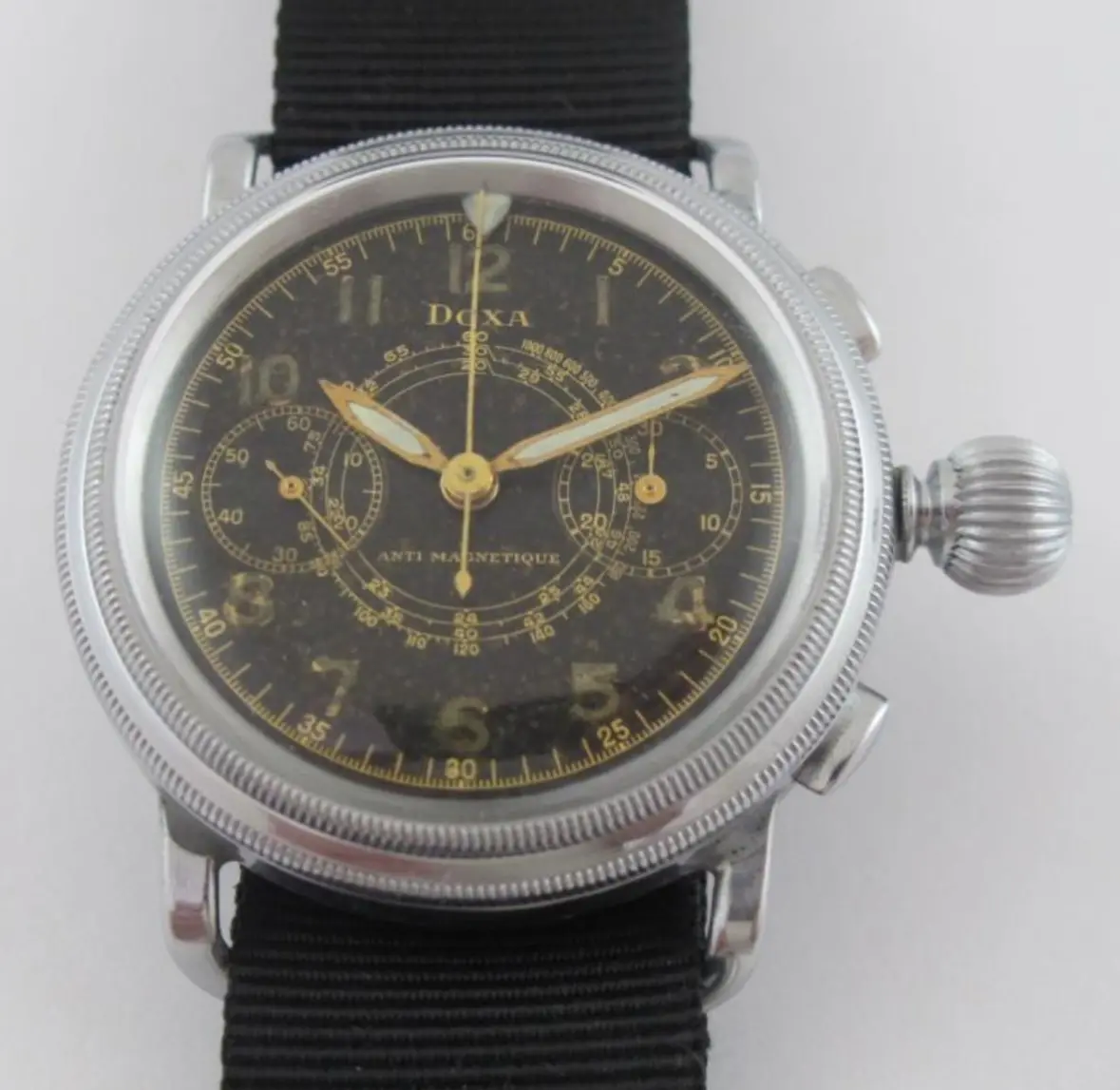
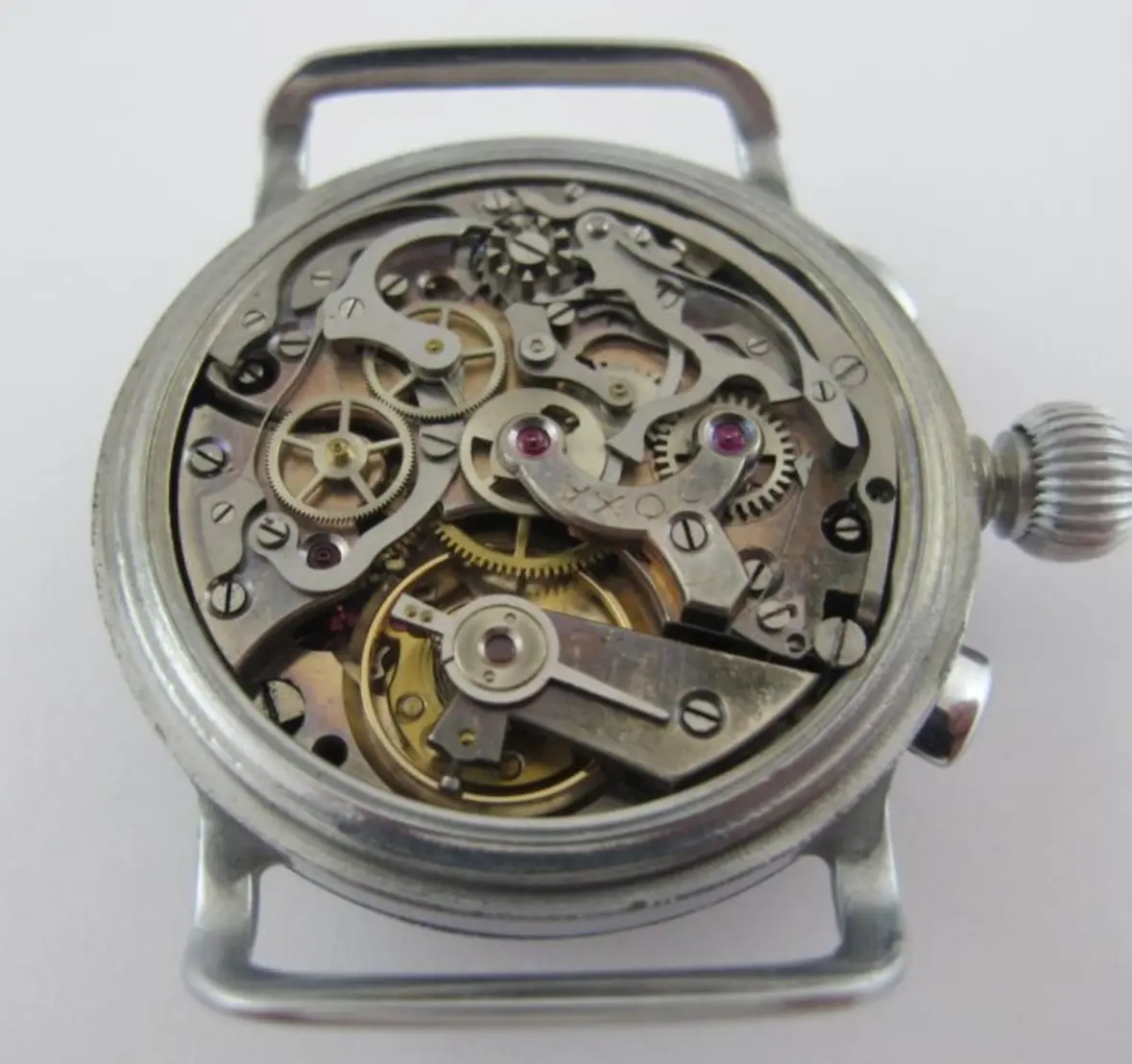

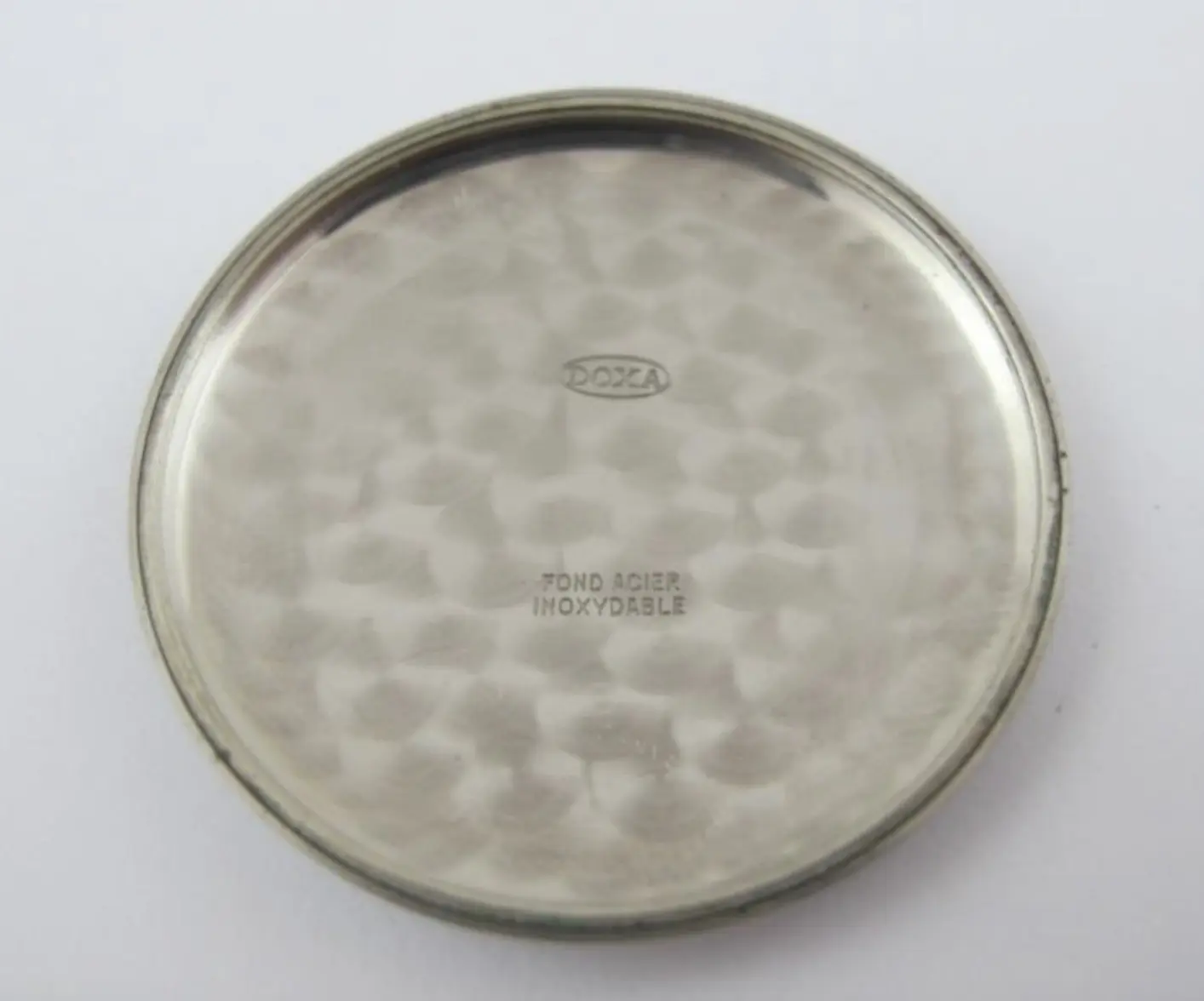
This above example is from the website of what appears to be a specialist in antique watches from Czech Republic. Many well known military and pilots watches listed and archived. Leads me to think it’s original. Note the brushed pattern on inner case back.
2)
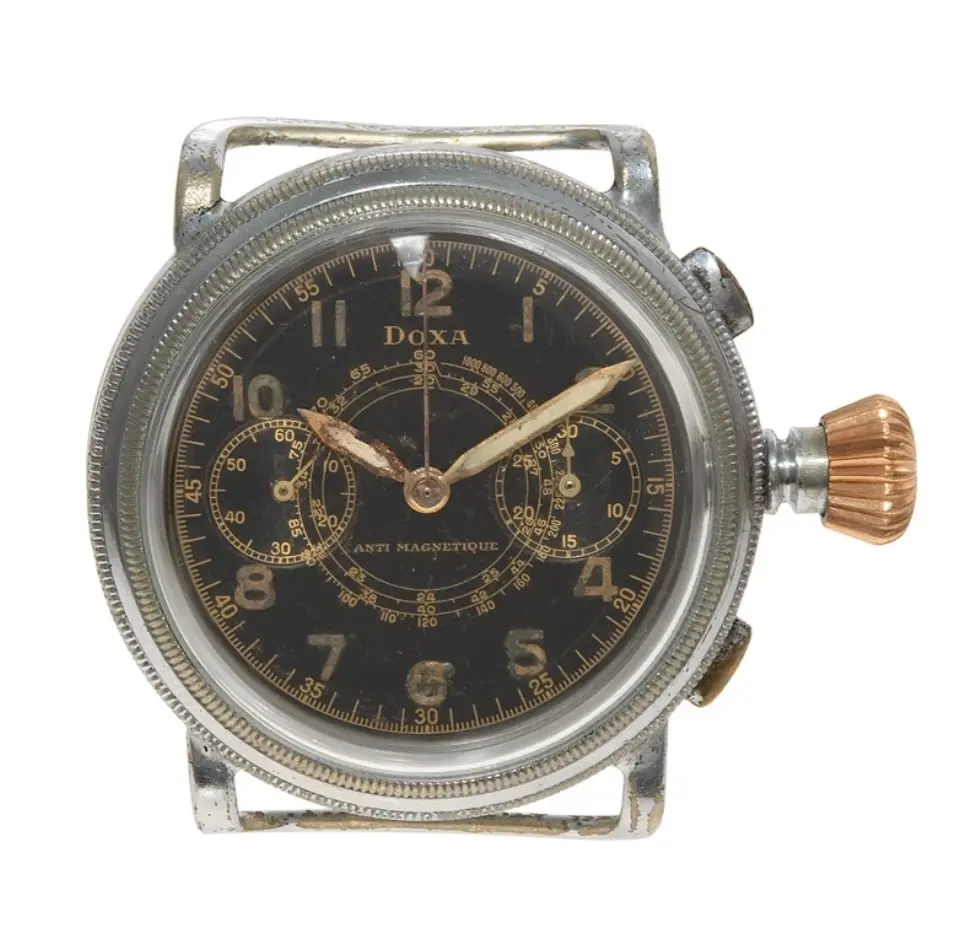

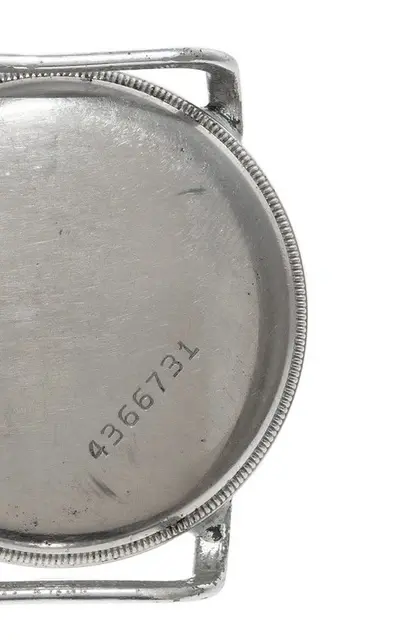 Another which excepting the crown perhaps, could be considered legitimate looking, similar to first example.
3)
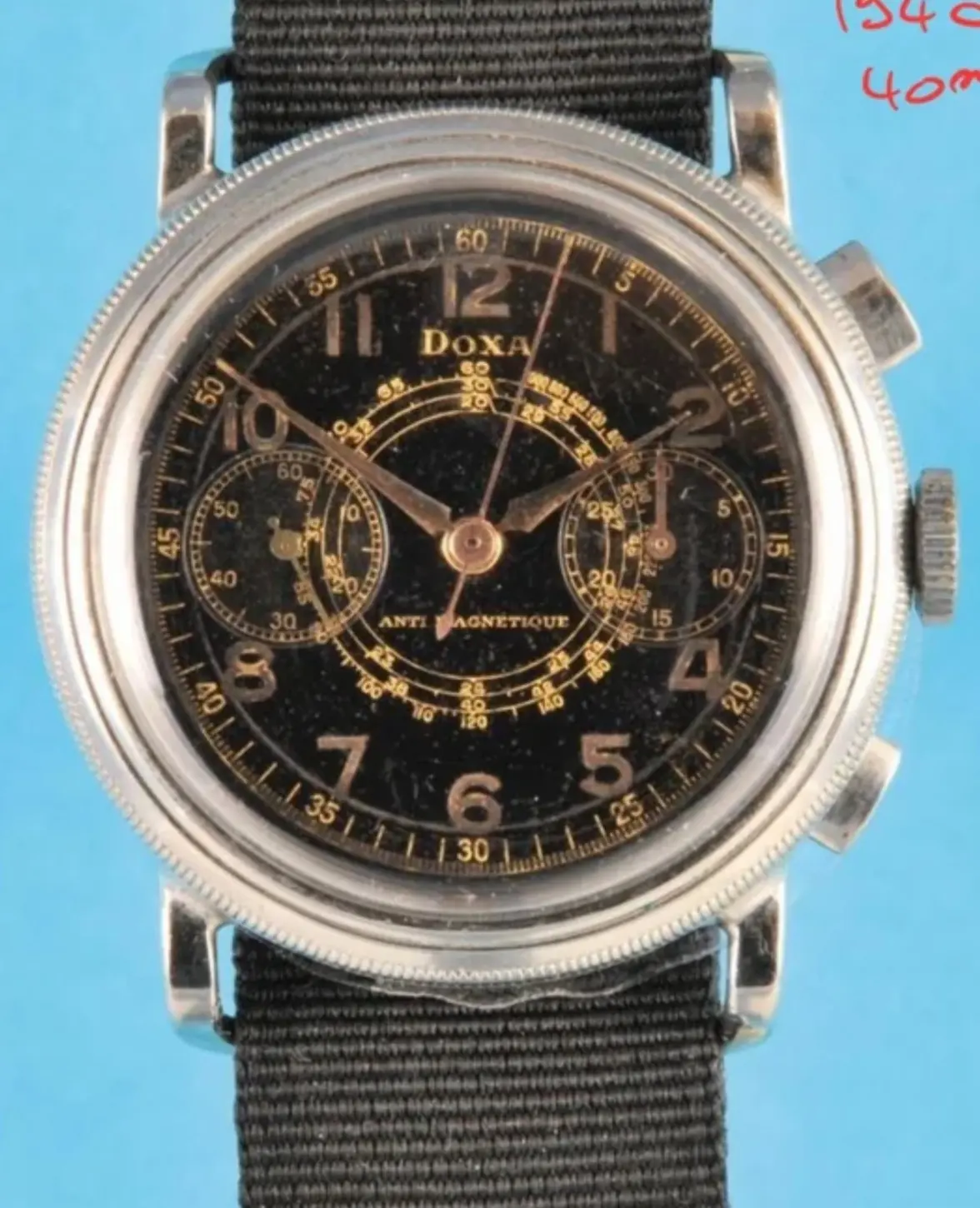
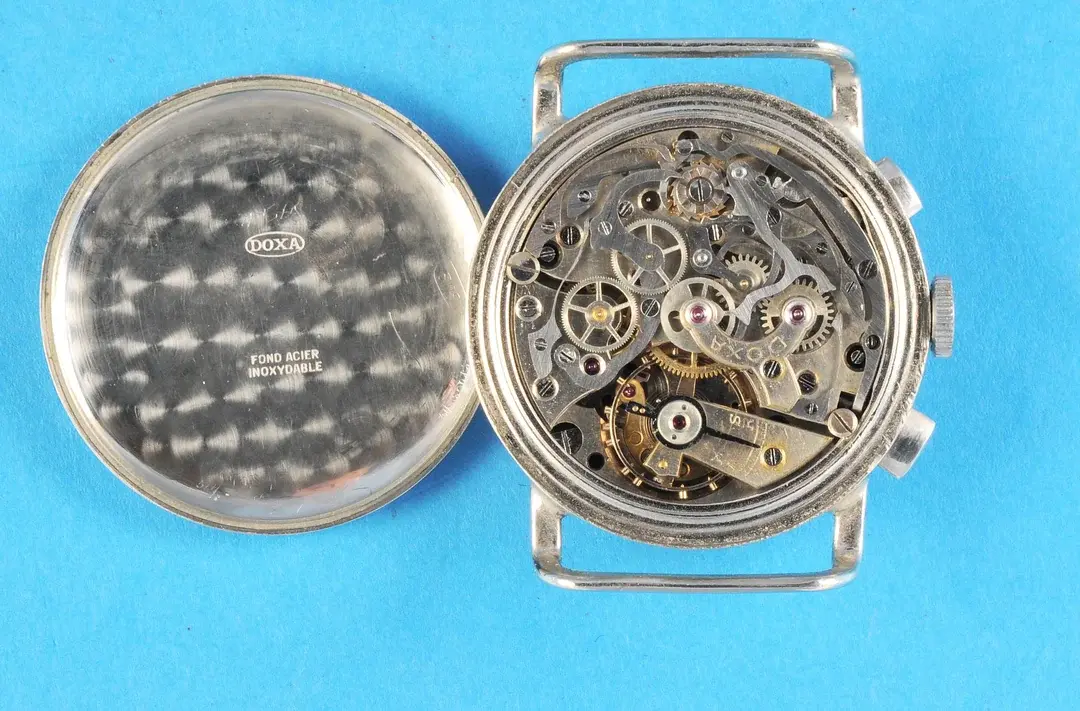
No extended crown or pointer. Despite radium numerals, this variation has copper looking hands as opposed to the radium filled pencil hands of the first two examples. There is also no -inner case engraving serial number. Perhaps it was on the outer case back, but I cannot find a picture. Also note the 'Doxa' stamp on inner case back. Regarding lack of protruding crown - could this be a separate variation of example 1) and 2) or just a later personal customisation?
4)
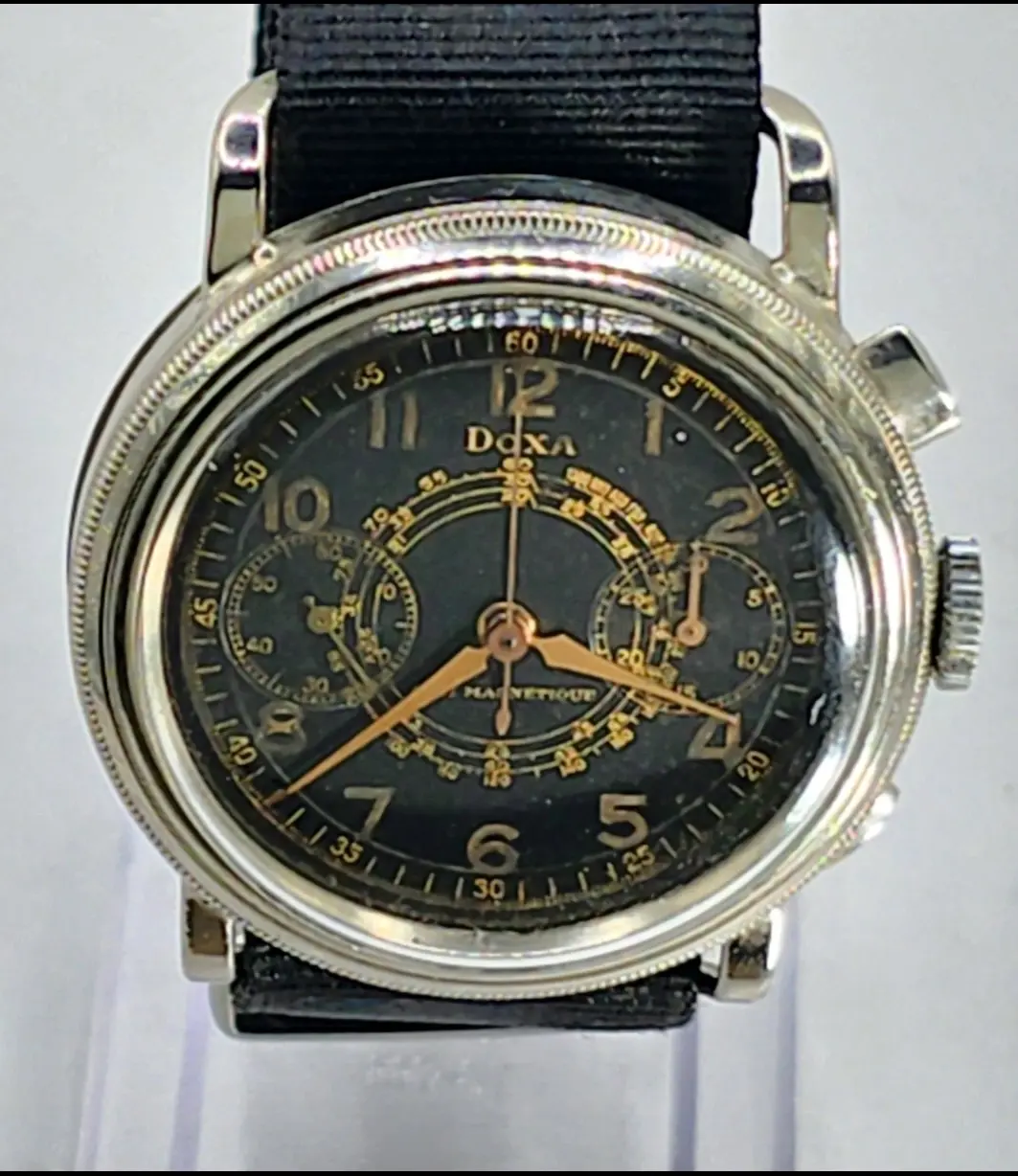
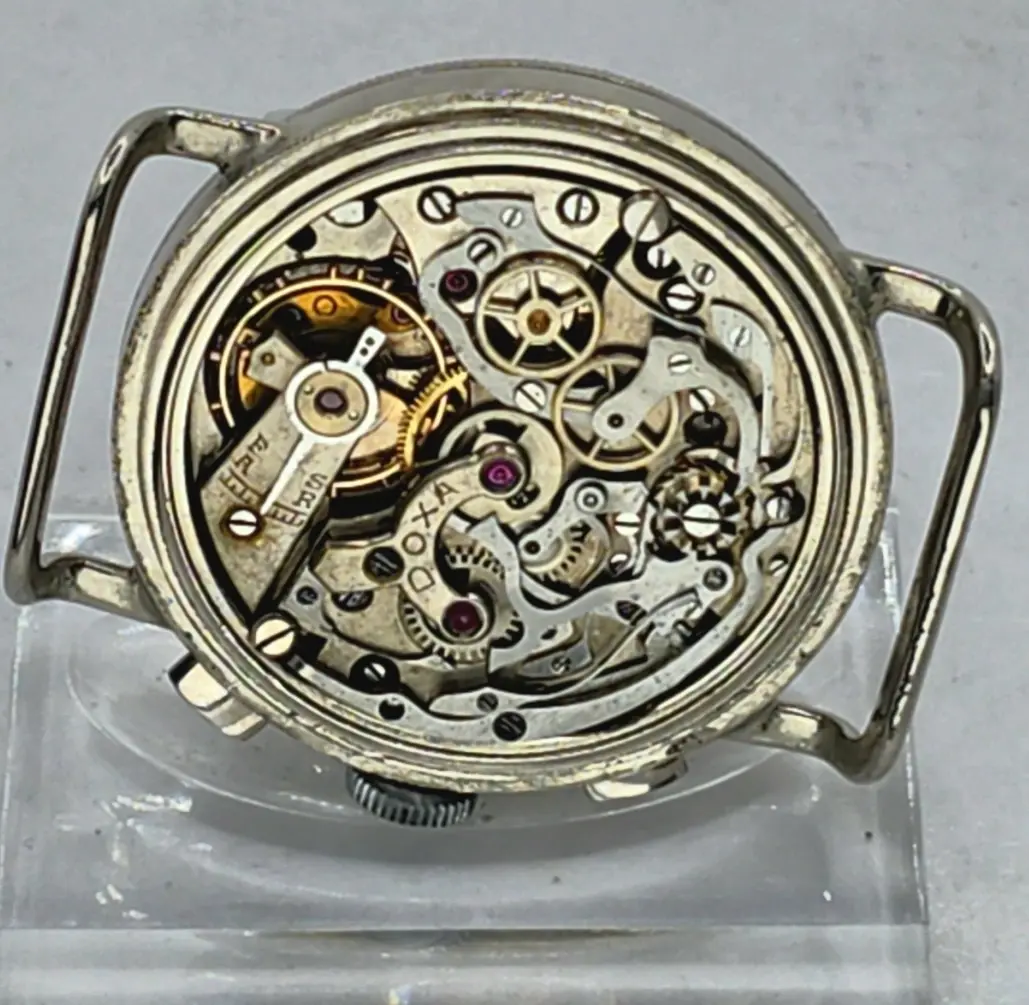
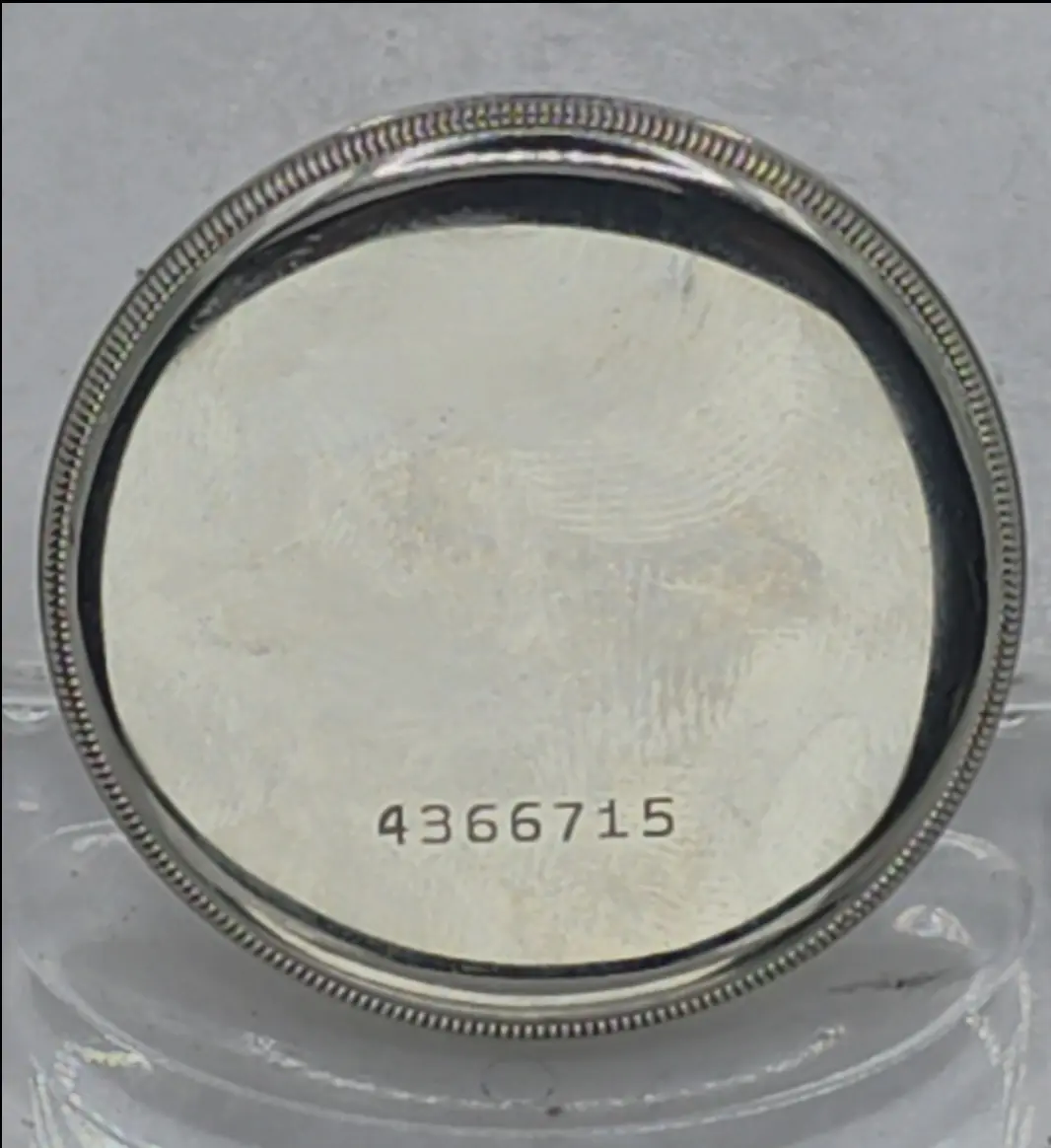
This one for sale now. Same configuration as one above. No protruding crown. Solid, Copper looking hands with no space to accommodate luminance.
No 'Doxa' stamp and an entirely different inner case back texture of the previous example 3) - the example it appears most similar to. Despite this, the Inner case back serial number type face matches those seen on outer case back of example 1) and 2).
It is possibly worth nothing that the inner case back number: '4366715' - is only 16 units later than '4366731' - example 2) - despite being stamped on the inner case back rather than more frequent outer case back stamps. Is this significant? No idea.
5)
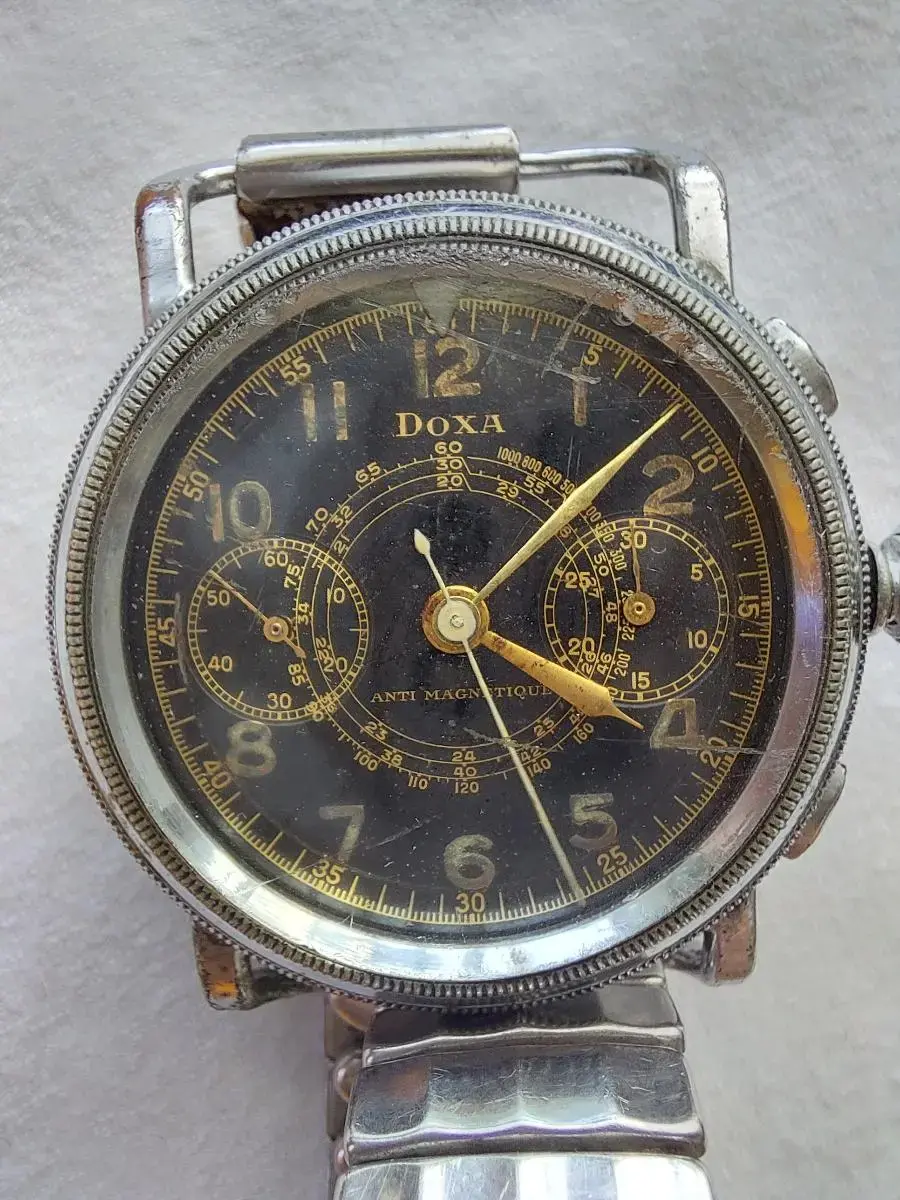
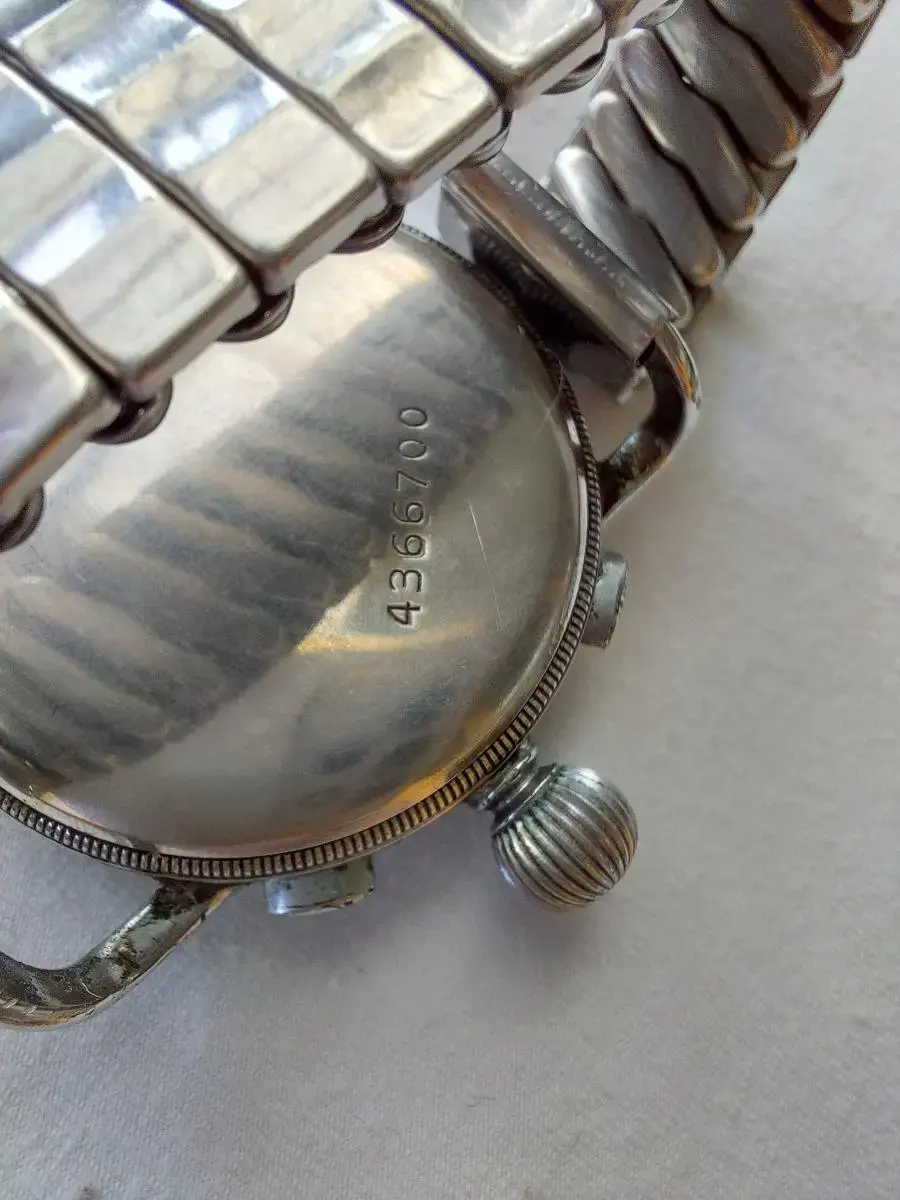
Another that sold. Case Back serial. '4366700' - only 15 units below example 4). Configuration in keeping with 1) and 2) but has a round Onion crown like example 1) and forthcoming example 6) - seeming to confirm example 2) had crown replaced. Unlike the other two examples 1) and 2) that shared the majority these attributes, the hands found here are not pencil type radium hands, but the copper looking type - though different from the other copper examples seen in 3) and 4).
Could mean the copper hand / big crown and pointer trend can no longer be relied on. Does it mean the pencil hands just got replaced at some point?
Does it mean example 3) and 4) used to have pencil hands with radium? If so, what are the chances that they would both be replaced to the same style of copper hands?
6)
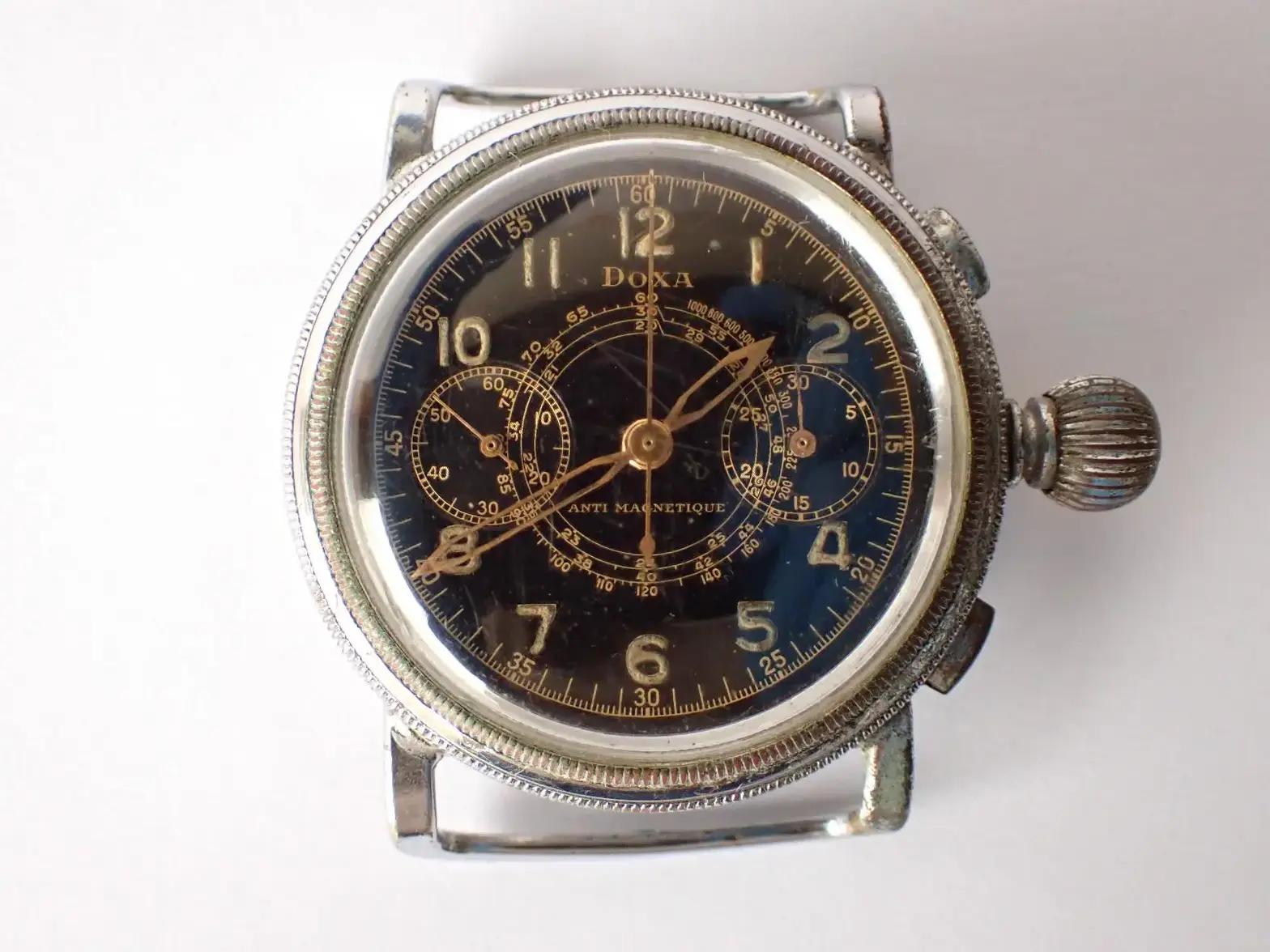
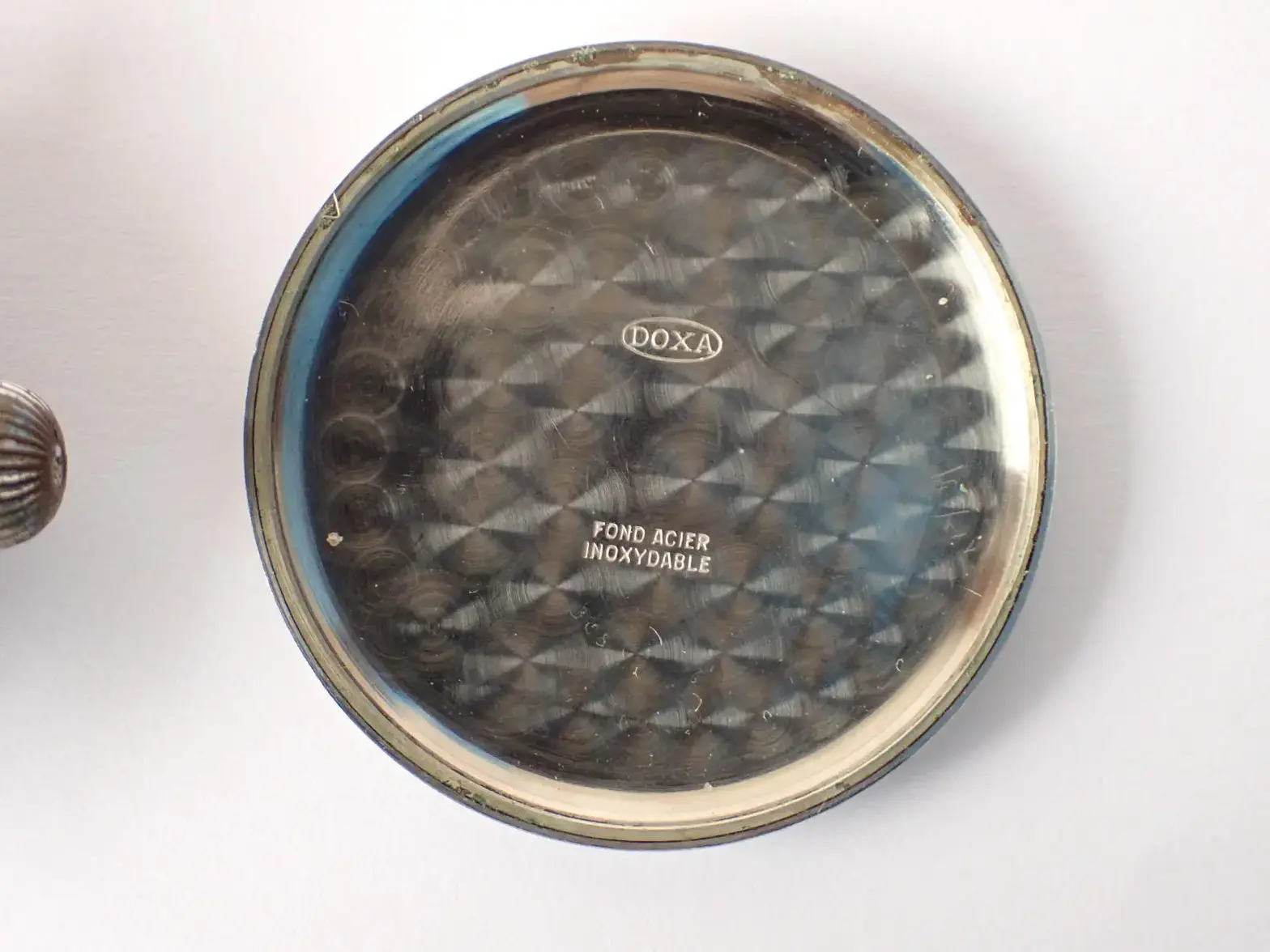
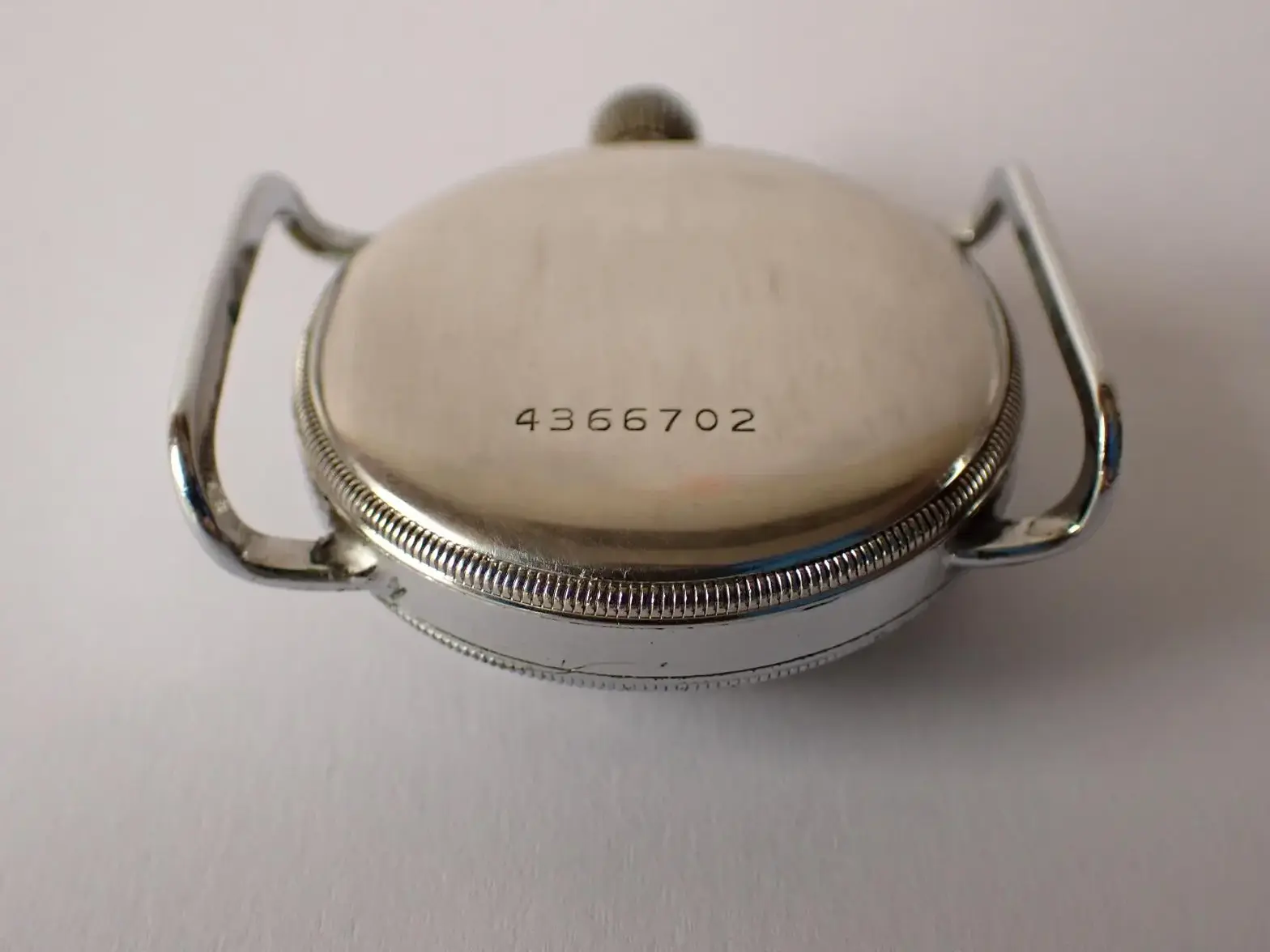
Another of first configuration type. Same inner case back texture, Doxa stamp. Serial on outer case back '4366702' is one unit proceeding example number 1) - '4366701'.
6)
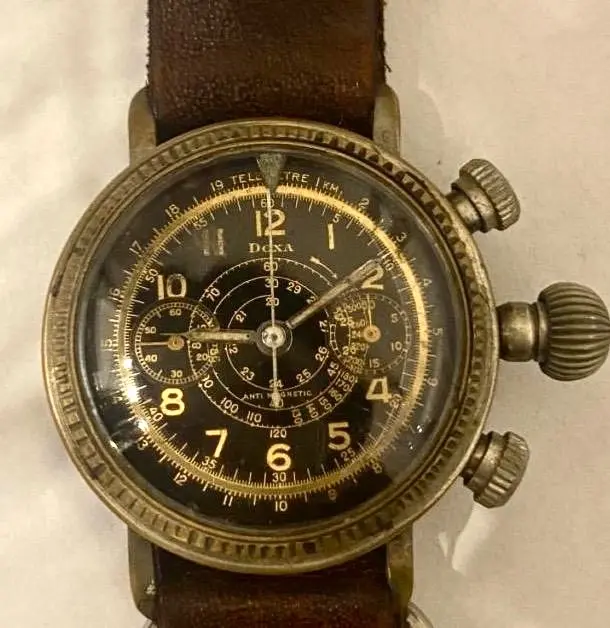
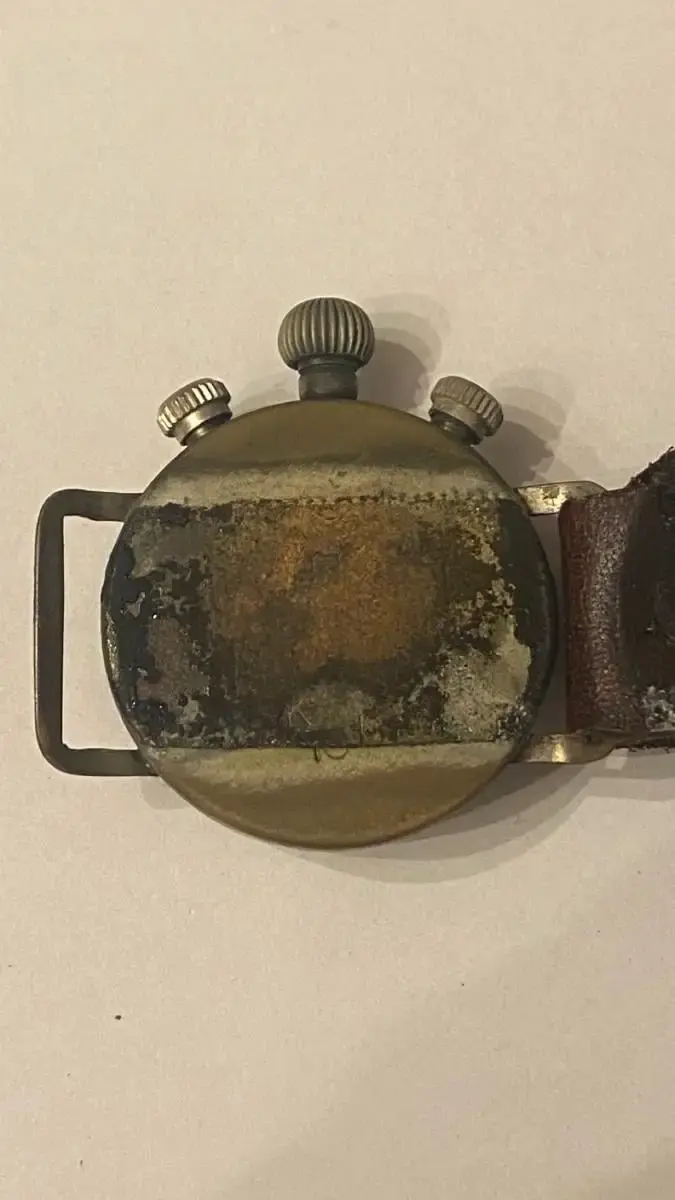
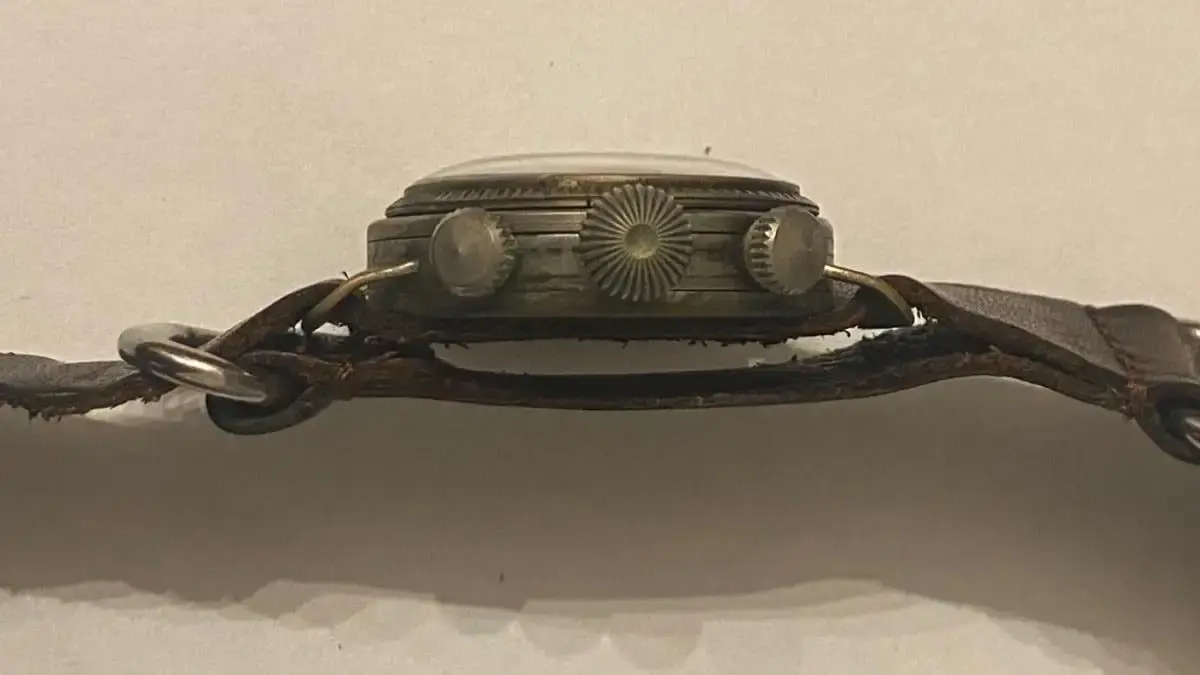
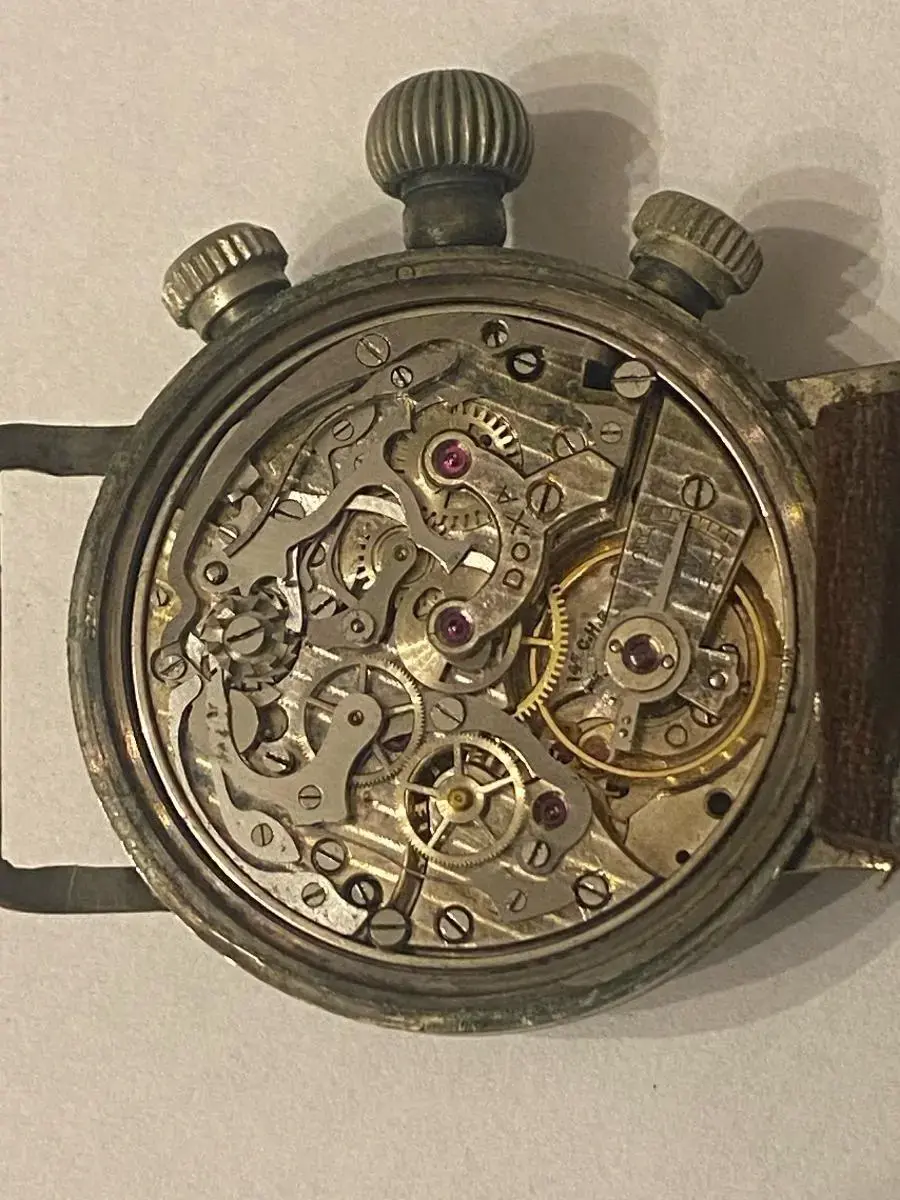
This one blew me away at first. Only picture of one I have seen. Dial differs from all others. Some people I’ve asked say it’s most probably reassembled from parts, or a custom job - they cite the lack of machine uniformity of the rotating bezel’s coin texture. Others say it’s a ‘very rare and hard to find model’. The pushers are the same kind of pushers I’ve seen on lots of ww2 chronographs that have had their pushers replaced with incorrect ones for the precise model. The case seems different from the others - bulkier. Who knows?
Does anyone know anything about these Doxa chronographs? The different variations? How they came about? Are 3) and 4) made by in full by Doxa? Who for? Doesn’t seem to be much information available.
I have seen them, primarily on Czech internet based selling platforms, but elsewhere also.
There seem to be many variations. I can’t tell if they are legitimate Doxa creations or are reassembled from parts after or during the war. Some people I have heard from say that re-casing was frequent in Eastern Europe after the WW2. Some examples I have seen pictures of, seem to be from Germany.
The lugs and case shape design seem to share much in common with German WW2 pilot watches (usually with 1928 pattern dials). Fixed lugs - usually around the 20mm mark and cases usually around 40-41mm. (Similar to the Zenith ‘special’ pilots watches, said to be used by the fledgling Luftwaffe, and those made by Helvetia, Roamer, Omega, Sita, Lanco etc)
What I don’t understand is the variation and progression, and what the hallmarks of a watch made from reassembled parts are in this case.
Here is an example of the standard pilot Doxa’s, typical of the late 30s - 40s, which nobody seems to question.
However, the chronographs I’m talking about are all over the place.
1)
This above example is from the website of what appears to be a specialist in antique watches from Czech Republic. Many well known military and pilots watches listed and archived. Leads me to think it’s original. Note the brushed pattern on inner case back.
2)
3)
No extended crown or pointer. Despite radium numerals, this variation has copper looking hands as opposed to the radium filled pencil hands of the first two examples. There is also no -inner case engraving serial number. Perhaps it was on the outer case back, but I cannot find a picture. Also note the 'Doxa' stamp on inner case back. Regarding lack of protruding crown - could this be a separate variation of example 1) and 2) or just a later personal customisation?
4)
This one for sale now. Same configuration as one above. No protruding crown. Solid, Copper looking hands with no space to accommodate luminance.
No 'Doxa' stamp and an entirely different inner case back texture of the previous example 3) - the example it appears most similar to. Despite this, the Inner case back serial number type face matches those seen on outer case back of example 1) and 2).
It is possibly worth nothing that the inner case back number: '4366715' - is only 16 units later than '4366731' - example 2) - despite being stamped on the inner case back rather than more frequent outer case back stamps. Is this significant? No idea.
5)
Another that sold. Case Back serial. '4366700' - only 15 units below example 4). Configuration in keeping with 1) and 2) but has a round Onion crown like example 1) and forthcoming example 6) - seeming to confirm example 2) had crown replaced. Unlike the other two examples 1) and 2) that shared the majority these attributes, the hands found here are not pencil type radium hands, but the copper looking type - though different from the other copper examples seen in 3) and 4).
Could mean the copper hand / big crown and pointer trend can no longer be relied on. Does it mean the pencil hands just got replaced at some point?
Does it mean example 3) and 4) used to have pencil hands with radium? If so, what are the chances that they would both be replaced to the same style of copper hands?
6)
Another of first configuration type. Same inner case back texture, Doxa stamp. Serial on outer case back '4366702' is one unit proceeding example number 1) - '4366701'.
6)
This one blew me away at first. Only picture of one I have seen. Dial differs from all others. Some people I’ve asked say it’s most probably reassembled from parts, or a custom job - they cite the lack of machine uniformity of the rotating bezel’s coin texture. Others say it’s a ‘very rare and hard to find model’. The pushers are the same kind of pushers I’ve seen on lots of ww2 chronographs that have had their pushers replaced with incorrect ones for the precise model. The case seems different from the others - bulkier. Who knows?
Does anyone know anything about these Doxa chronographs? The different variations? How they came about? Are 3) and 4) made by in full by Doxa? Who for? Doesn’t seem to be much information available.
Edited: