Deck watch identification

Posts
4,941
Likes
49,996
Was wanting to know a little about these if any one knows much about them.

 
Posts
15,638
Likes
46,656
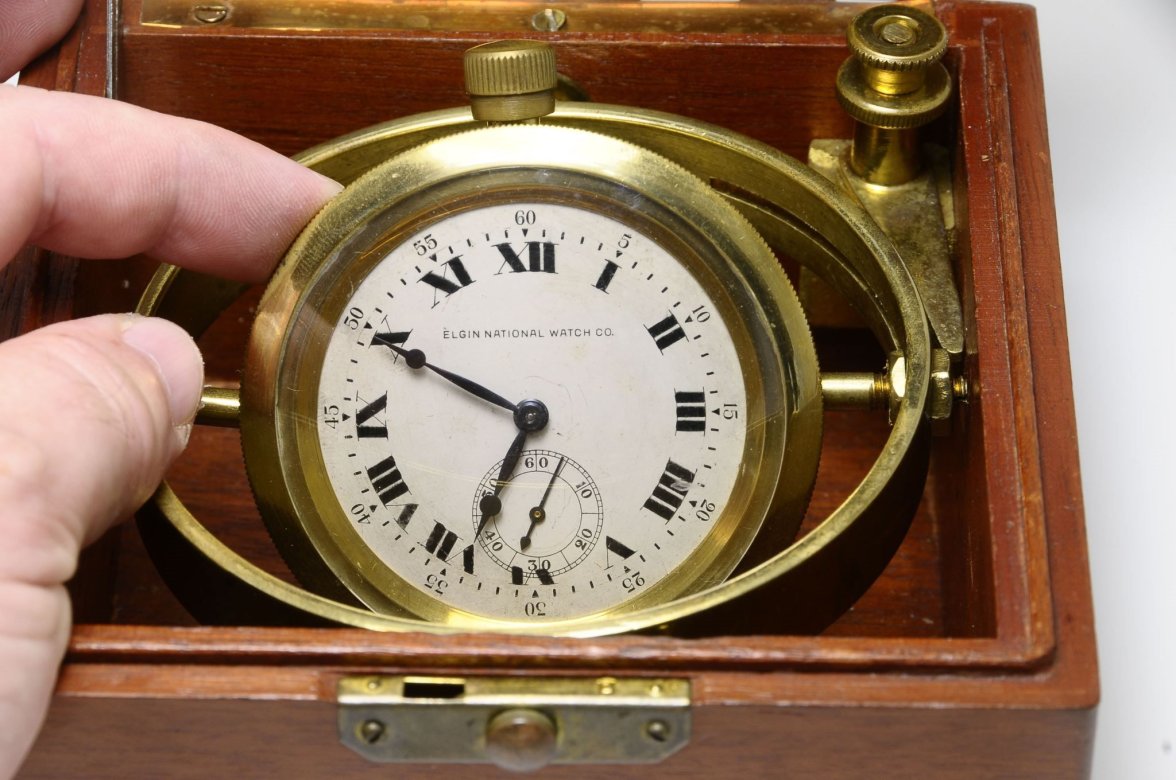
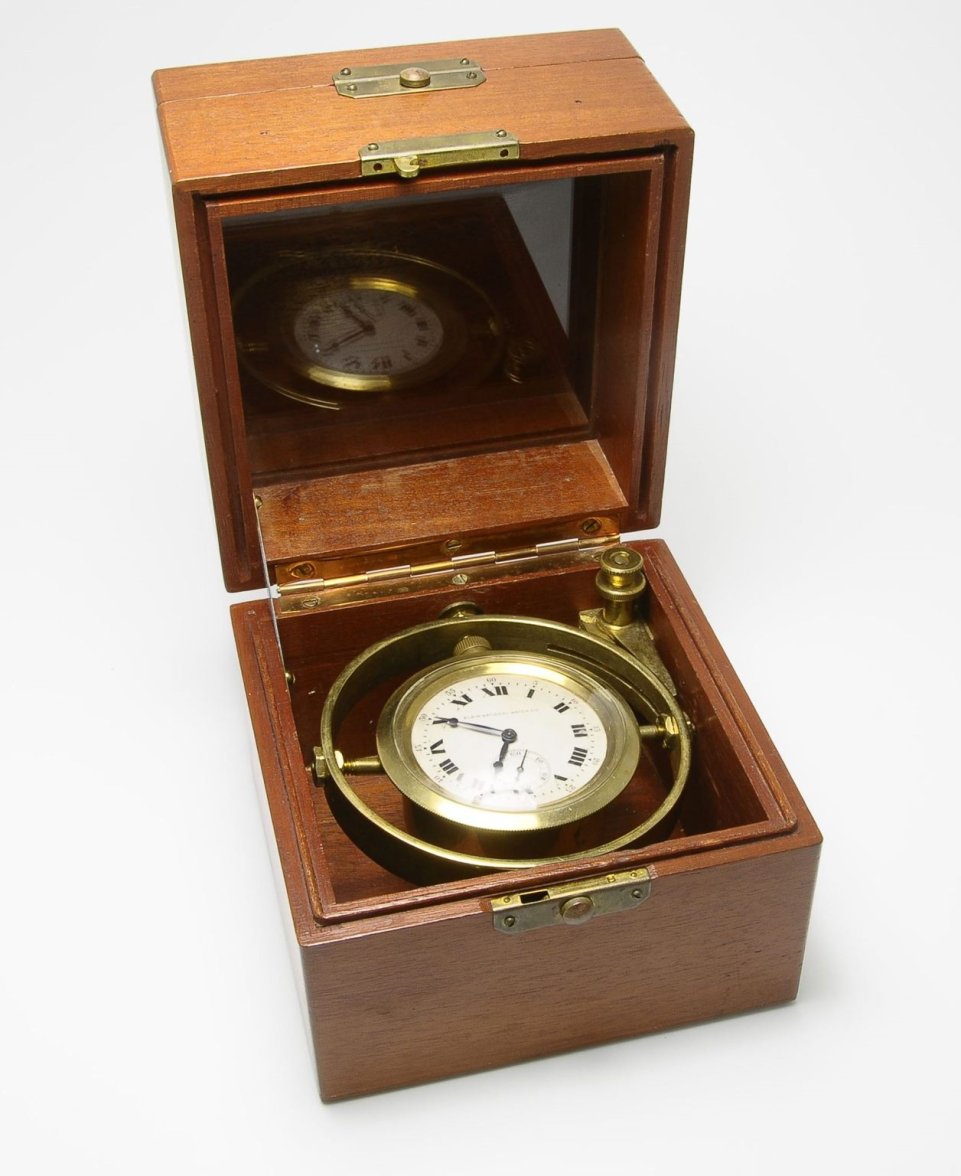
In his book on the marine chronometer, Marvin Whitney reports that Elgin used their grade 367, 18-size, 3/4 plate, lever set, 21-jewel Father Time movement in this model. Some had a micrometer regulator on them, while others were free sprung. The Father Time movement was a railroad standard movement. Your chronometer is often called a “torpedo boat” piece. It has also been called “mine sweeper” model. I have read that such chronometers were also used by coast guard, merchant marine, and navy ships which were always escorted by man-o-war ships. Ships like oilers, hospital ships, freighters, and such like.
 
Posts
4,941
Likes
49,996
In his book on the marine chronometer, Marvin Whitney reports that Elgin used their grade 367, 18-size, 3/4 plate, lever set, 21-jewel Father Time movement in this model. Some had a micrometer regulator on them, while others were free sprung. The Father Time movement was a railroad standard movement. Your chronometer is often called a “torpedo boat” piece. It has also been called “mine sweeper” model. I have read that such chronometers were also used by coast guard, merchant marine, and navy ships which were always escorted by man-o-war ships. Ships like oilers, hospital ships, freighters, and such like.

Thanks for that.
 
Posts
4,941
Likes
49,996
Seller has provided more info, providing the manufacture date as 1891 with the serial number also.
 
Posts
15,638
Likes
46,656
The seller says 1891? I’d like to have the serial number of the mechanism (movement) for another look at that date. No other serial number, on the box, or the housing of the movement would be an assist in determining the date. Elgin was not in the marine chronometer business in 1891, to the best of my knowledge. The movement that was reportedly used in the Elgin marine chronometer was the 18-size, 21-jewel Father Time movement, and those were likely out of production by the mid to late 1920s. So this time frame seems more likely for the subject chronometer. Hamilton was producing a similar chronometer at about that time, so chances are, Elgin could have been as well.
 
Posts
4,941
Likes
49,996
Movement number is
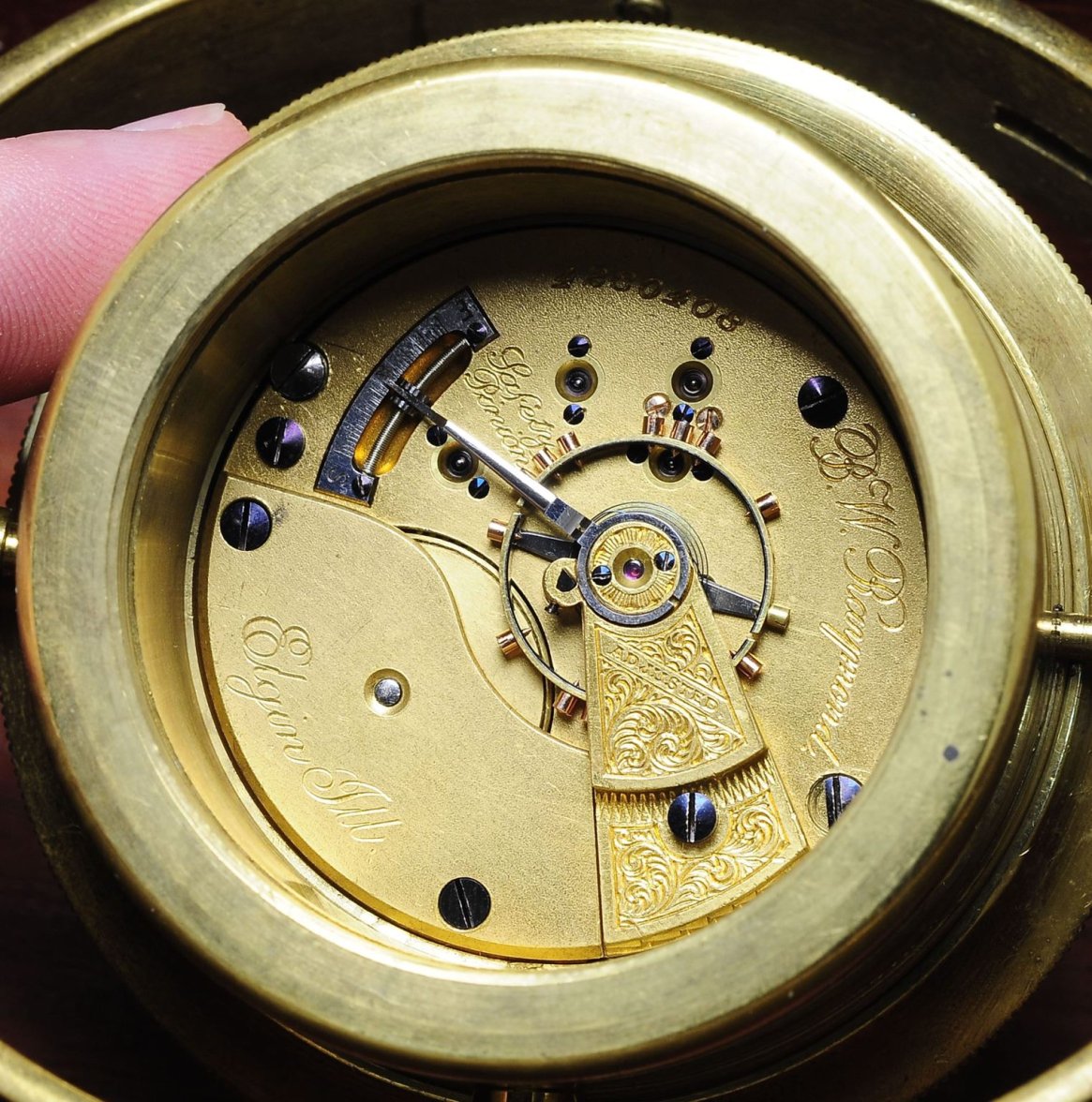
4280408

Looking at the photos I had expected it to be a WW1 vintage.
Edited:
 
Posts
15,638
Likes
46,656
According to my reference, that serial number indicates a class 77 grade movement which is defined as 18-size, full plate, pendant set, 15 to 17-jewels. The B W Raymond typically is 19-jewels or more, and lever set. I still contend that Elgin was probably not in the marine chronometer business in 1891. The movement may be from 1891, but the rest of the chronometer is newer. A New York firm (Roth) was involved in upgrading and converting non chronometer watches to chronometer specs, late in the 1930s and early 1940s. The U S military wasn’t confident they could continue to rely on Swiss makers for chronometers. So Roth acquired high grade watches from private sources for upgrading. This could be one of the ones that was upgraded from pocket watch to chronometer. But, BUT, the
details don’t fit a B W Raymond grade description. Peculiar. My source is an official Elgin publication.
 
Posts
4,941
Likes
49,996
Interesting, further marking apparently on the movement are.
The movement is signed BW Raymond, Elgin ILL also this, Safety Pinion and Adjusted.

Also
high grade American keyless wind, 15 jewel, gilt full plate movement with a lever escapement and screw micrometer.
 
Posts
15,638
Likes
46,656
Interesting, further marking apparently on the movement are.
The movement is signed BW Raymond, Elgin ILL also this, Safety Pinion and Adjusted.

Also
high grade American keyless wind, 15 jewel, gilt full plate movement with a lever escapement and screw micrometer.

I wonder if you can show us a picture of the movement in the case. The more I think about this item, the more confused I get. Where did you get the “high grade American keyless wind”..…….etc.? That is obviously not on the movement. Whitney says that it was the Father Time movement from Elgin, that was used in these Elgin chronometers. Perhaps they did use B W Raymond movements as well. Please show a picture of the movement.
 
Posts
4,941
Likes
49,996
The seller hasn't unfortunately provided a picture of the movement but I can always ask him to see if he can do.
 
Posts
15,638
Likes
46,656
Exactly as described. I am certain this is one of those re-purposed movements that was privately owned, government acquired, upgraded, serviced, and re-cased in a gimbal, for use as a chronometer. This at a time when the US was not certain of a continued supply of Swiss chronometer grade watches, and before the US watchmakers had geared up to produce chronometers in sufficient quantity to fulfill the need for such instruments. I suspect this Elgin was converted from a pocket watch to a gimballed chronometer, sometime in the1930s or early 1940s. I am certain it didn’t leave Elgin this way.

To quote Marvin Whitney in his book The Ship’s Chronometer, page 199:

“Many 18-size watch movements were bought up and fitted in brass gimbals, (and are) easily distinguishable as they don’t have a winding indicator.”

First of these I have seen. Appears to be in decent shape, but there appears to be damage to the brass stud at the 9:00 position. It appears to be mis-aligned, or bent.
 
Posts
4,941
Likes
49,996
Interesting time frame, I had thought that this was most likely a 1st WW or civilian fleet chronometer but 30's and 40's makes it an interesting snapshot of the way the world was back in the the early build up to the 2nd WW.

I am guessing that this would put a lower value on it than say a 1st WW grade 367.
 
Posts
15,638
Likes
46,656
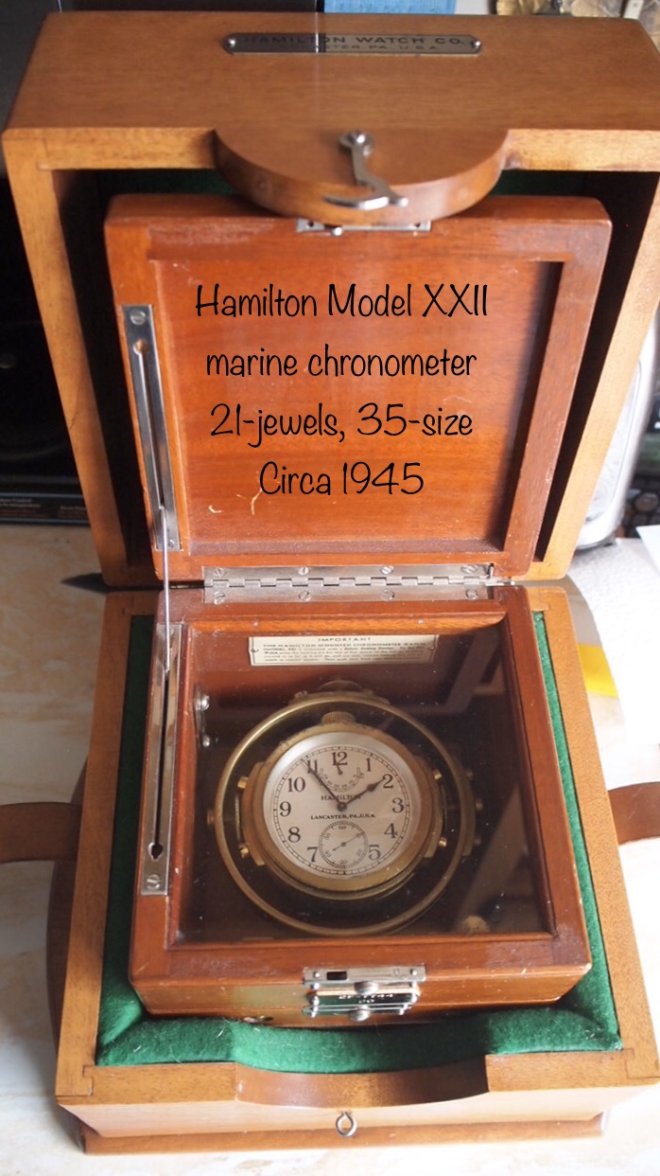
Part of the reason I feel that this watch is a “conversion”, is because of the cabinet. It is virtually identical to the cabinet used on a Hamilton model 22 torpedo boat chronometer such the one on my own model 22. These cabinets (I have read) were produced by the Heintzman Piano Company in New York. Hamilton began using these cabinets with the introduction of the model 21 and 22 chronometers circa 1940 to 1942.