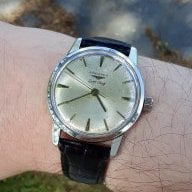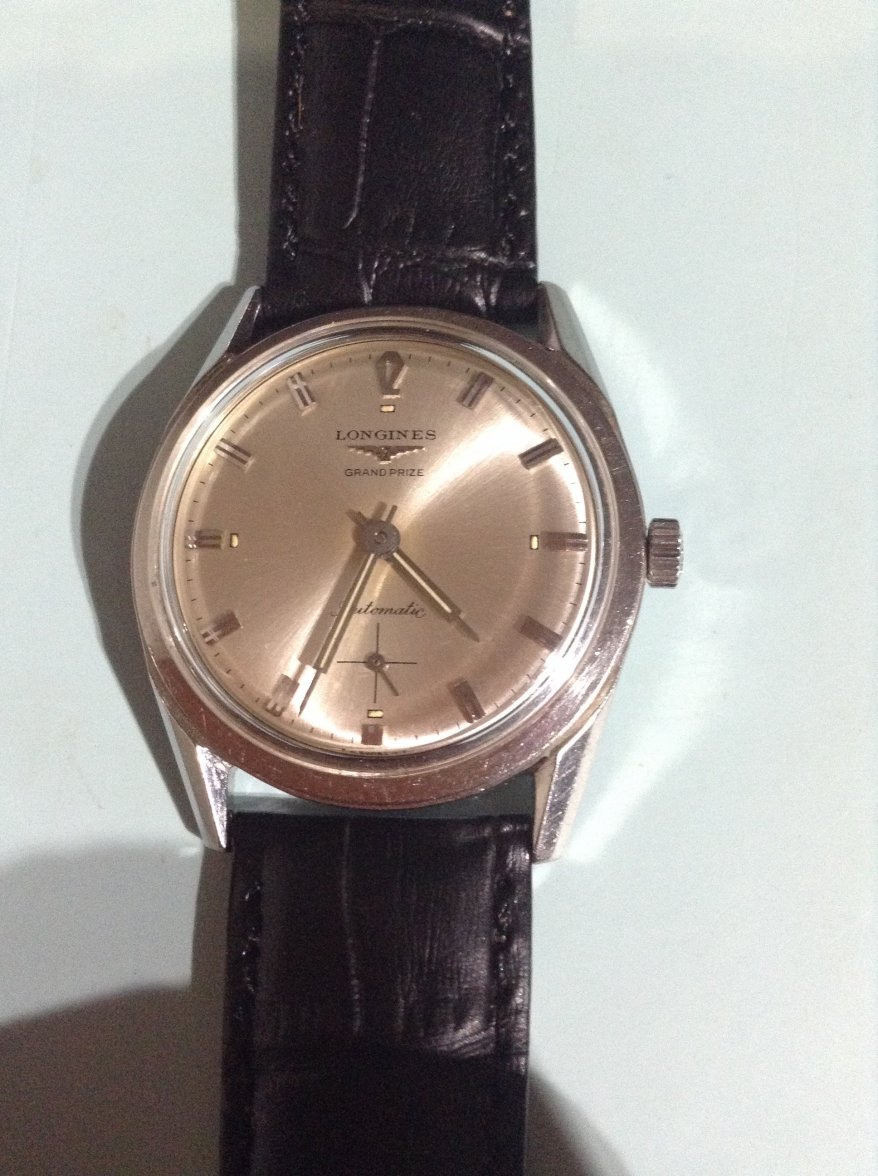
Can Anyone Help Me Identify This Longines?

Posts
101
Likes
64
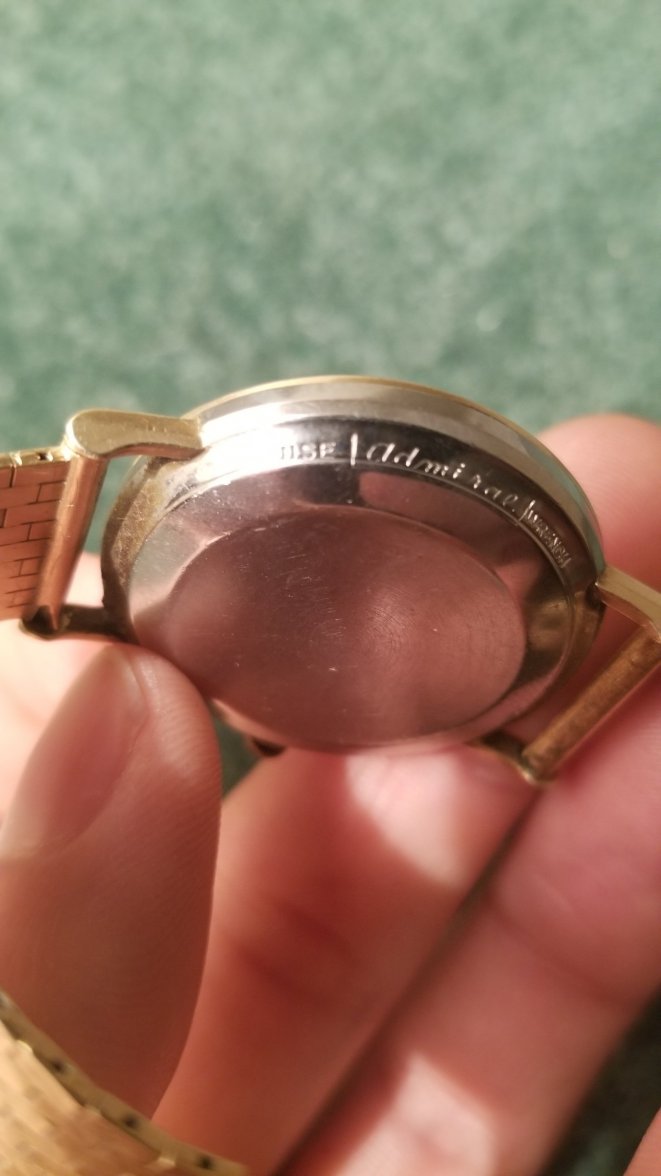
Hello everyone, my father just gave me a bunch of watches that were my grandfathers. Among them was this Longines. I wanted to ask if anyone can tell me anything about it or if it is even real. I wish I could provide more information but he doesn't really know anything about it. Thank you.
Edited:

 
Posts
17,942
Likes
37,520
.........

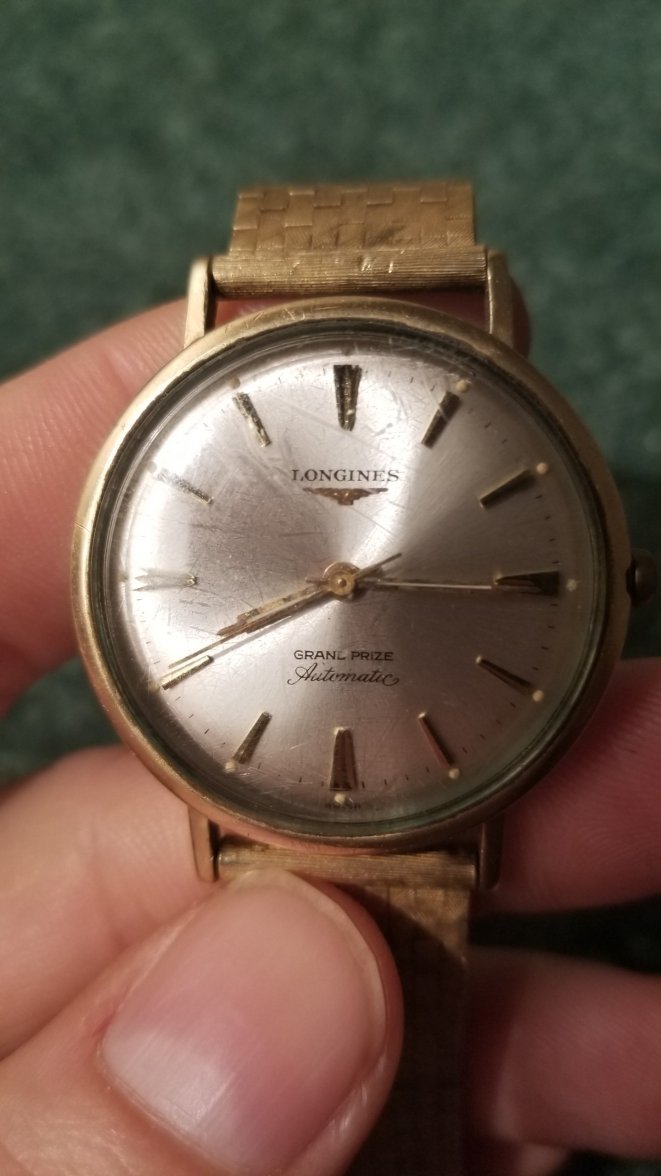
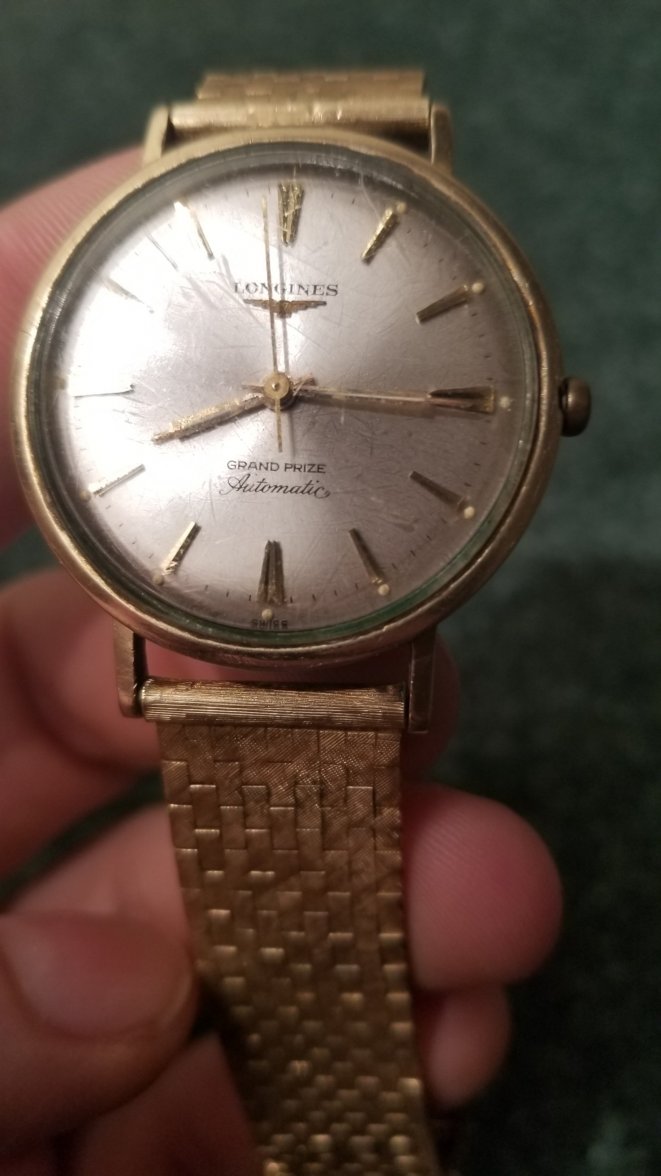
EDIT: I am having trouble adding the pictures, they wont add for some reason. Is there a size limit?


What size are they?
 
Posts
17,942
Likes
37,520
👍
Just re-size to 1024x768 resolution or thereabouts.
 
Posts
13,483
Likes
31,778
The Grand Prize was a mid/lower tier watch, mid 1960s.

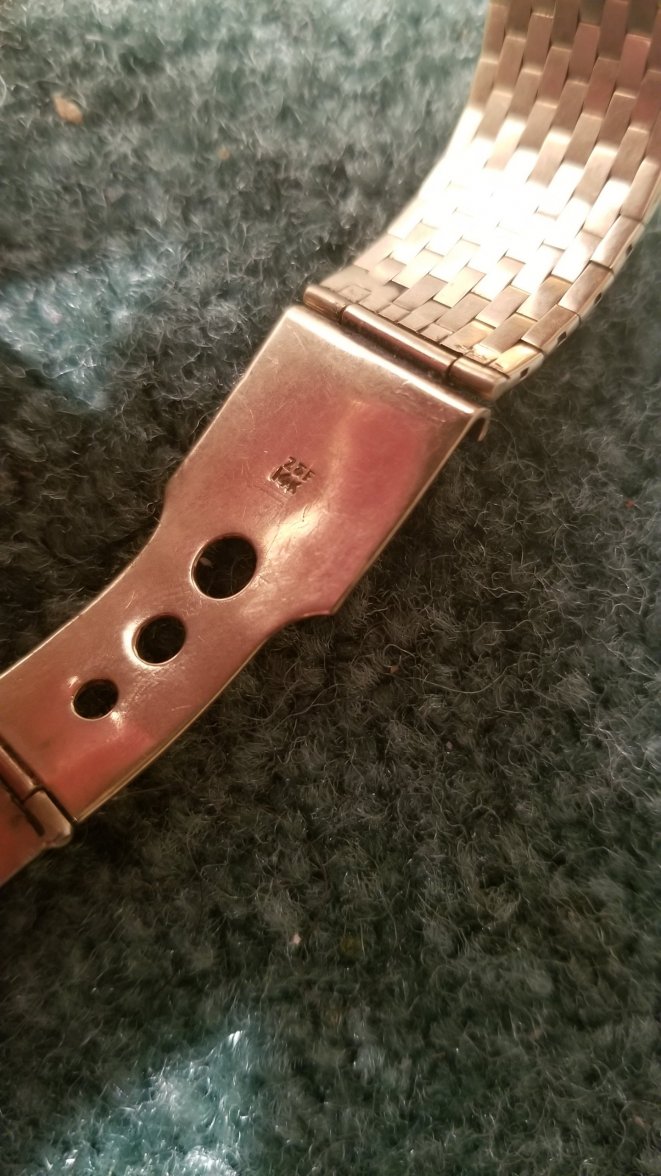
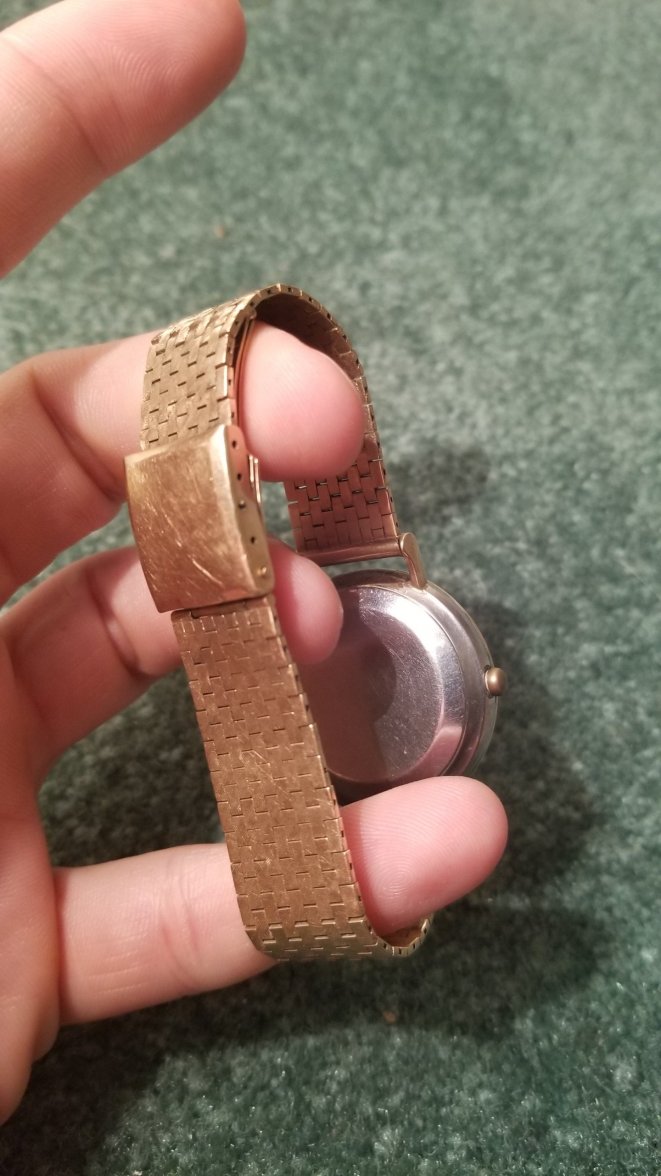
Yours looks like a US market watch with an aftermarket 14K gold bracelet.

Flagship/Conquest

Admiral/Grand Prize
 
Posts
101
Likes
64
The Grand Prize was a mid/lower tier watch, mid 1960s.

Yours looks like a US market watch with an aftermarket 14K gold bracelet.

Flagship/Conquest

Admiral/Grand Prize

Thank you I appreciate that. Would you happen to know if it is sapphire crystal or possibly plexiglass? I am curious how expensive it would be to replace the glass.

Also what strap would you replace this one with? What strap would it of came with? The one pictured is too small for my wrist so I might need to get another one because I would like to keep it as it was my grandfathers.
Edited:
 
Posts
346
Likes
288
That's plexiglass; sapphire does not scratch, it shatters. Replacing a plexi is often unnecessary as it can be easily polished. A leather strap would be most appropriate.

Despite comments above saying it's a mid to lower tier watch, you have to remember that at the time Longines was more high end than both Omega and Rolex. The movement in that watch (either a 340 or 342) is particularly interesting from a technical standpoint.
 
Posts
106
Likes
133
I agree with everything TropicConnie said. A leather strap would be better because the watch is also gold filled and a metal bracelet will eventually wear down and damage the lugs on a case like that. The crown either looks either very worn or is a replacement, but could probably stand to be replaced anyway.

Apart from the name, there was not much different in the higher-end "Conquest" or "Flagship" lines compared with your "Grand Prize." It has an "Admiral" case, which required a special type of wrench to open at the time it was made (I think other tools can be used by a watchmaker now). It's a one-piece, front-loading case that was designed to have some water resistance.
 
Posts
346
Likes
288
Apart from the name, there was not much different in the higher-end "Conquest" or "Flagship" lines compared with your "Grand Prize." It has an "Admiral" case, which required a special type of wrench to open at the time it was made (I think other tools can be used by a watchmaker now). It's a one-piece, front-loading case that was designed to have some water resistance.

Indeed, most Longines watches shared calibres between families, which was different from, say, Omega's policy of keeping the first class chronometer movements (with a mention on the certificate for "especially good results") for Constellations, and second class chronometer movements for Seamaster chronometers (pass but without special mention).

Even though Longines shared movements between families, very rough equivalents between Longines watches and their competition can be made:
Longines Flagship = Omega 30 mm = Rolex Oyster Precision
Longines Flagship Automatic/Conquest = Omega Constellation = Rolex Datejust
Longines Admiral = Omega Seamaster = Rolex Oyster Perpetual
Grand Prize = Omega DeVille = Rolex Oyster Perpetual

Note there's a lot of overlap so the guide is best taken with a large handful of salt.
 
Posts
106
Likes
133
Indeed, most Longines watches shared calibres between families, which was different from, say, Omega's policy of keeping the first class chronometer movements (with a mention on the certificate for "especially good results") for Constellations, and second class chronometer movements for Seamaster chronometers (pass but without special mention).

Even though Longines shared movements between families, very rough equivalents between Longines watches and their competition can be made:
Longines Flagship = Omega 30 mm = Rolex Oyster Precision
Longines Flagship Automatic/Conquest = Omega Constellation = Rolex Datejust
Longines Admiral = Omega Seamaster = Rolex Oyster Perpetual
Grand Prize = Omega DeVille = Rolex Oyster Perpetual

Note there's a lot of overlap so the guide is best taken with a large handful of salt.

It is really quite perplexing to imagine how Longines came up with their hierarchy. A Longines Flagship Automatic (and I believe the later Conquests) and the Admirals of the early-mid 60s would have all had the same cal. 34x movements. I imagine that case and dial design along with materials played a role. Typically solid gold (14 or 18k) watches were reserved for Flagships and Conquests, although it seems Grand Prize watches were also available with solid gold cases. The Flagships and Conquests had elaborate casebacks with engraving or enamel medallions, although there are exceptions to that too (some had plain backs). The higher-end watches seemed to have more elaborate dials with faceted markers.

I think issue lies with the origin of the watch. Some lines were only available in certain countries or regions of the world. The "Sport Chief" watches were only imported to Sweden and possibly Norway, and I believe the "Jamboree" line of watches were also imported largely to Scandinavia. The "Silver Arrow" and "Golden Arrow" watches generally seem to have been imported to Italy. Wittnauer seemed to use model names, and often times cases that were unique to the US market. It wouldn't surprise me if "Grand Prize" was a name only used in the US, as they don't seem to appear in other foreign catalogs at that time. The "Admiral" cased watches also seem to have been largely sold in the US as well, and also produced in the US by different 3rd party makers like the Star Watch Case Co.
 
Posts
346
Likes
288
It is really quite perplexing to imagine how Longines came up with their hierarchy.

It becomes simpler if you look at them as all sharing components such as movements and sometimes cases of the same quality, and their name being more of a nod to their competition from other brands rather than a Longines brand hierarchy - Conquests competing with Constellations, Admirals competing with Seamasters, etc... A Grand Prize would be just as well made as a Flagship, just different intended markets.
 
Posts
16,863
Likes
47,901
Nothing wrong with a Grand Prize. One of the nicest sunburst dials I have. Picked up from the squirrel a few years back.


( The case is better than the photos above suggest)
 
Posts
15,482
Likes
45,856
Before we start touting this Longines model as having a movement superior to Rolex or Omega, we really need to see what is in the case.
 
Posts
106
Likes
133
It becomes simpler if you look at them as all sharing components such as movements and sometimes cases of the same quality, and their name being more of a nod to their competition from other brands rather than a Longines brand hierarchy - Conquests competing with Constellations, Admirals competing with Seamasters, etc... A Grand Prize would be just as well made as a Flagship, just different intended markets.

Yes, I would completely agree that the name of the collection or model was different depending on market it was sold in. The Grand Prize watches seemed to have been made for the US market.