- Posts
- 38
- Likes
- 19
d3adrock
·Hi, I've been reading up on speedmaster movements and movements in general focusing around the differences between the 321 and the 861/1861. So far the distinctions (that aren't cosmetic) I've been able to understand are
1. Column Wheel to Cam
2. Overcoil to Flat
3. Screwed balance wheel to Smooth (which somehow resulted in the increase in BPH from 18,000 to 21,600).
Since the column wheel to cam change has been talked about to death and from my understanding (feel free to disagree and explain why) doesn't affect the accuracy or performance in any regard aside from making it a bit more robust, I'd like to talk about the other two changes and find out if they can be considered improvements, or at least understanding the compromises in their design from one to the other.
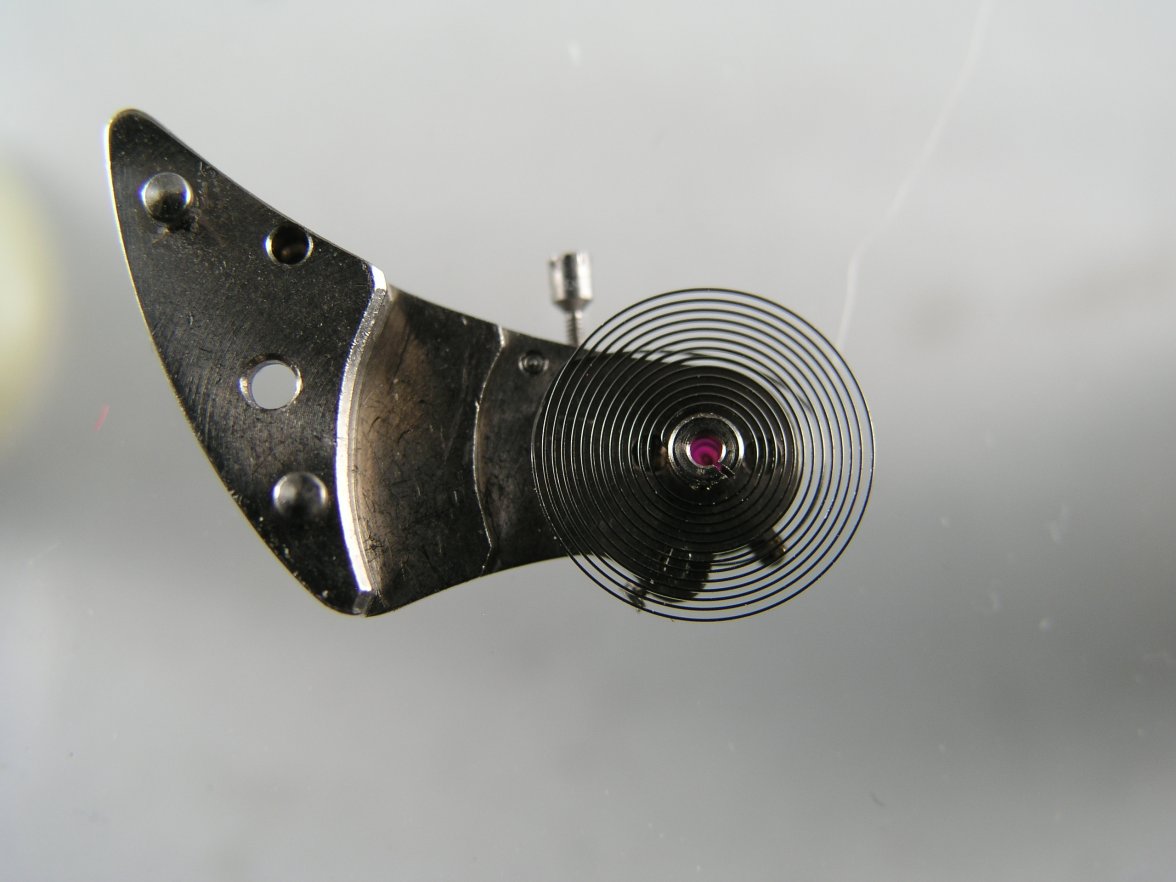
Starting with the overcoil, it is my understanding (please correct me if I'm wrong) that the purpose of the overcoil is that it forces the spring to wind and unwind symmetrically and thus distributes the weight evenly across the balance wheel making it more isochronistic (or accurate in layman terms). However, one place that I'm a bit confused is that most of the mentions that I've heard in regards to improved accuracy with the overcoil mention it in conjunction with a freesprung balance as opposed to the regulated ones found in both the 321 and 861/1861. So one question I have is does an overcoil still provide any benefit in a regulated movement like the 321/861, and if so are there any disadvantages/trade offs being made? Is it a great loss to that the 861/1861 doesn't have one?
Another question I have is along the same lines as the previous one but in regards to the screwed balance wheel vs the smooth one? Since it's regulated anyways, was there ever any point in having the screws? Or if not was there any great loss going from one to the other? Any advantages or disadvantages/trade offs to having screws vs not having screws in this movement?
And finally a question that is tangential to my previous one, how does going from screws to smooth increase the beat-rate? Is there any advantage to the slightly faster beat rate or is it just incidental? Are there any tradeoffs to the faster beat rate? I know that 6 beats per second means that the chronograph seconds hand doesn't line up with the tick marks since there are 5 tickmarks and 6 beats, as opposed to the 5 beats which I assume always lined up with the tick marks. Does that matter? Am I correct?
I'd love to get y'alls opinion about this. It may sound like nitpicking but I find it interesting, i'm sure someone else out there might find it interesting too. Thanks for your help everyone!
1. Column Wheel to Cam
2. Overcoil to Flat
3. Screwed balance wheel to Smooth (which somehow resulted in the increase in BPH from 18,000 to 21,600).
Since the column wheel to cam change has been talked about to death and from my understanding (feel free to disagree and explain why) doesn't affect the accuracy or performance in any regard aside from making it a bit more robust, I'd like to talk about the other two changes and find out if they can be considered improvements, or at least understanding the compromises in their design from one to the other.
Starting with the overcoil, it is my understanding (please correct me if I'm wrong) that the purpose of the overcoil is that it forces the spring to wind and unwind symmetrically and thus distributes the weight evenly across the balance wheel making it more isochronistic (or accurate in layman terms). However, one place that I'm a bit confused is that most of the mentions that I've heard in regards to improved accuracy with the overcoil mention it in conjunction with a freesprung balance as opposed to the regulated ones found in both the 321 and 861/1861. So one question I have is does an overcoil still provide any benefit in a regulated movement like the 321/861, and if so are there any disadvantages/trade offs being made? Is it a great loss to that the 861/1861 doesn't have one?
Another question I have is along the same lines as the previous one but in regards to the screwed balance wheel vs the smooth one? Since it's regulated anyways, was there ever any point in having the screws? Or if not was there any great loss going from one to the other? Any advantages or disadvantages/trade offs to having screws vs not having screws in this movement?
And finally a question that is tangential to my previous one, how does going from screws to smooth increase the beat-rate? Is there any advantage to the slightly faster beat rate or is it just incidental? Are there any tradeoffs to the faster beat rate? I know that 6 beats per second means that the chronograph seconds hand doesn't line up with the tick marks since there are 5 tickmarks and 6 beats, as opposed to the 5 beats which I assume always lined up with the tick marks. Does that matter? Am I correct?
I'd love to get y'alls opinion about this. It may sound like nitpicking but I find it interesting, i'm sure someone else out there might find it interesting too. Thanks for your help everyone!