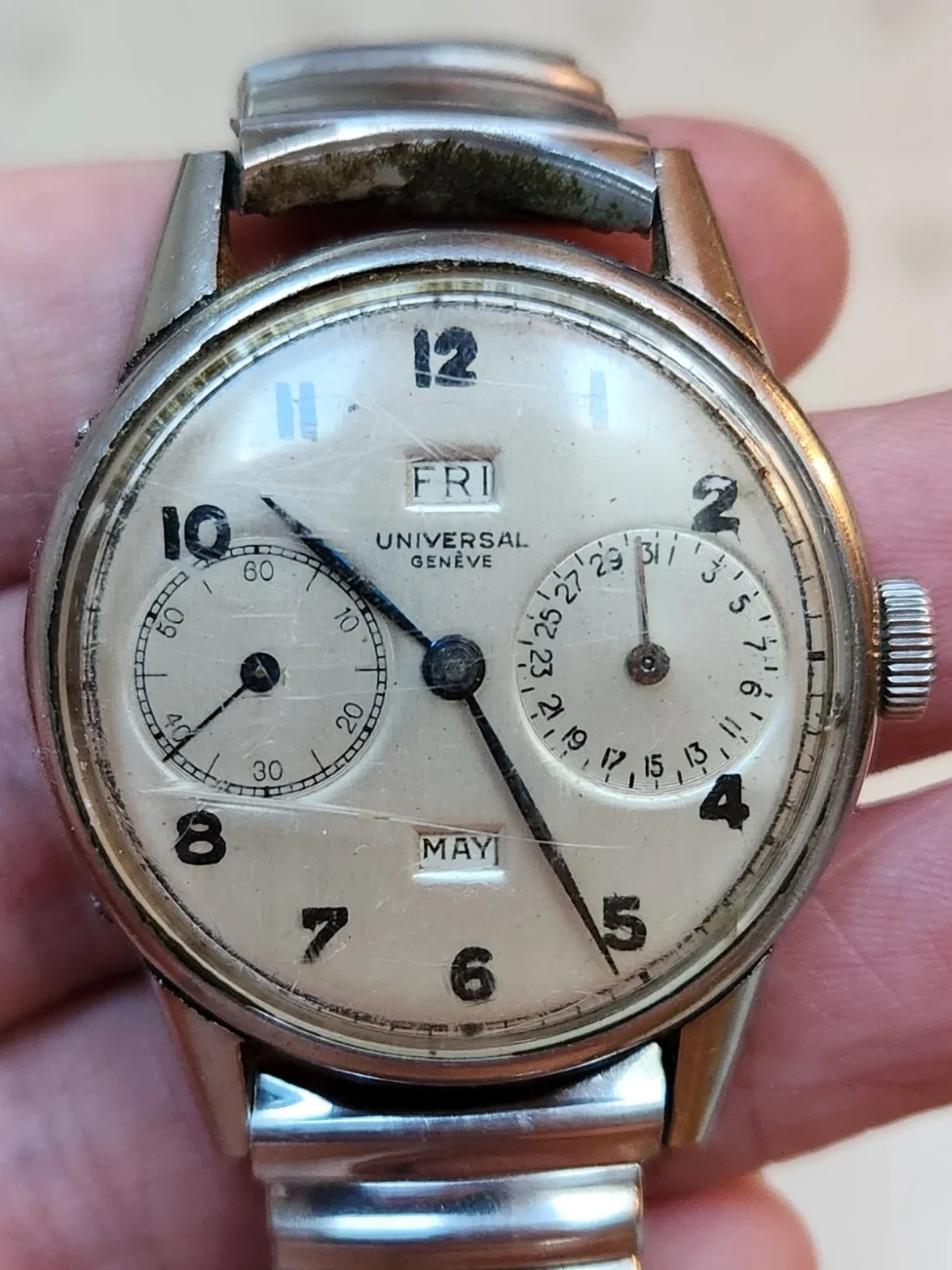
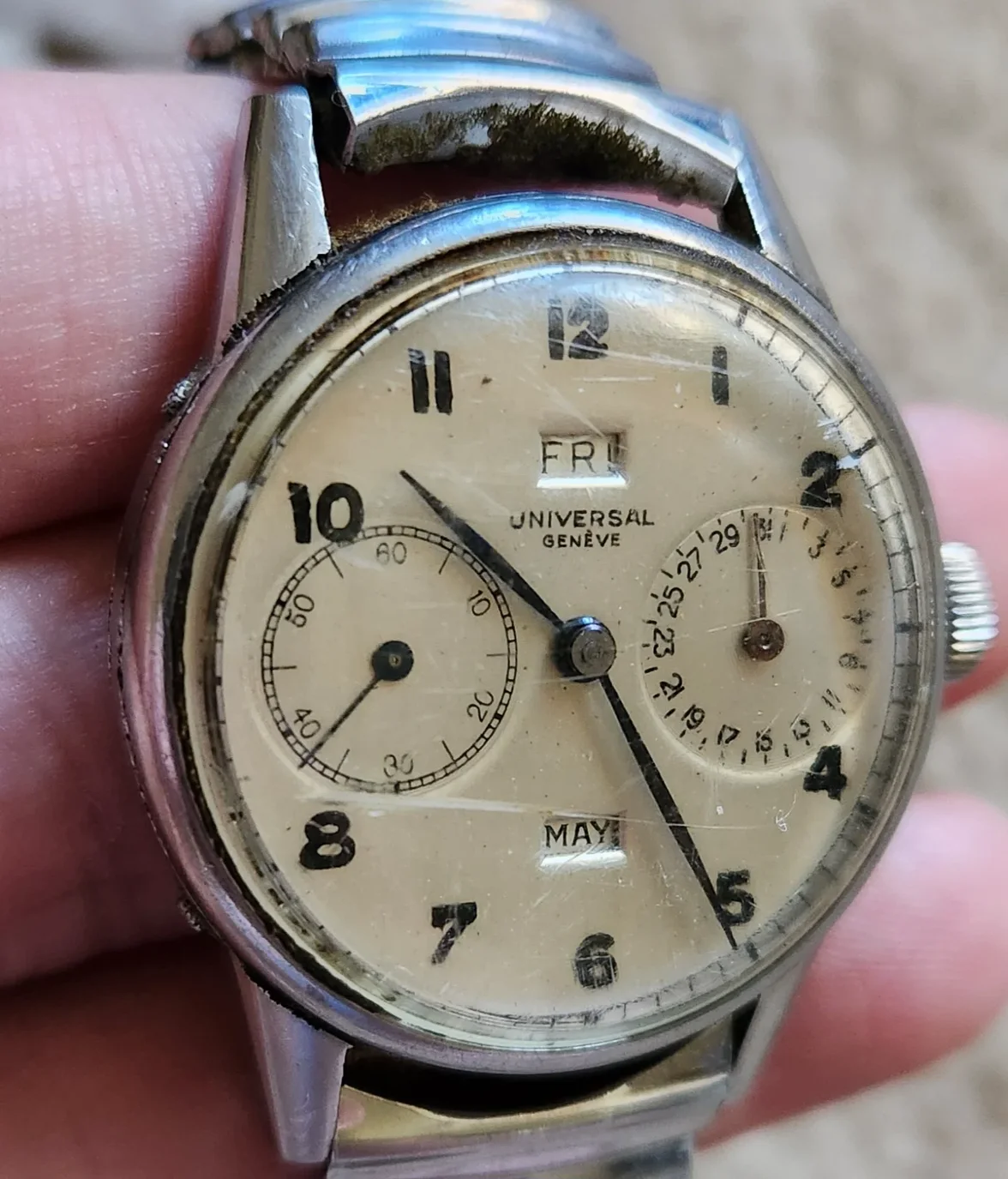
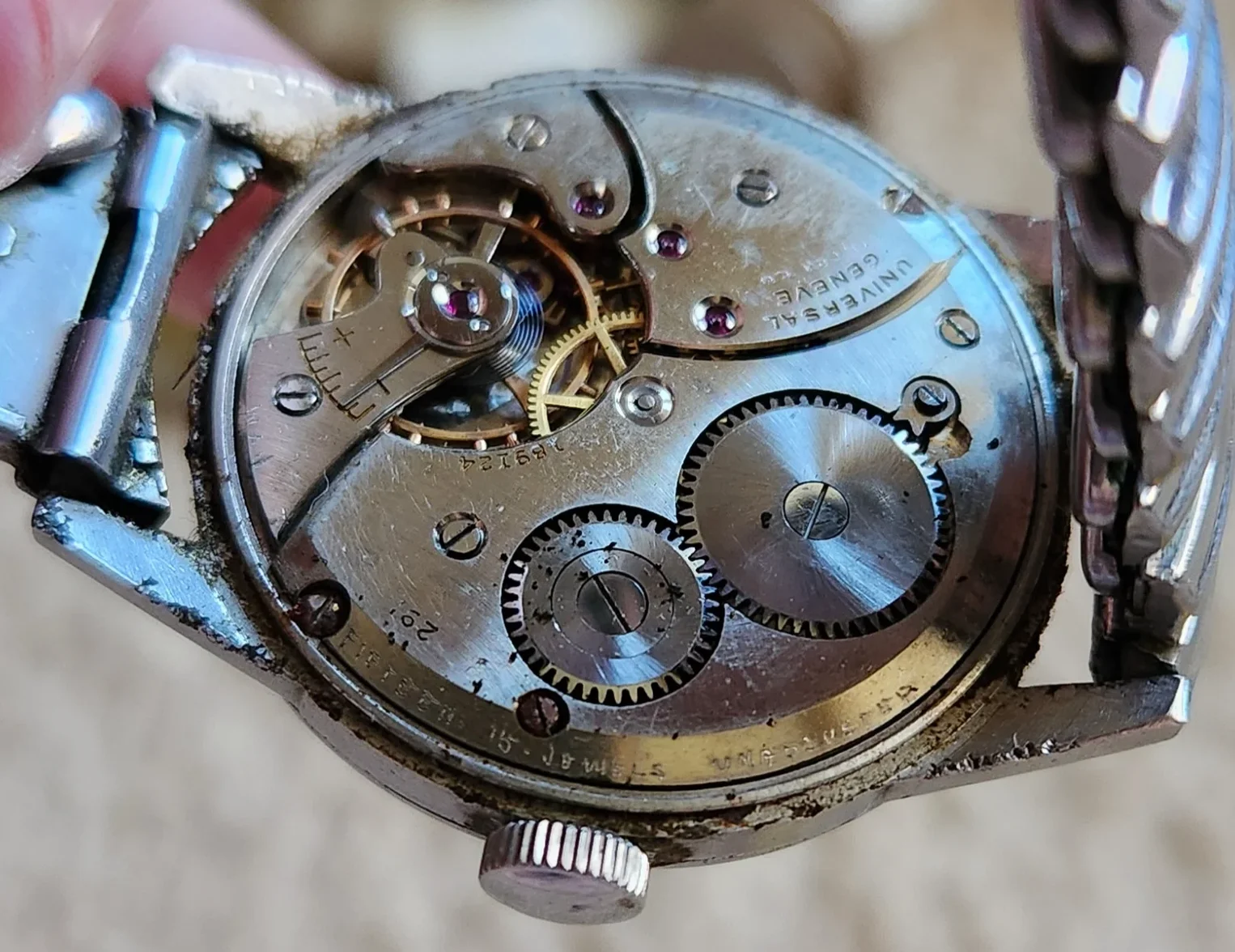
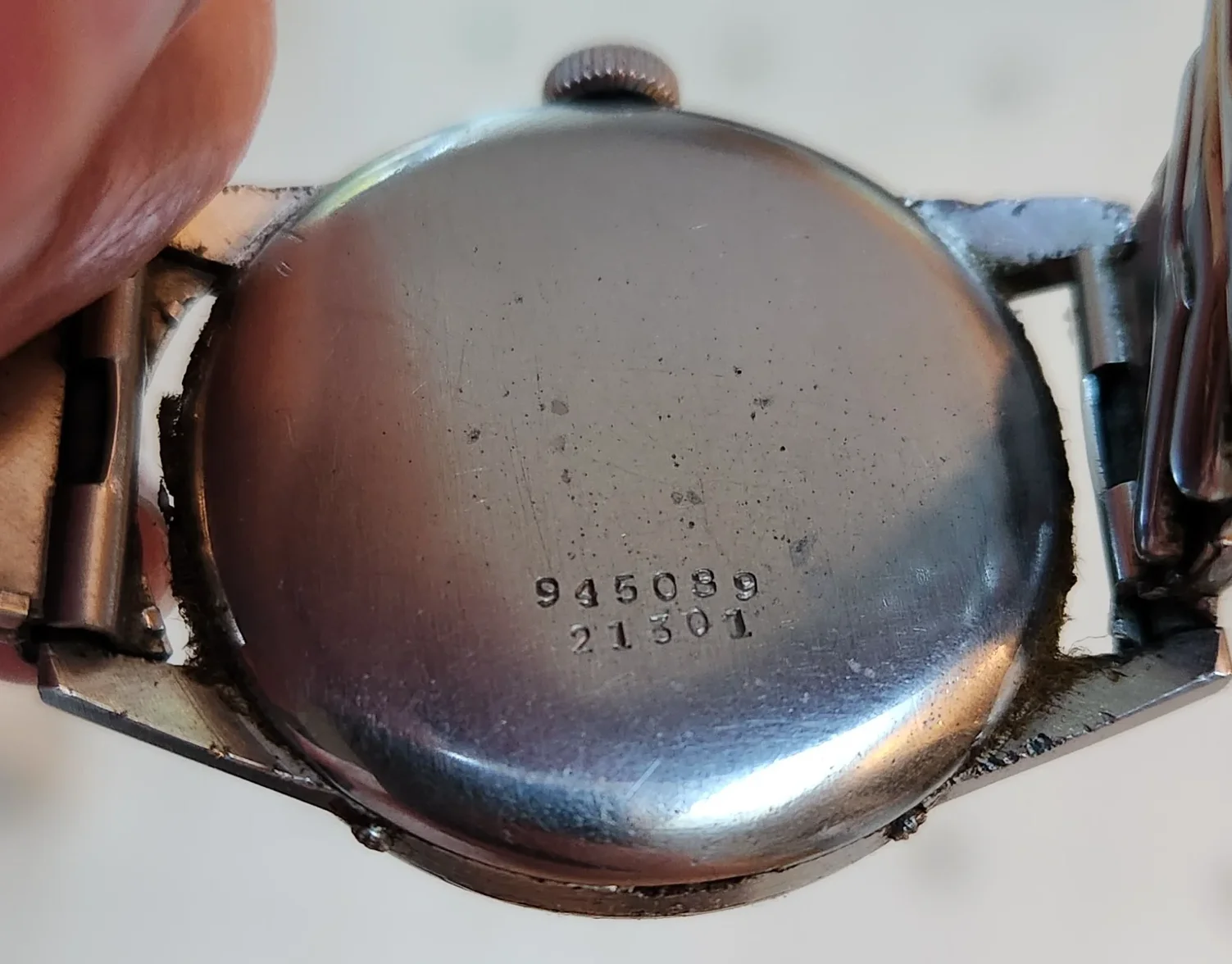
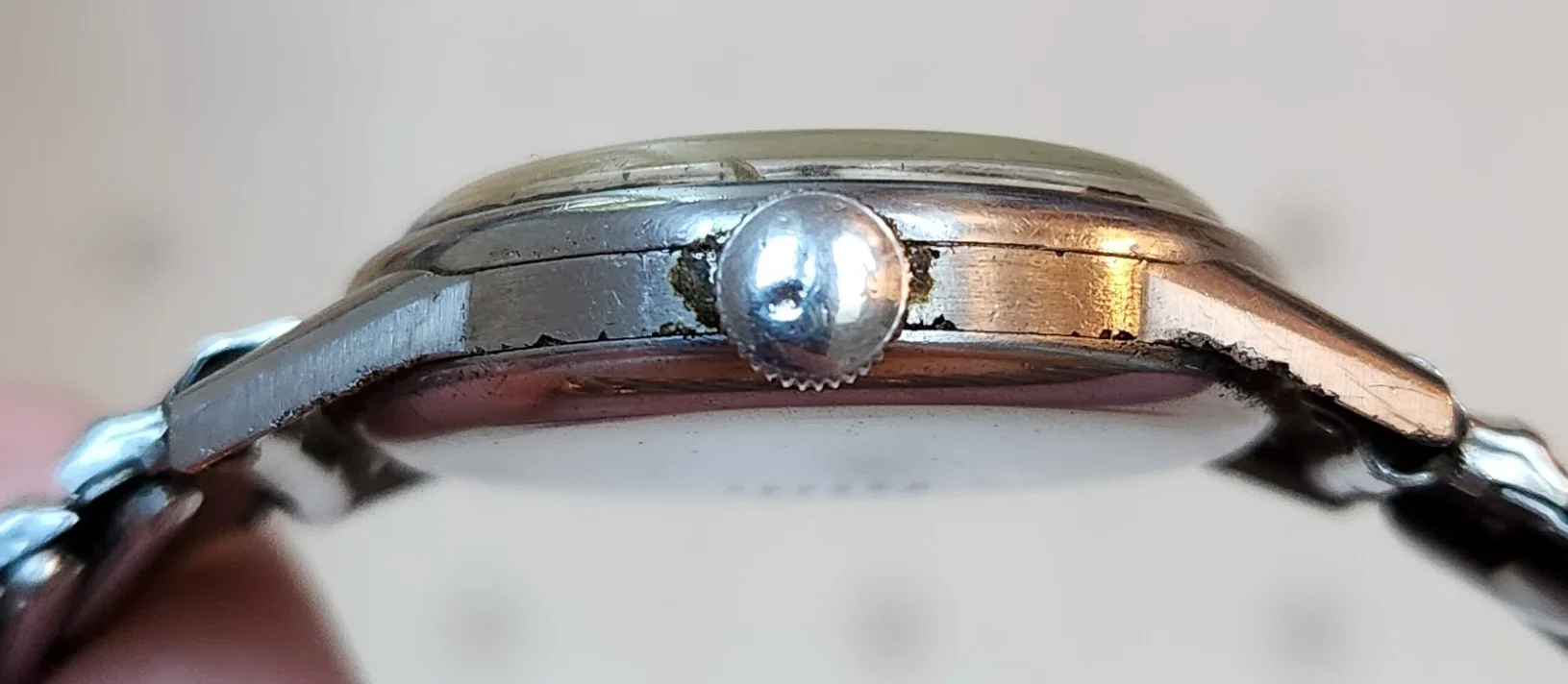
Great find, I would give it a clean and service of the movement. If the dial is impossible to get, you will have an honest and charming watch, like a dinget up old race car, or something like that.
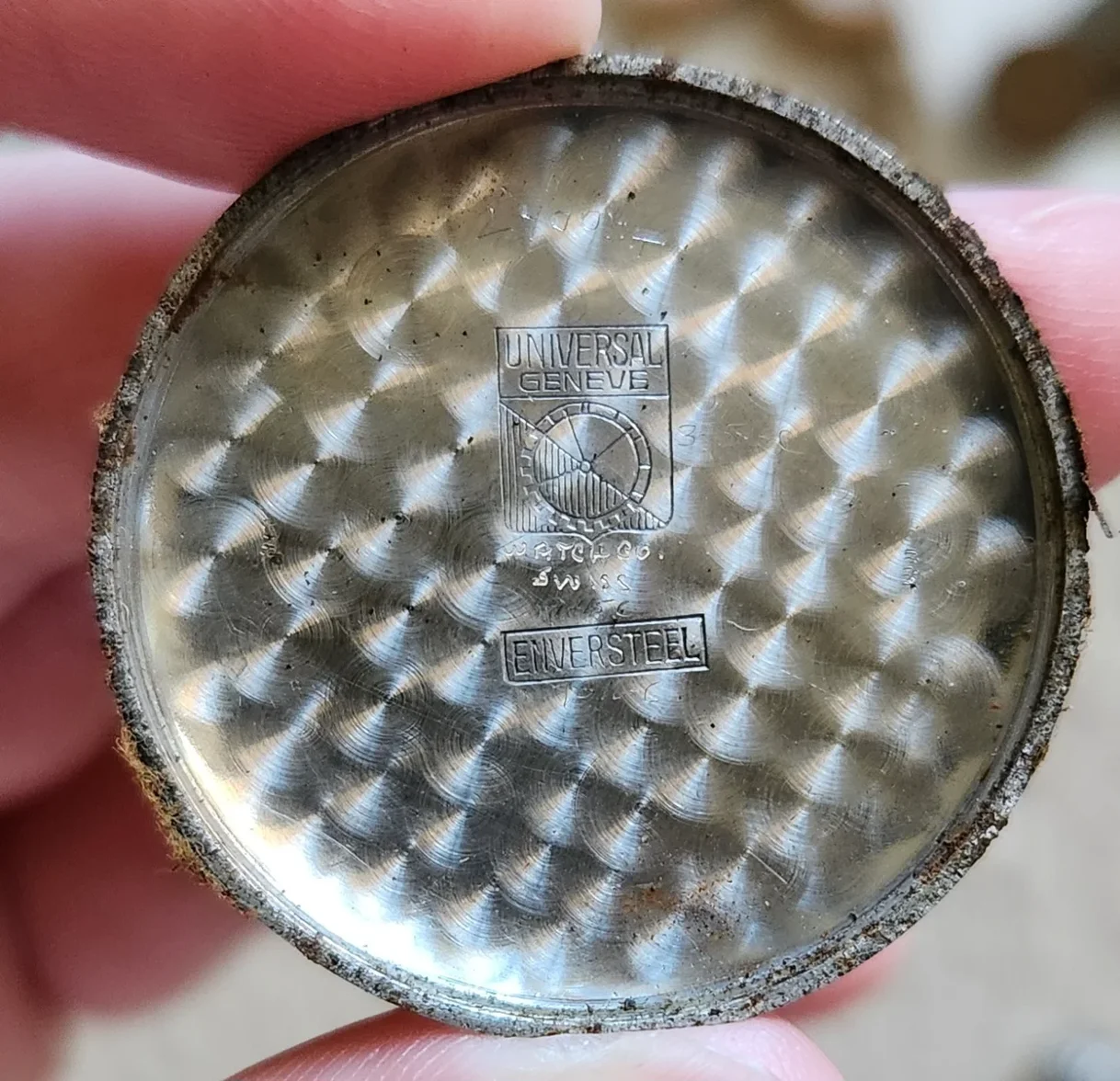
I got curious to what enversteel could be, here is what google said:
Enversteel is an early proprietary stainless steel alloy used by the Swiss watchmaker
Universal Genève (registered around 1935 by
Perret & Berthoud) for manufacturing watch cases. [
1,
2,
3]
- Time Period: Most commonly found on vintage Universal Genève timepieces, military-style watches, and chronographs produced from the mid-1930s through the 1950s (including World War II-era models).
- Usage: It served as an alternative to other early corrosion-resistant or stainless metals of the era (such as "Staybrite" steel), providing a durable, rust-resistant housing for mechanical movements.
- Markings: Case backs made from this material are typically stamped with the inscription "Enversteel" alongside the Universal Genève signature or shield logo
- Metallurgical Context & Purpose
- The Base Alloy: Enversteel is an early austenitic stainless steel alloy, meaning it relies primarily on a matrix of Iron (Fe) blended with Chromium (Cr) for corrosion resistance and Nickel (Ni) for structural stability and a non-magnetic nature. [1, 2]
- Market Position: Universal Genève introduced and stamped "Enversteel" on its casebacks to denote a high-strength, highly durable, surgical-grade stainless steel. It was created to compete directly with Staybrite, another dominant proprietary steel alloy used by Swiss watchmakers during the vintage era. [1, 2]
- Modern Equivalency: While the exact ancestral proportions vary, vintage restorers and laser-welders note that the material properties closely mirror early iterations of the 300-series stainless steels (such as standard low-carbon surgical steels like AISI 316L), though with minor variances in trace element impurities due to 1930s smelting limitations