Anyone in Clocks (Bracket or Longcase)?

Posts
4,740
Likes
47,637
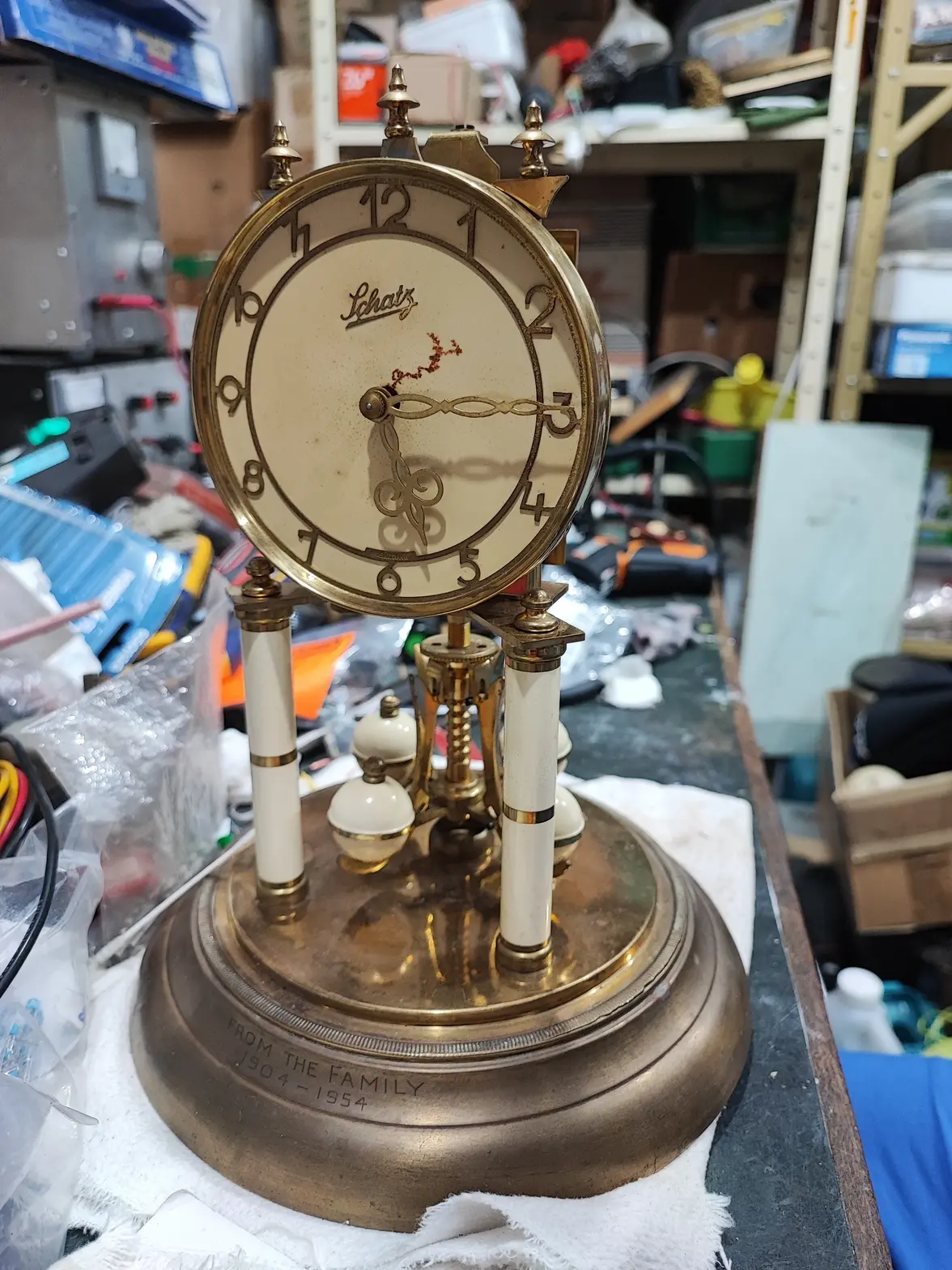
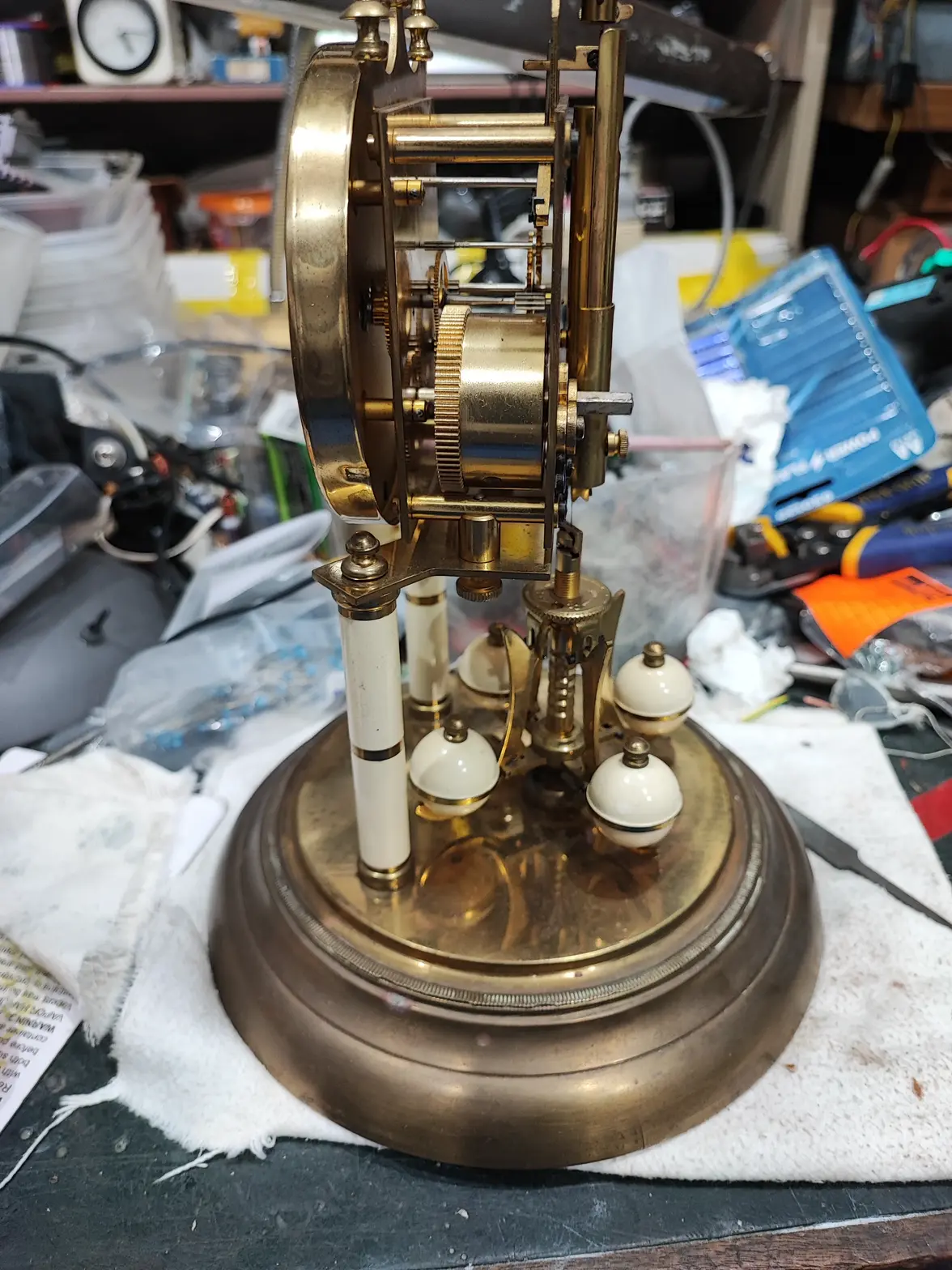
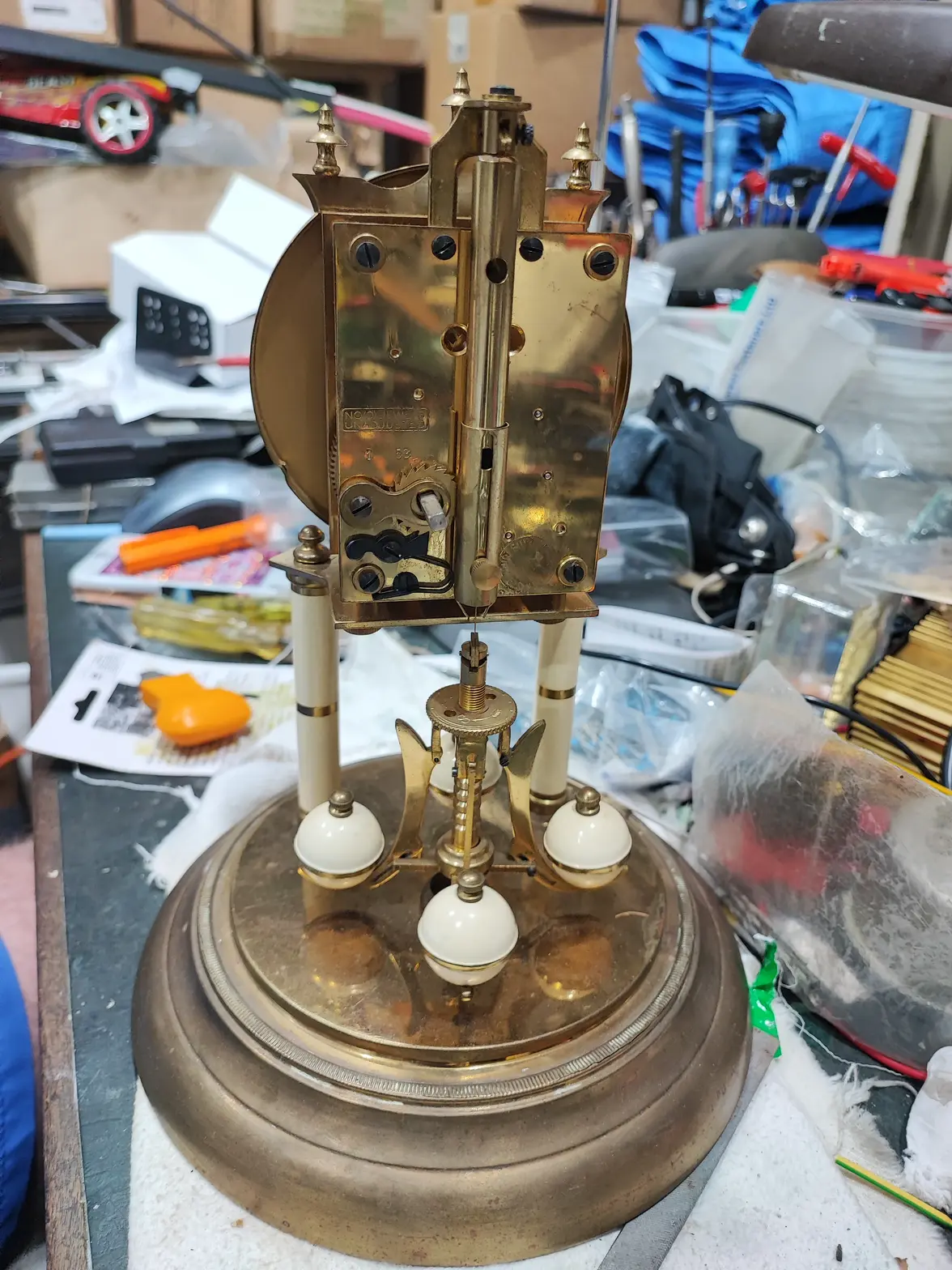
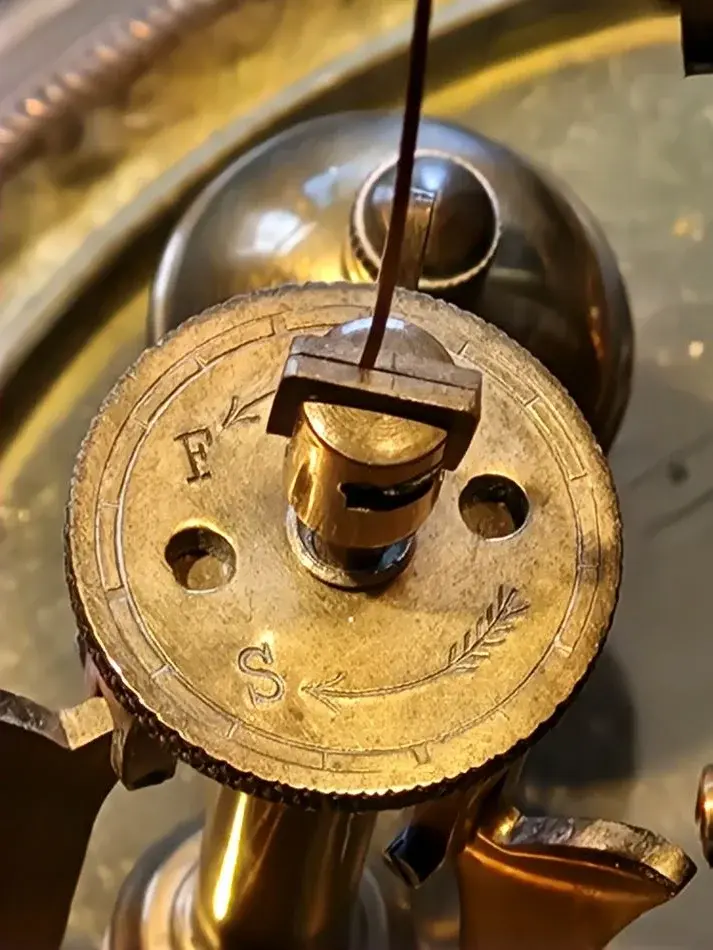
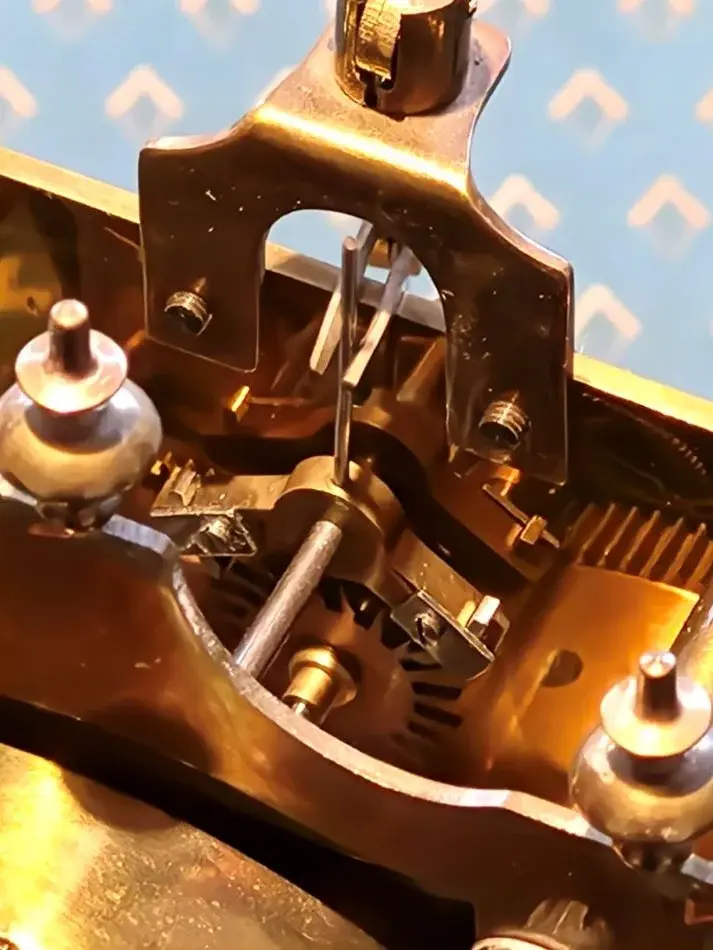
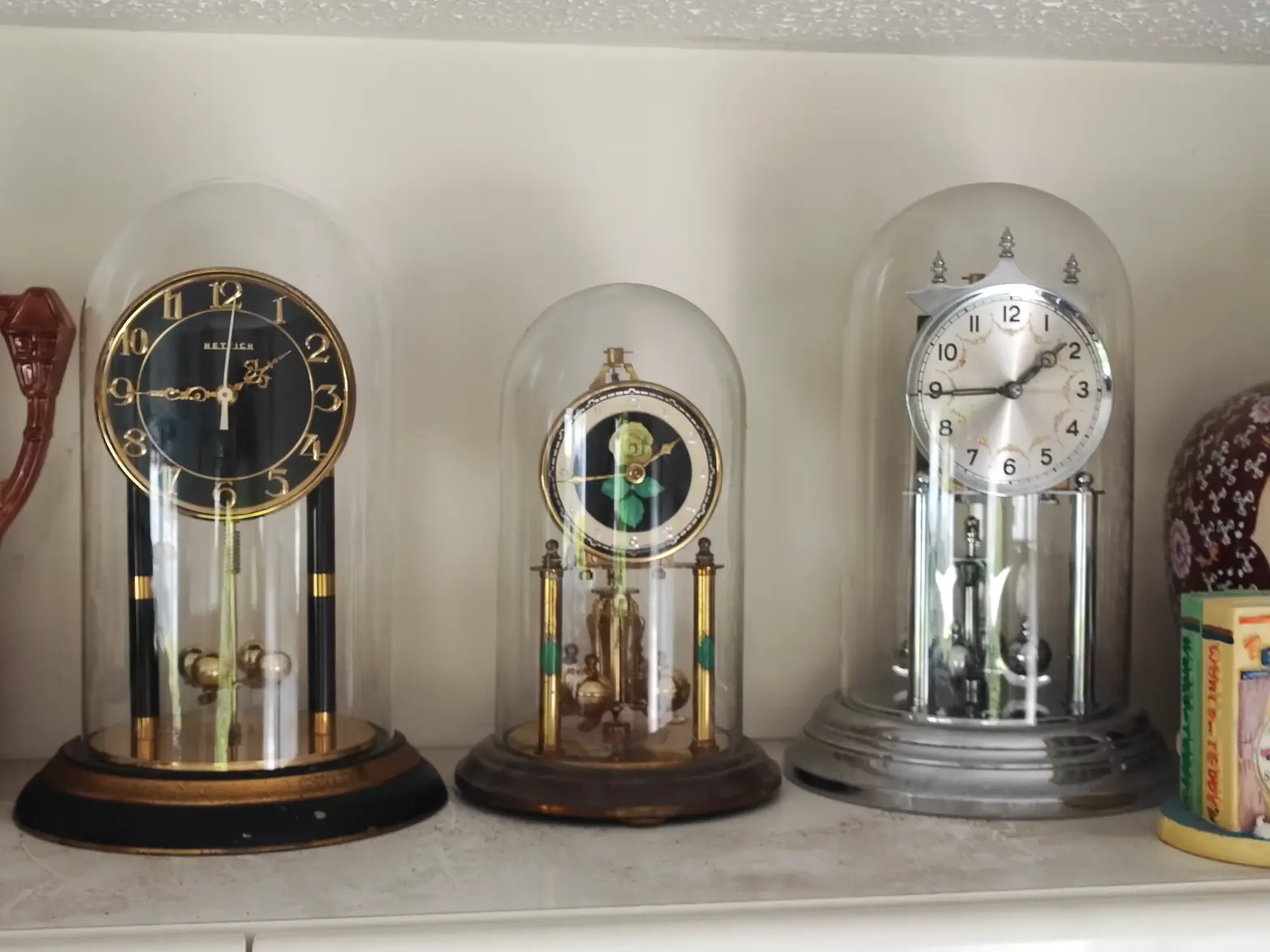
Time to bump this thread again even though it's with 400 day clocks.
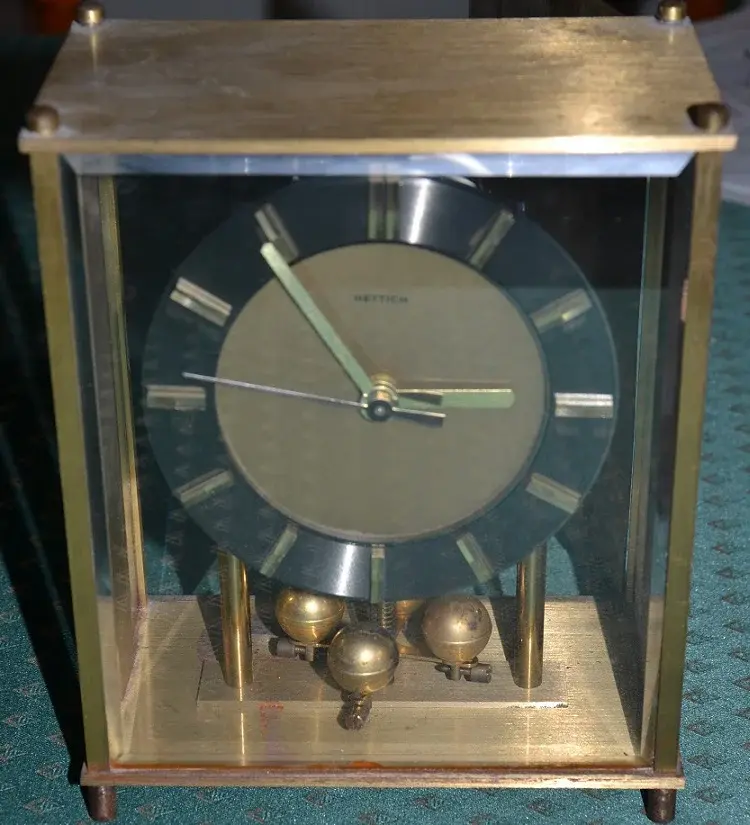
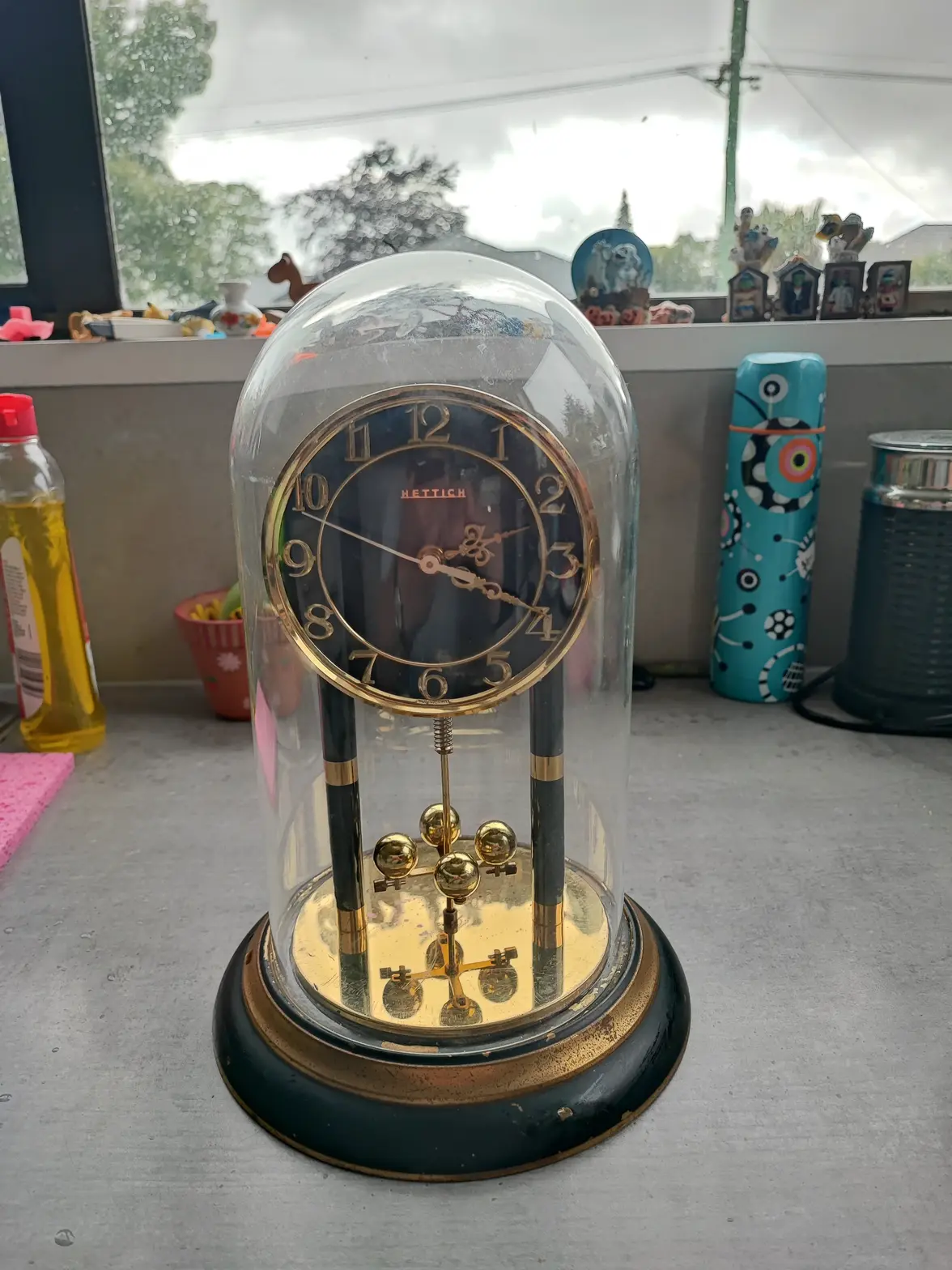
Finally made a space alongside a couple of other 400 day clocks my new to me Hettich.

Will make an effort to find a new (old) glass dome for this one also that I just serviced and regulated.

Sitting currently on my cluttered workbench for the last 2 weeks whilst I regulated it.
 
Posts
632
Likes
2,134
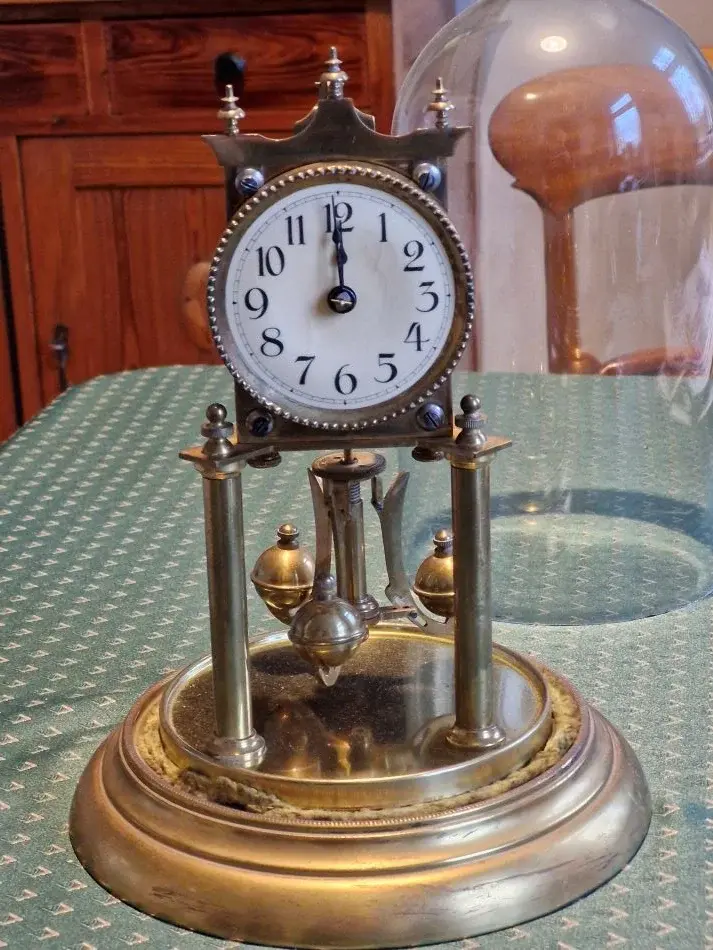
Ah, a 400 days clock. These are imo really undervalued. I have one since almost 4 decades. It is a "Jahresuhrenfabrik" made 1915 with two somewhat rare features (both original), i.e. three balls pendulum and adjustable pallets.
 
Posts
632
Likes
2,134
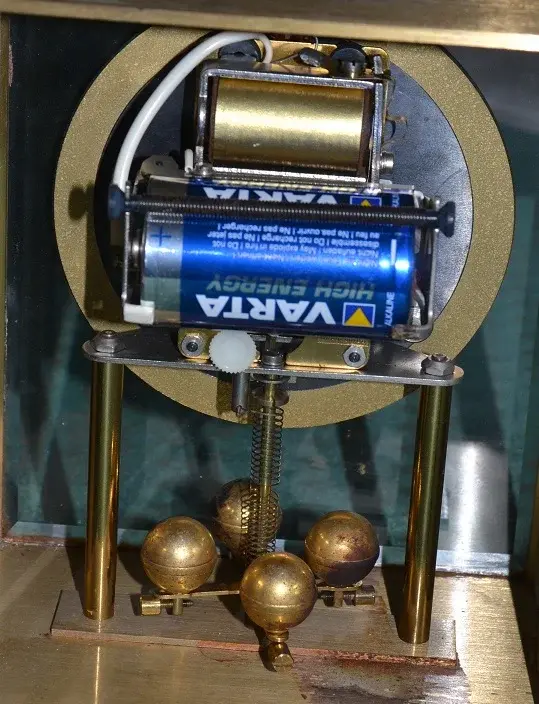
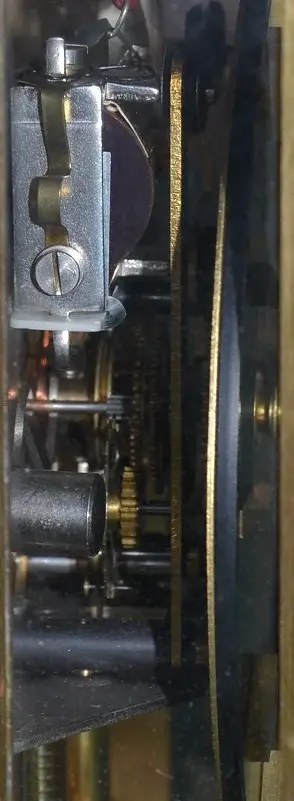
And did you say "Hettich"? Here is mine. The electric part lifts a lever with a weight about every 10 seconds, which then drives the mechanical works. As soon as the weight is almost down again, a contact is activated, so that the solenoid lifts the lever again. Indeed a kind of remontoire.

 
Posts
4,740
Likes
47,637
Yes I really like 400 day clocks too and have 5, plus the Faux 400 day Hettich.
Their simplicity low stress and durable build quality make them a very low maintenance and long lived mechanism, who needs jeweled bearings with this sort of slow movement!

People often say they are cantankerous and hard to get running but its really just a matter of getting them "in beat" and the only trouble starts when amateurs start to play with things like the pallets.

They can be reasonably accurate but I do find that temperature variation and probably variable spring power delivery do seem to make them drift during the year.

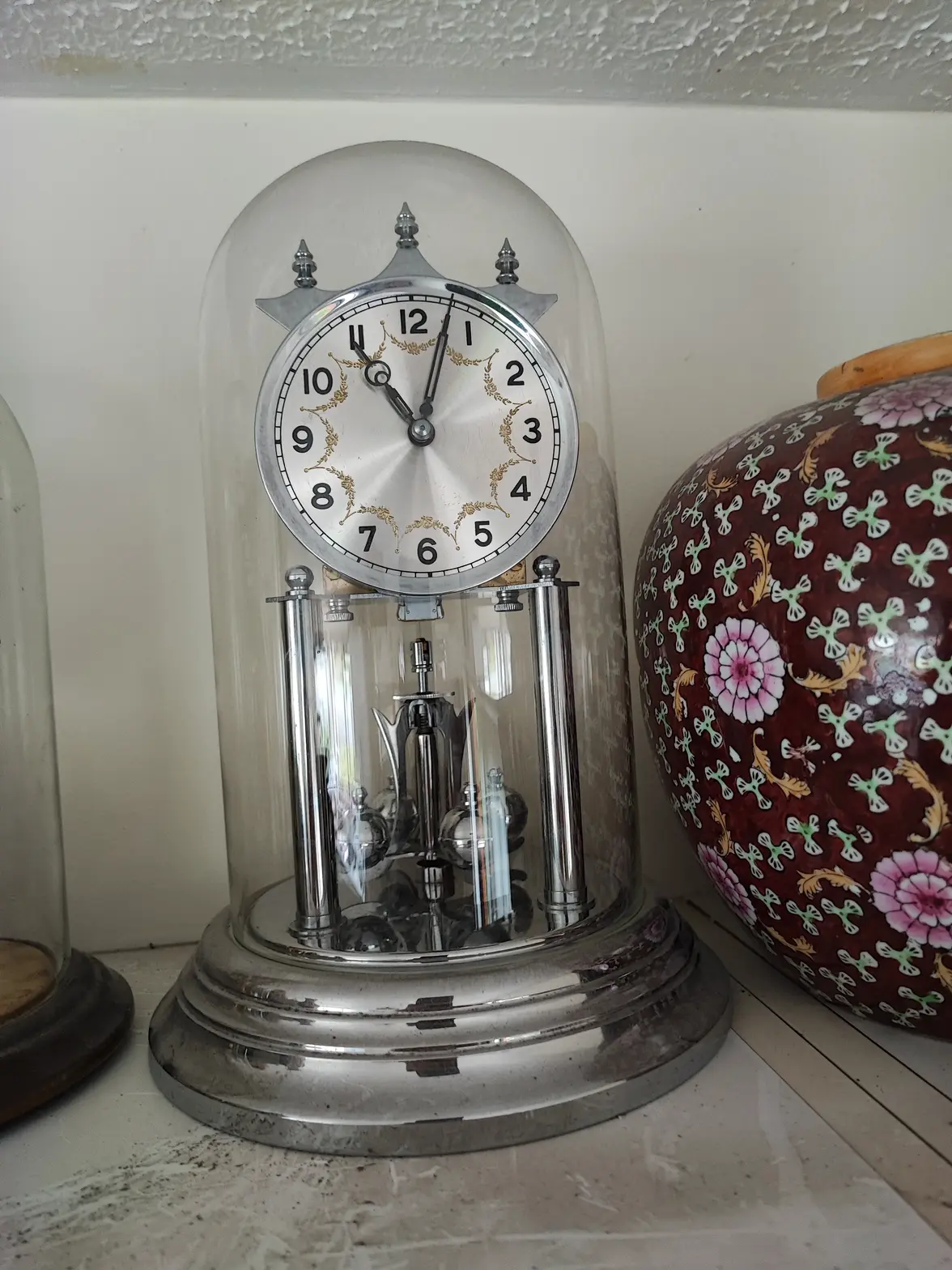
I bought my first one, this lovely chromed one in about 1989 with a broken suspension wire and it took till about 2018 to get it sorted by my watch maker who had the correct suspension spring on the shelf, he put it on and it just ran, no other work required!

Koma 400 day clock


It had been at another watchmaker for about 10 years previously and he couldn't get it to work, just a matter of having the right part.
Since 2018 I have been a bit braver and got done a bit of servicing on my collection of 400 day clocks, they are pretty basic after all but charming and functional time pieces that will out last me by a wide margin of time barring mishaps.

My Hettich.

Floating Balance Electro-Mechanical
Edited:
 
Posts
792
Likes
918
I've got a great story about a 400-day clock; an Kundo (Kieninger und Obergfell) that my dad must have brought back from overseas in the service. The clock sat on his Stereo stand where I could reach it as a toddler. Oh, oh!

I remember having deep curiosity about what made it spin, seemingly forever. I would have been between two and three at the time as the memory is rather vague and solid memories started at about three.

Anyway, I also remember lifting the glass off and thinking "If I drop this, there's gonna be hell to pay", as corporal punishment was handed out frequently when it came to me. But I did get it off and back on successfully as it's still in one piece.

Fast forward to a few years ago, going through my parents stuff and finding it. Of course I started it up and set it, etc. Problem was, it would stop after a month or two. I did some research and found that the most common cause of this is a twisted blade.
Sure enough, the blade was twisted many times. I did purchase replacements from Horolever but have yet to do anything with it as I should have also sourced a mainspring and a way to safely get the existing spring out of it.... note to self.

But what I also saw is that, in the inside of the base, you can see two tape adhesive strips just far enough apart to have held another blade in it's package.

So I didn't get into it just once!
 
Posts
15,477
Likes
45,824
This one came to me about 2015 or so. My wife’s church has a couple annual fund raisers to which paritioners donate items. My wife brought this one for me to see, as it wasn’t working. I had several choices. Do nothing and send it back. Spend a bunch of time on it to return it to health for a fee. Return it to health at no charge. Or to make them a standing offer of $25.00 if they couldn’t do better during the sale. They accepted my offer. Now, to service the clock.

It appeared to me that someone had given the movement a “dip and swish”, fully assembled, in soapy water. You can image the mess! In addition, someone had fiddled with the dial train, and after I stripped it and serviced it, it took me a long time to sort out the dial train.

I’ve forgotten who the maker was, but after buying out another maker, this firm was only in business for a short time. These clocks typically have badly deteriorated floral embellishments resulting from the case having been cleaned with soap and water. The floral trim on this one is pristine. I love it!

 
Posts
4,740
Likes
47,637
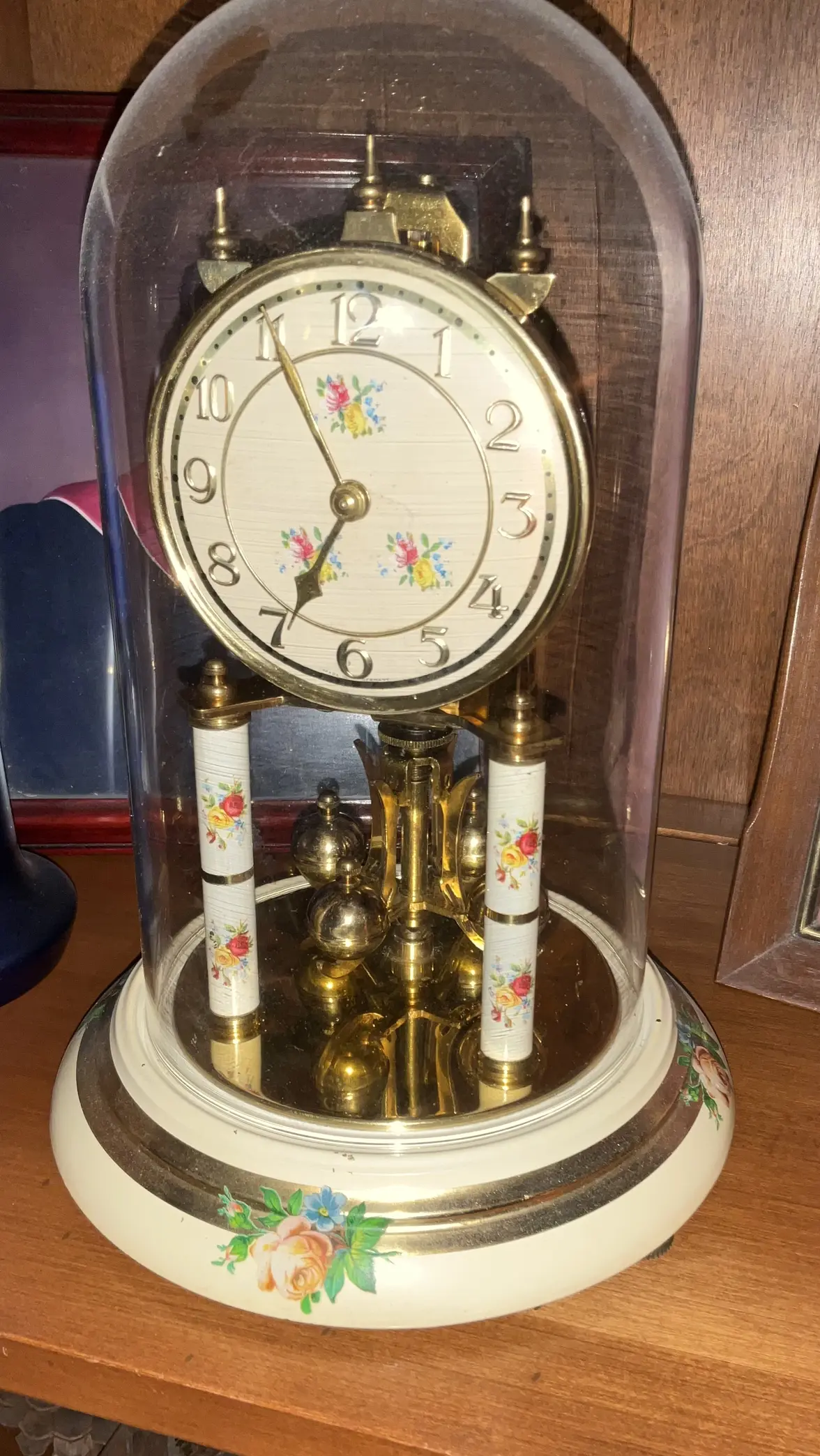
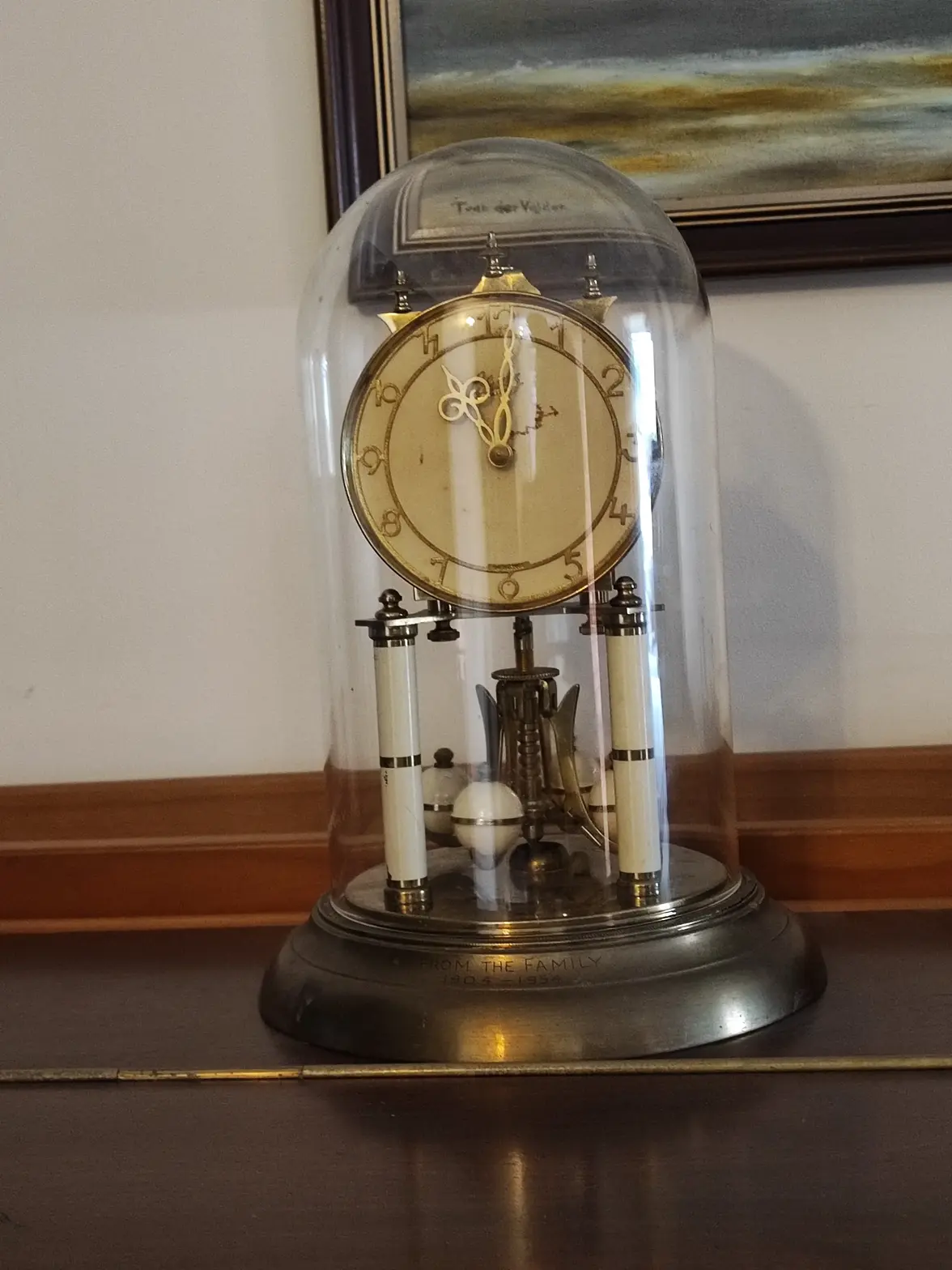
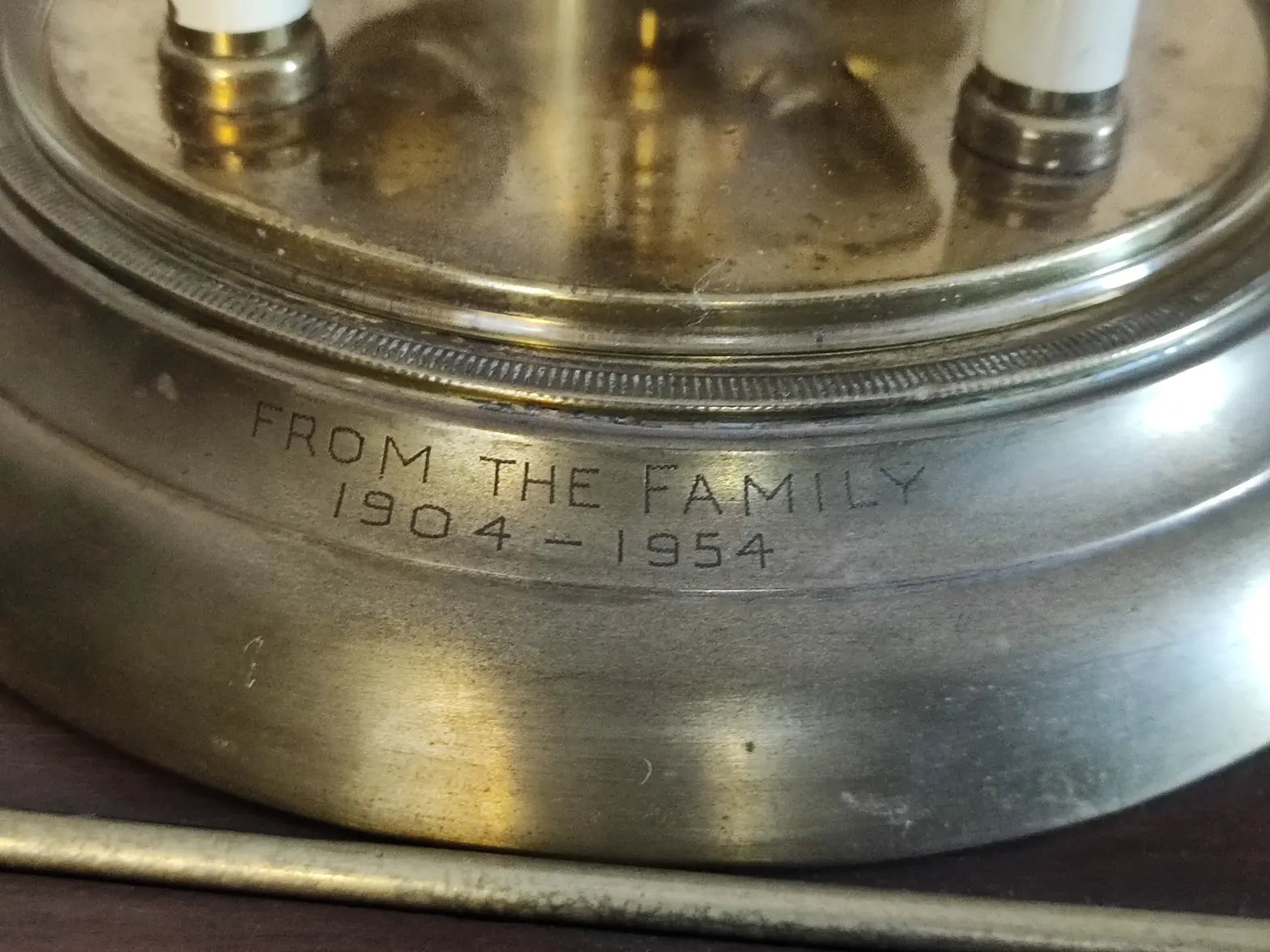
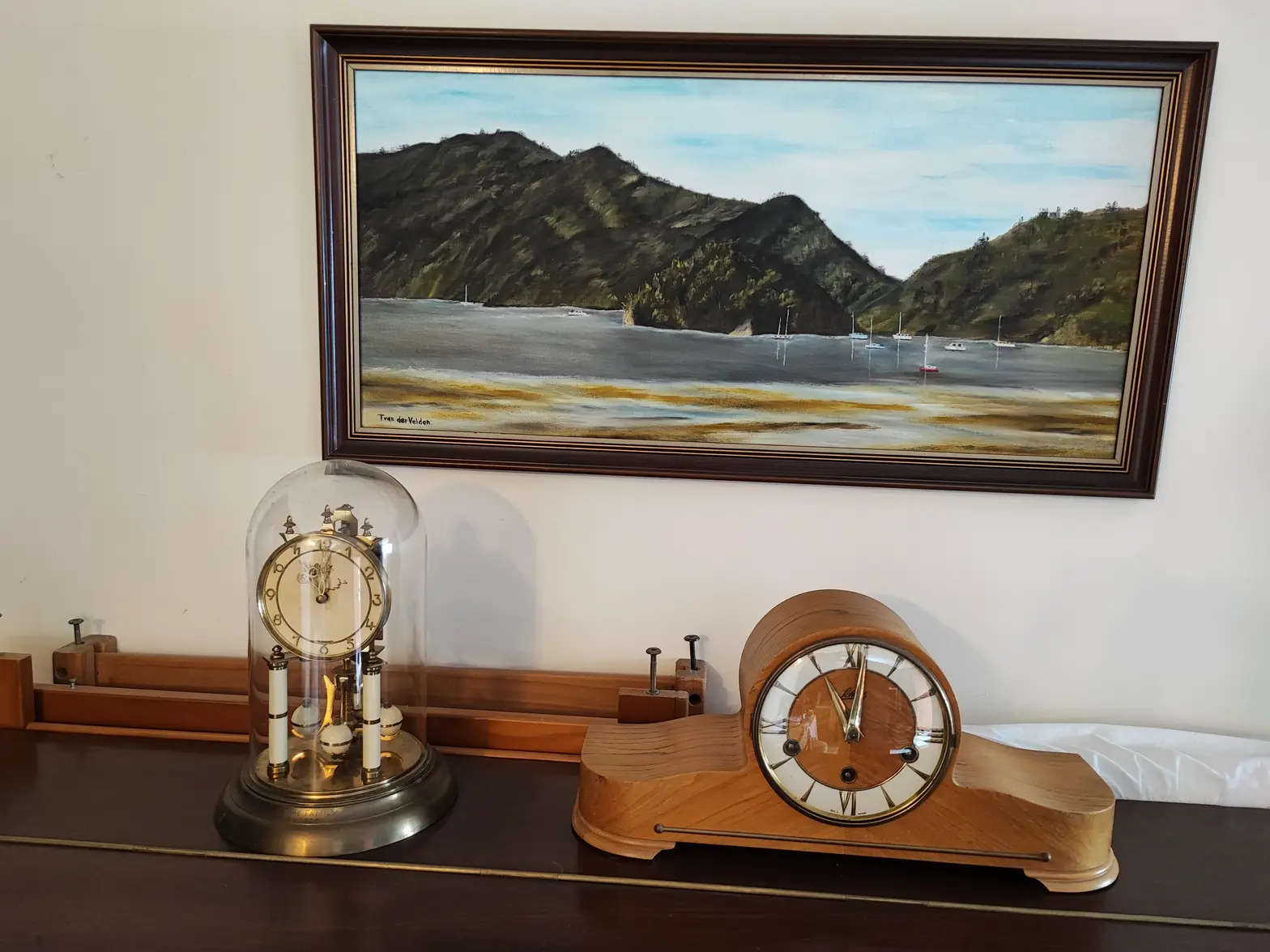
Well I finally got round to visiting my watchmaker yesterday to enquire about a glass dome for my 400 day Schatz that I acquired about 2 years ago in non working order and missing glass dome.
As mentioned in an above post I attended to it's long overdue maintenance but was very surprised to see the lubricants were still in excellent order with no discoloration or dried up residue, cleaned and lubricated with an appropriate Synthetic clock oil.
It's only real fault other than the missing dome was that it was well out of beat, soon cured of that.

I am sure many of these were given as gifts as obviously was this one for wedding anniversaries, a nice touch with the engraved inscription, shame there is no name to track them down for posterity.

Love it.
Pictured next to a Westminster chiming clock that I acquired some time around 1973-6.

 
Posts
4,740
Likes
47,637
And did you say "Hettich"? Here is mine. The electric part lifts a lever with a weight about every 10 seconds, which then drives the mechanical works. As soon as the weight is almost down again, a contact is activated, so that the solenoid lifts the lever again. Indeed a kind of remontoire.


Bernhard, your comment regarding the time between the solenoid firing is interesting. Are you able to time it ?
Mine is approximately 50 seconds between solenoid actuations but does vary about a bit, has a new battery in it which I am guessing gives the best solenoid action.
I am thinking that as the battery gets discharged and the battery internal resistance increases the solenoid will fire less effectively so when that time comes I might consider installing a low esr electrolytic capacitor of high capacitance to aid the solenoid operation.
 
Posts
632
Likes
2,134
Bernhard, your comment regarding the time between the solenoid firing is interesting. Are you able to time it ?
Mine is approximately 50 seconds between solenoid actuations but does vary about a bit, has a new battery in it which I am guessing gives the best solenoid action.
I am thinking that as the battery gets discharged and the battery internal resistance increases the solenoid will fire less effectively so when that time comes I might consider installing a low esr electrolytic capacitor of high capacitance to aid the solenoid operation.

I have just measured the time period between two subsequent solenoid actuations. It is about 25 seconds, not 10 seconds (that was just a rough estimate from memory).

But I did not observe any significant variation with battery charge status in the past. It is now running for 2 years on the same battery.
A variation of the time period between subsequent solenoid actuations would suggest that the weight lever is not lifted all the way any more with a weak battery. If it is lifted all the way (as always with a good battery), then this time period should be always exactly the same. I would think that with a weak battery the clock would stop totally quite soon.
 
Posts
4,740
Likes
47,637
I have just measured the time period between two subsequent solenoid actuations. It is about 25 seconds, not 10 seconds (that was just a rough estimate from memory).

But I did not observe any significant variation with battery charge status in the past. It is now running for 2 years on the same battery.

A variation of the time period between subsequent solenoid actuations would suggest that the weight lever is not lifted all the way any more with a weak battery. If it is lifted all the way (as always with a good battery), then this time period should be always exactly the same. I would think that with a weak battery the clock would stop totally quite soon.
Thanks for that Bernhard, I will continue to look at the refresh time till the battery goes flat.
2 Years is a great amount of time almost twice that of the "400 day" title that anniversary clocks claim. These battery powered clocks may have a future after all 😀.
 
Posts
15,477
Likes
45,824
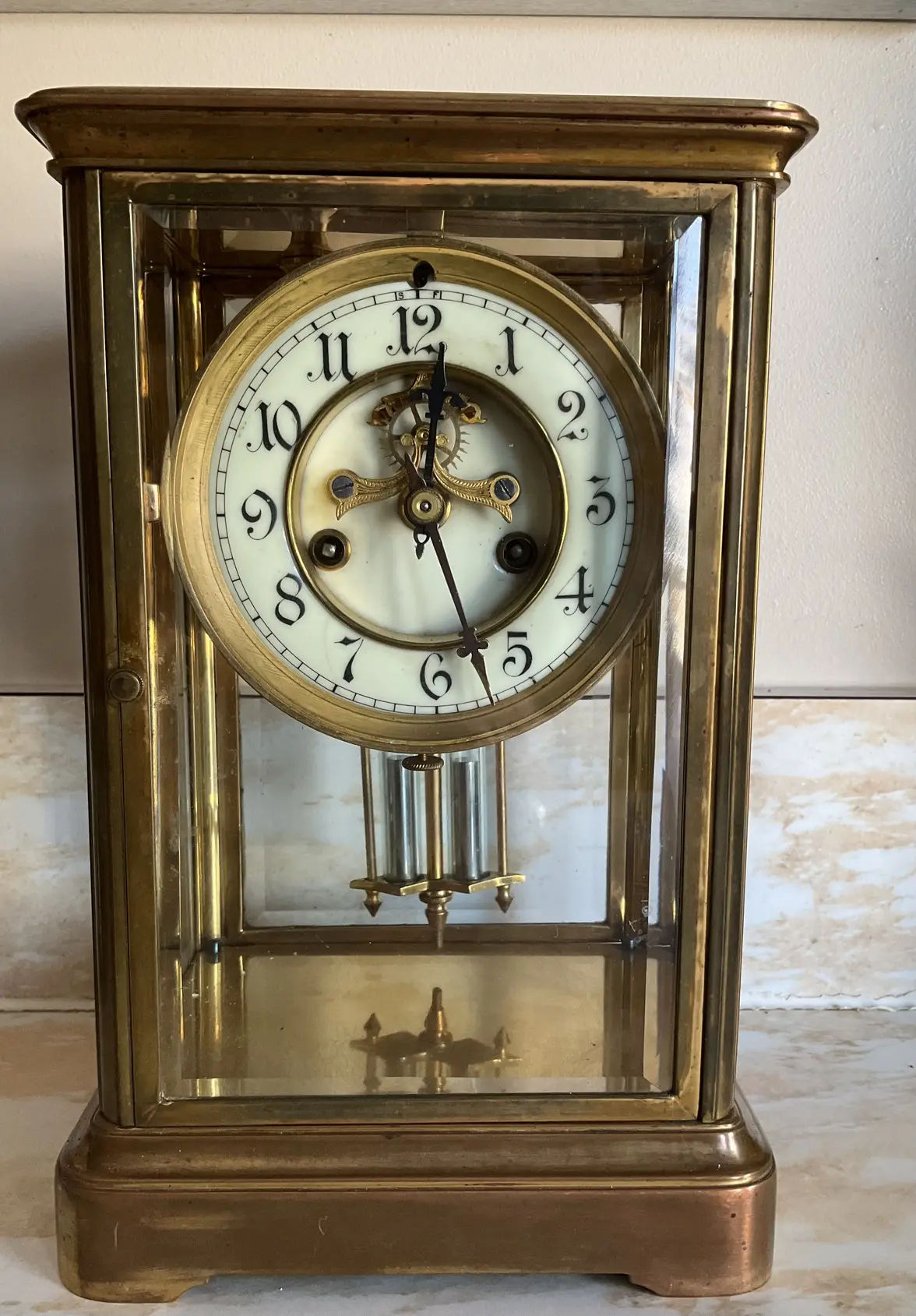
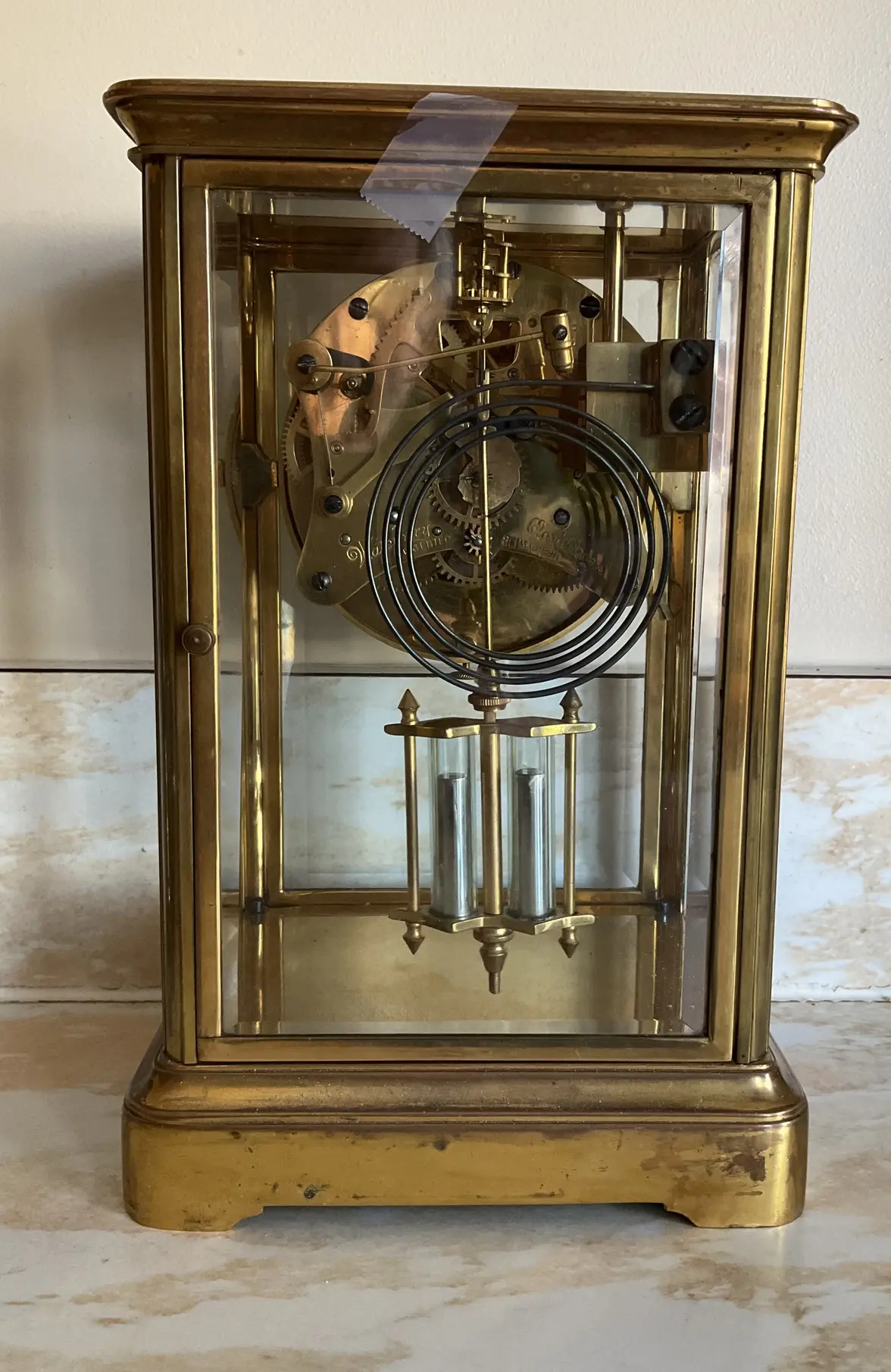
I serviced this one for the owner about 5 years ago. It is back with me now because she thought she’d screwed it up. Only problem was hands catching. This style of clock has been referred to as a “crystal regulator”. This one has a Brocot (exposed) escapement, and a two-piece vitreous enamel dial. The glass phials on the pendulum have polished steel inserts, not mercury. Four panes of beveled glass, case all brass. This one is American, by the Waterbury clock company. Likely circa 1898 or thereabouts. Unusual for an American clock as it has rack & snail striking mechanism, not the usual count wheel strike as seen on most American clocks of the era.

 
Posts
2,781
Likes
4,693
I serviced this one for the owner about 5 years ago. It is back with me now because she thought she’d screwed it up. Only problem was hands catching. This style of clock has been referred to as a “crystal regulator”. This one has a Brocot (exposed) escapement, and a two-piece vitreous enamel dial. The glass phials on the pendulum have polished steel inserts, not mercury. Four panes of beveled glass, case all brass. This one is American, by the Waterbury clock company. Likely circa 1898 or thereabouts. Unusual for an American clock as it has rack & snail striking mechanism, not the usual count wheel strike as seen on most American clocks of the era.

I like the idea of a "snail striking mechanism" I need one in my brick pillar mailbox, as the bloody thing is constantly full of bastard snails, they might seem slow but they seem to be able devour my mail pretty damned quickly! 🤣
 
Posts
15,477
Likes
45,824
I like the idea of a "snail striking mechanism" I need one in my brick pillar mailbox, as the bloody thing is constantly full of bastard snails, they might seem slow but they seem to be able devour my mail pretty damned quickly! 🤣

Tee hee!
 
Posts
632
Likes
2,134
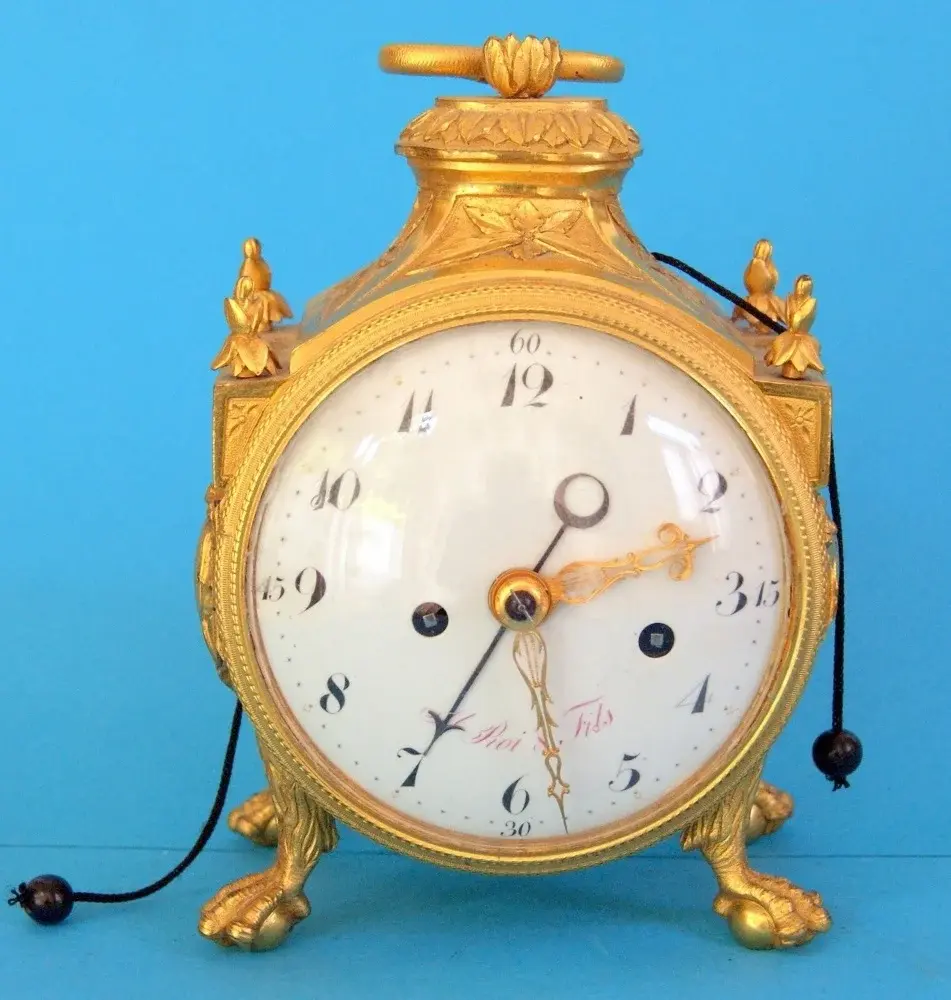
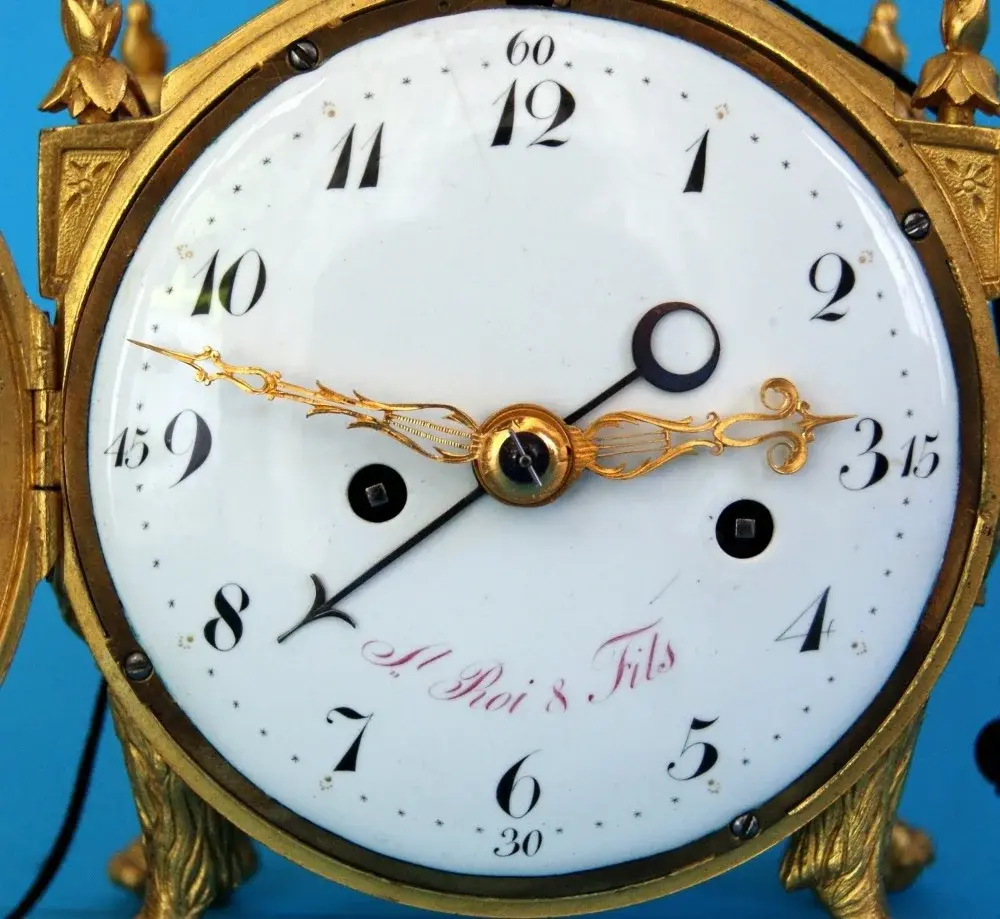
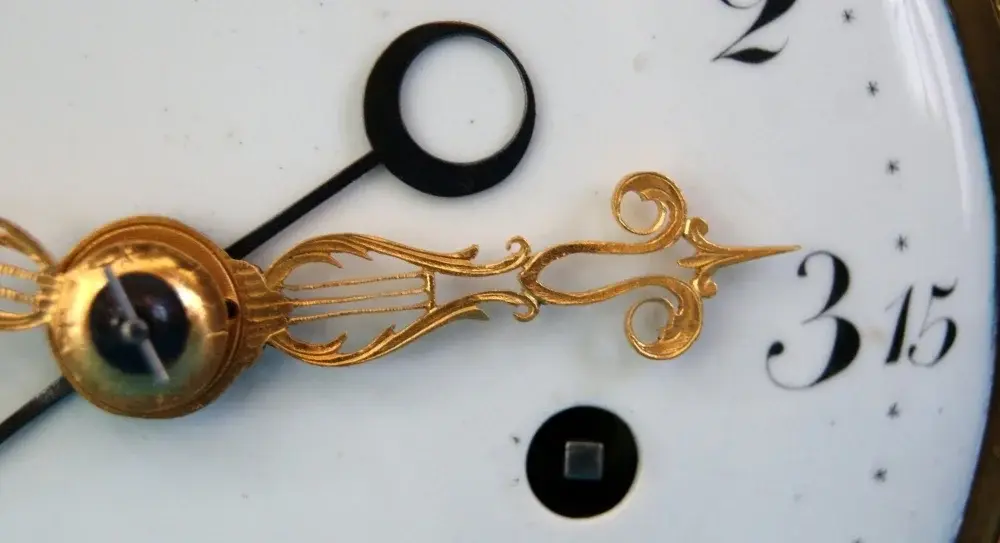
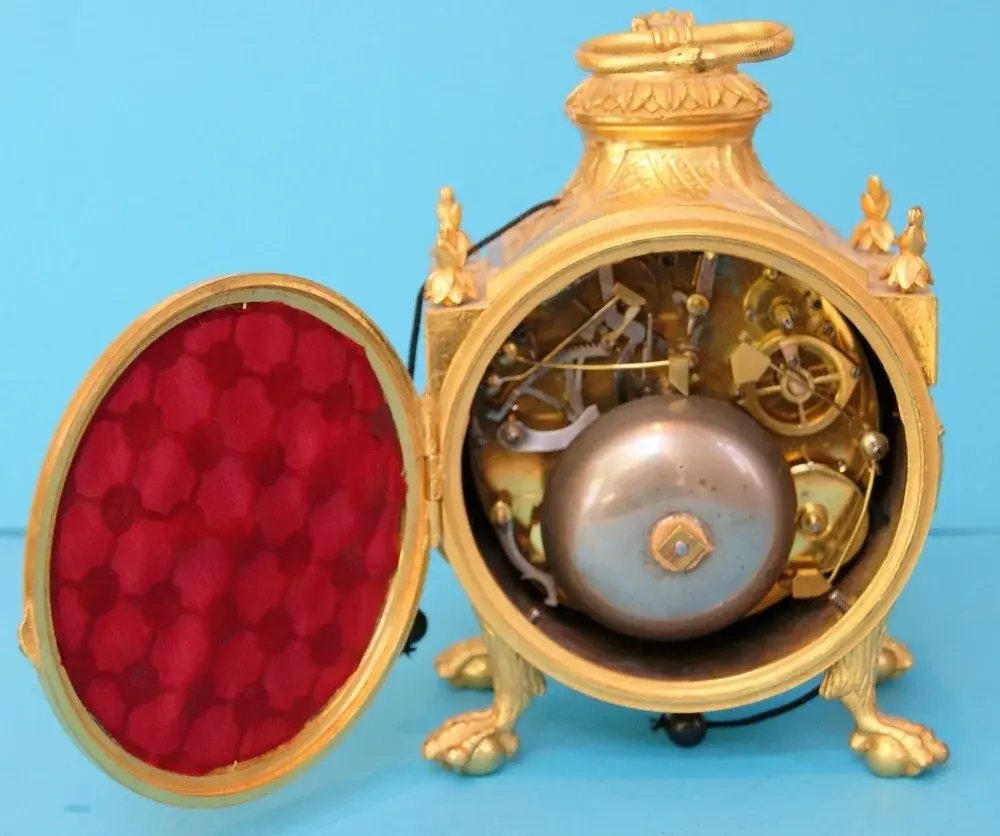
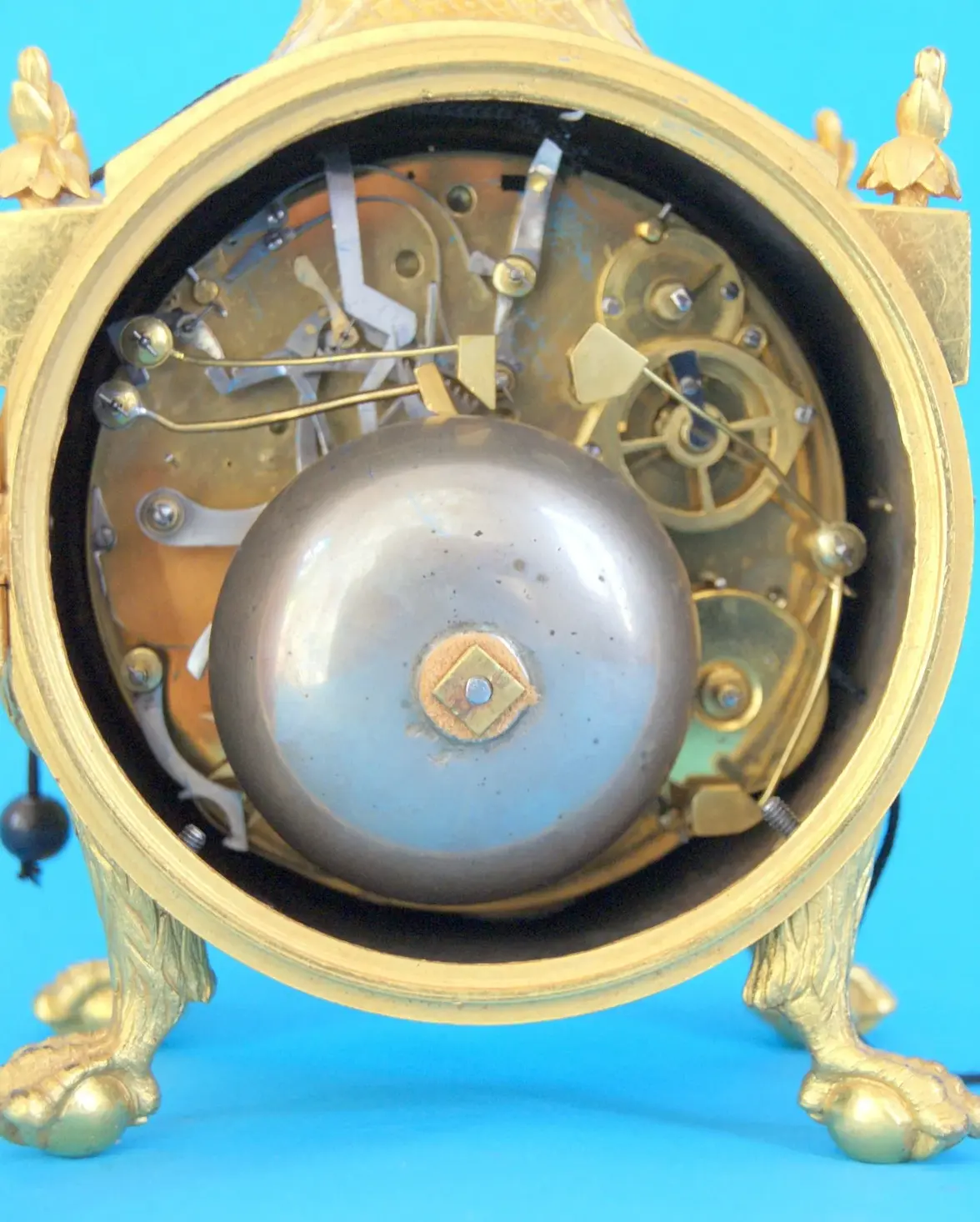
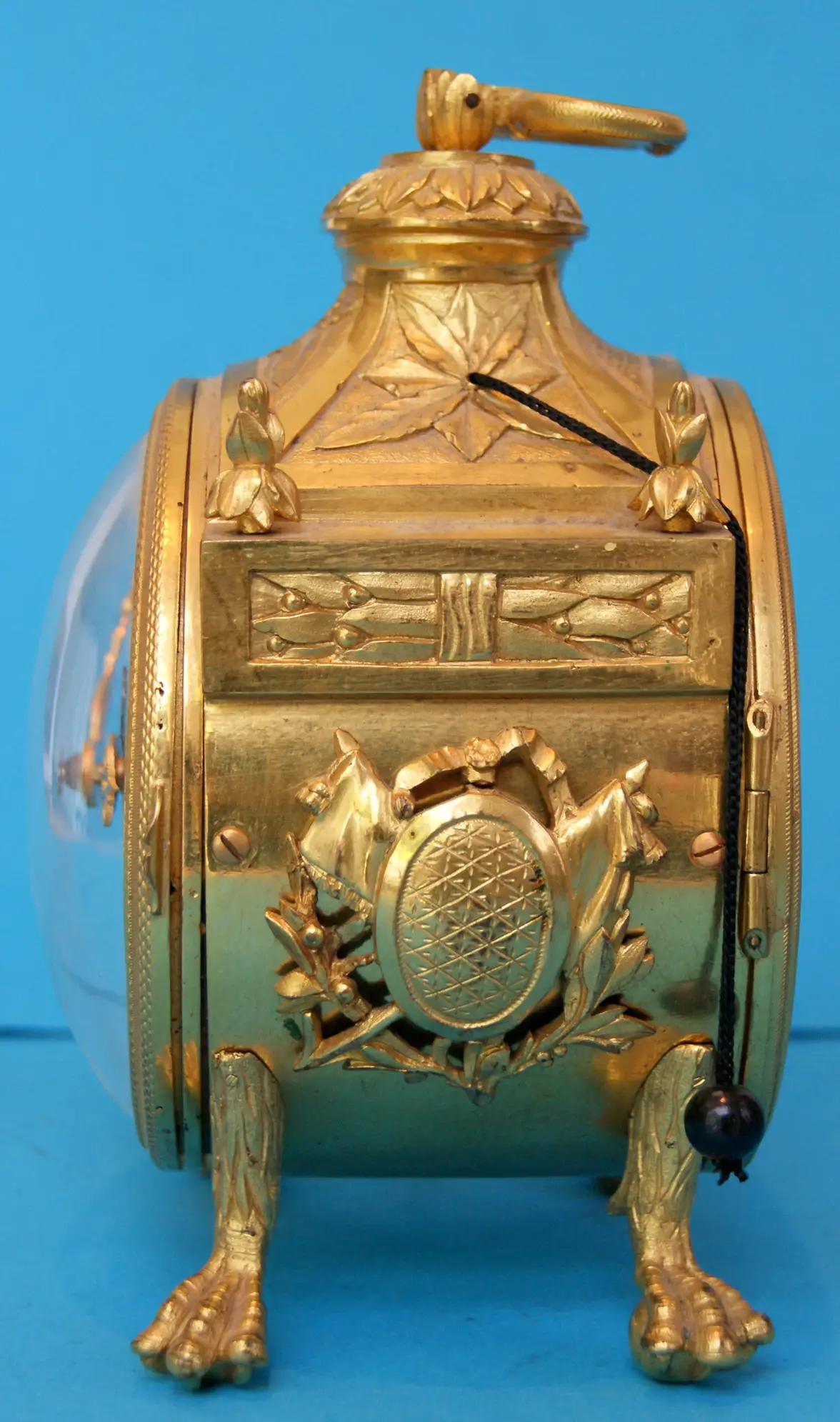
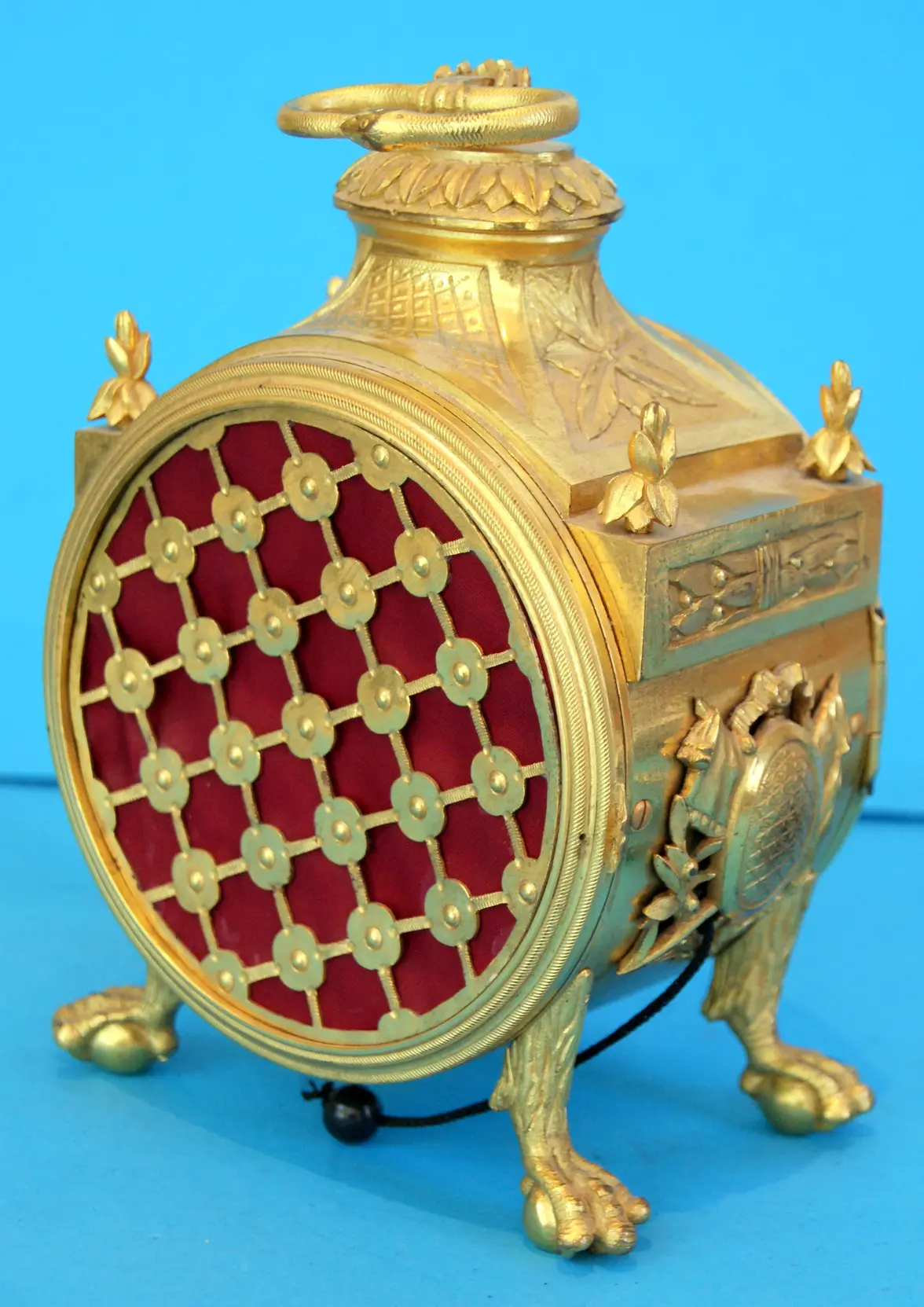
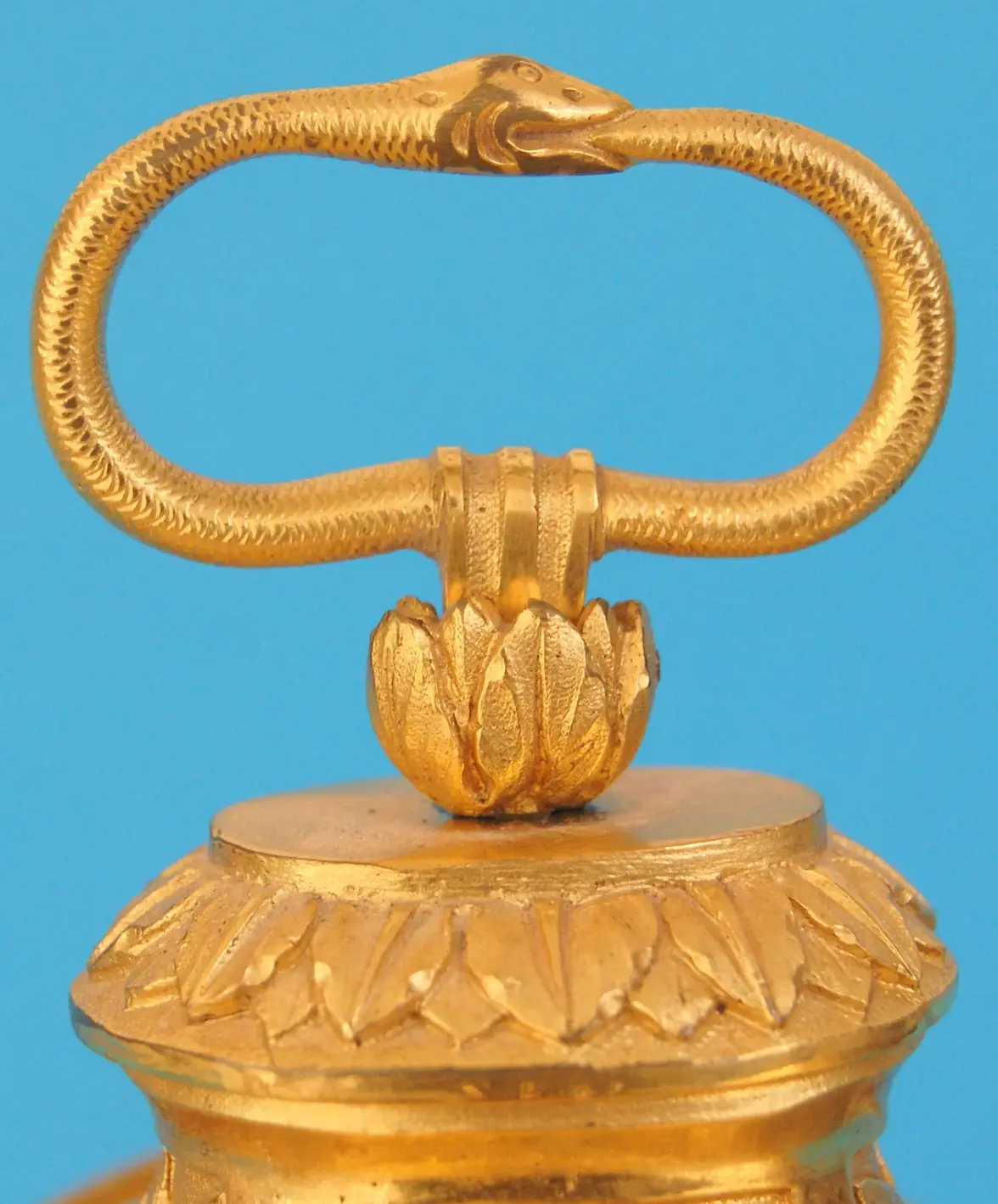
Here is a somewhat older "Officers Clock" or "Travel Clock", dating in the 1780s. It strikes the hours and quarters, has repetition and alarm function. Samuel Roi, known to Breguet by occasion of Breguet´s Swiss exile during the French revolution, had later been invited by Breguet to work for him in Paris, but Roi declined. Presumably because Samuel Roi was at the time himself one of the most celebrated clockmakers.

 
Posts
15,477
Likes
45,824
Beautiful! Possibly fire gilded using heat, with gold dissolved in mercury! Undertaken only by those dedicated to the craft……in a abbreviated career!
 
Posts
43
Likes
138
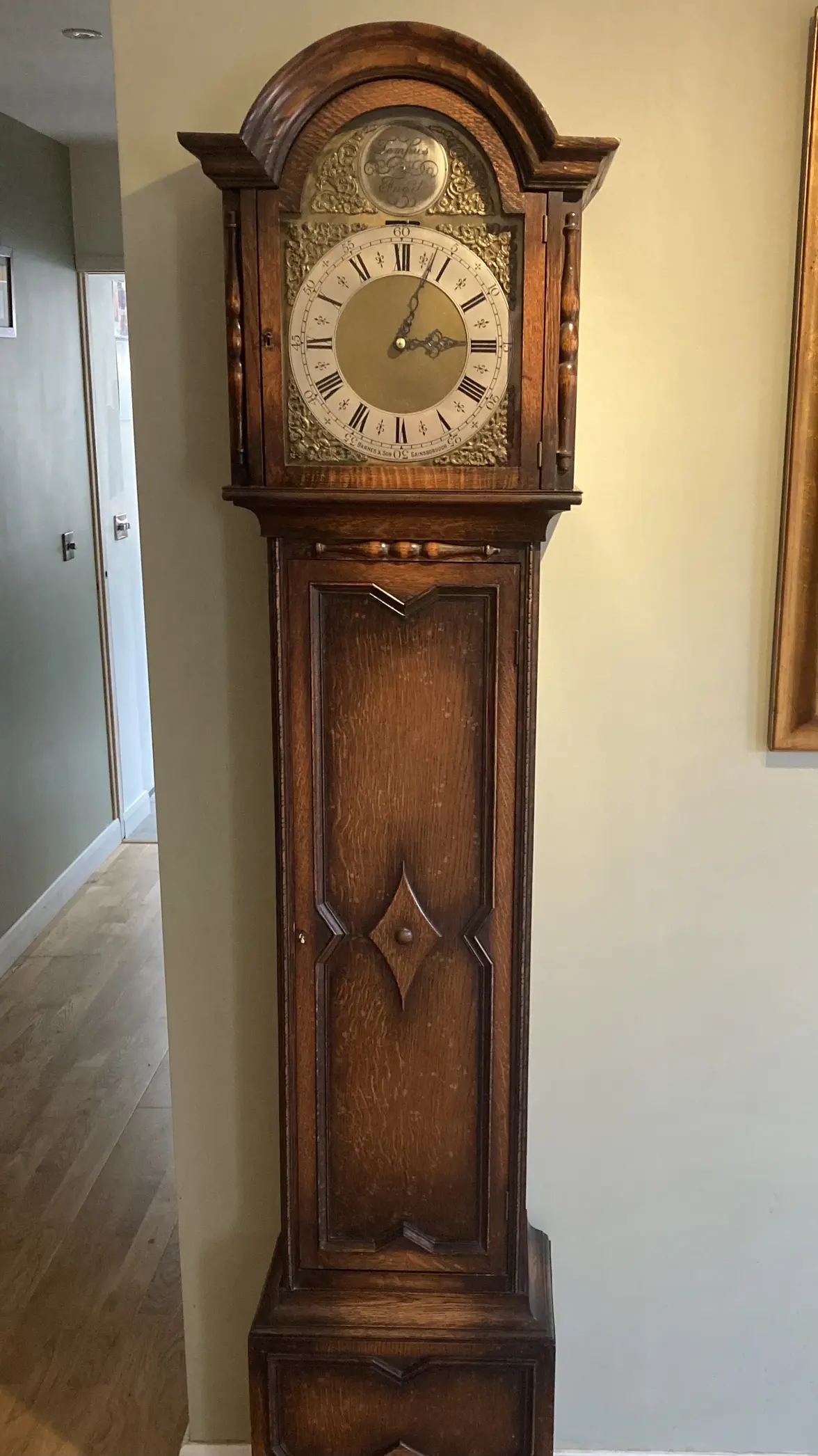
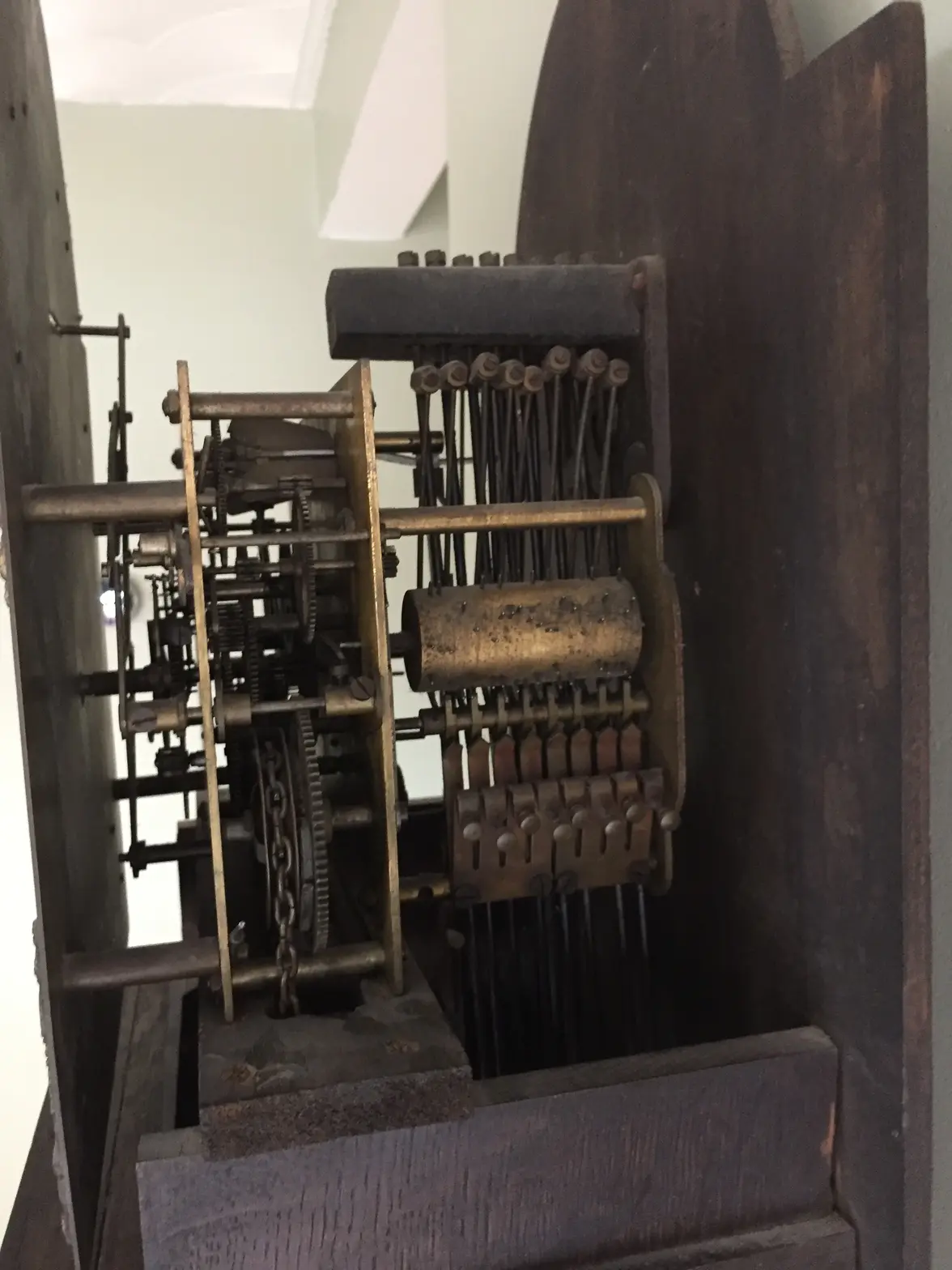
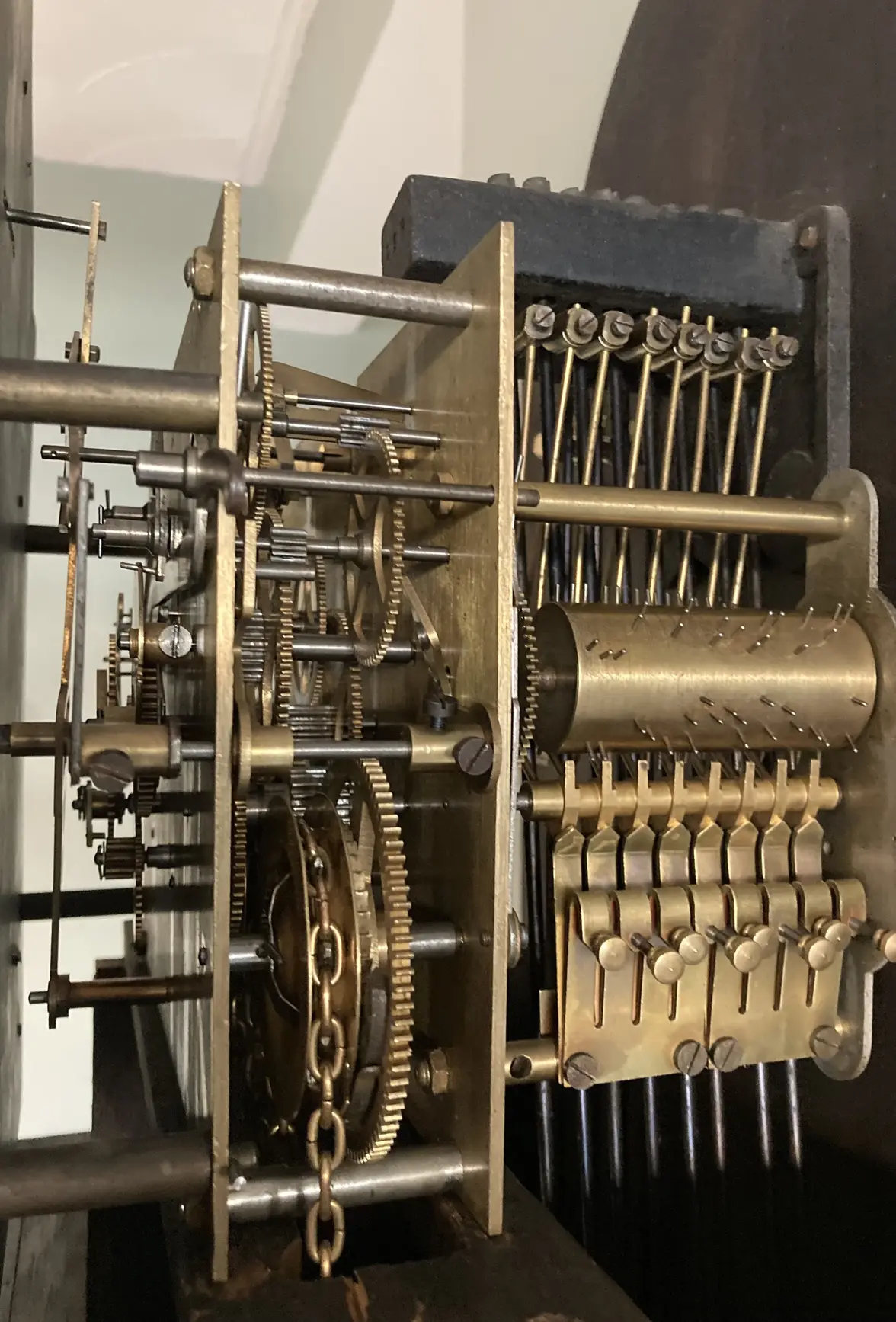
I posted this family longcase clock a while ago and the condition in those photos shamed me into getting what I think is probably its first service in at least 40 years ☹️. Thankfully it’s now back and filling the house with sound again after a thorough service and some minor re-bushing work, with some before and after shots below:

 
Posts
632
Likes
2,134
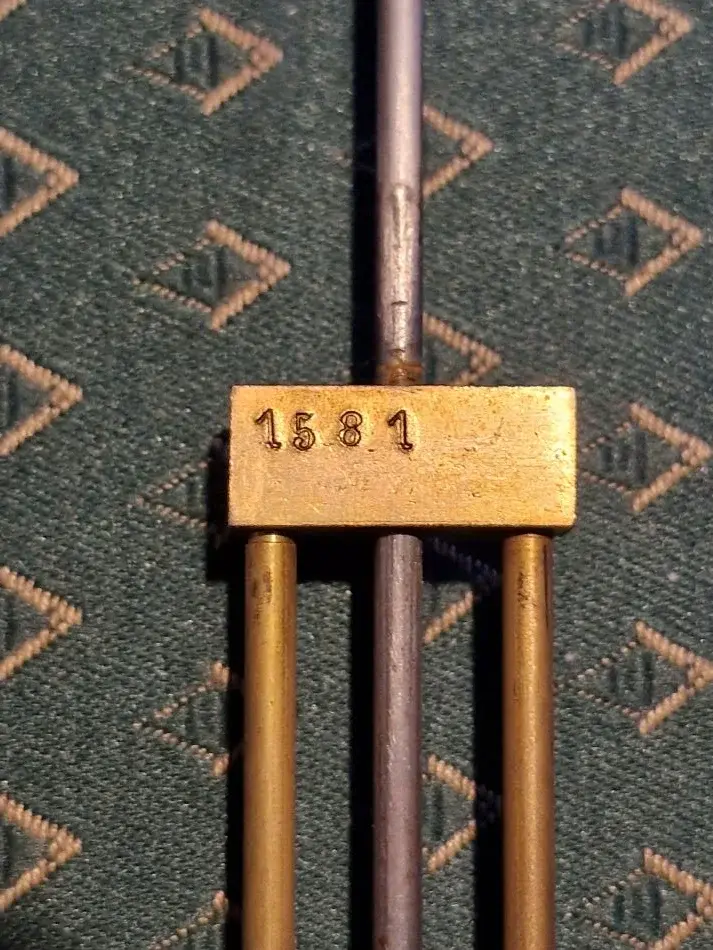
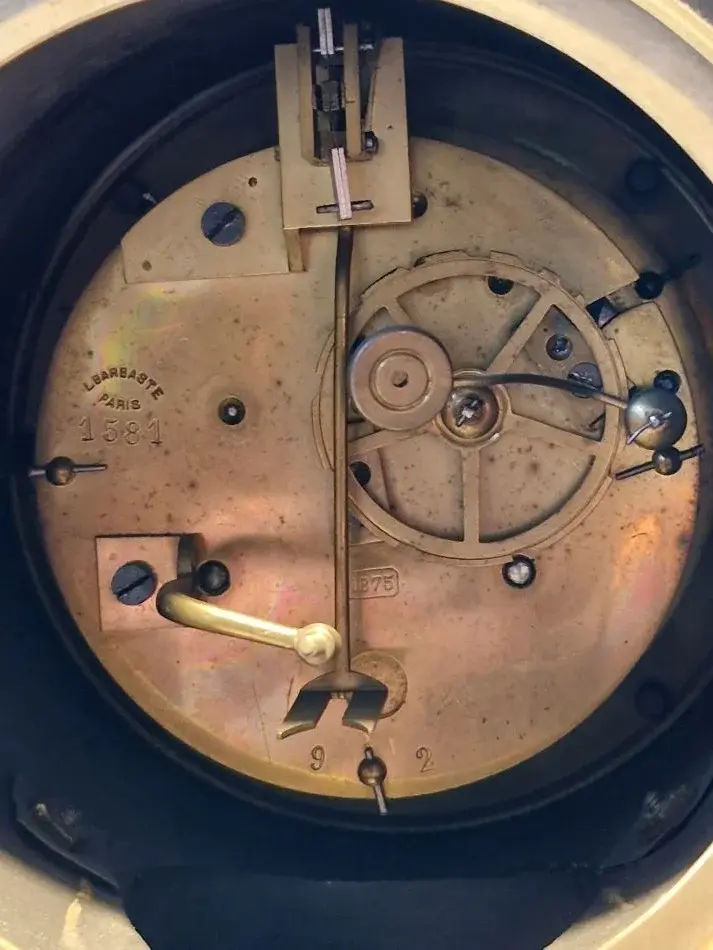
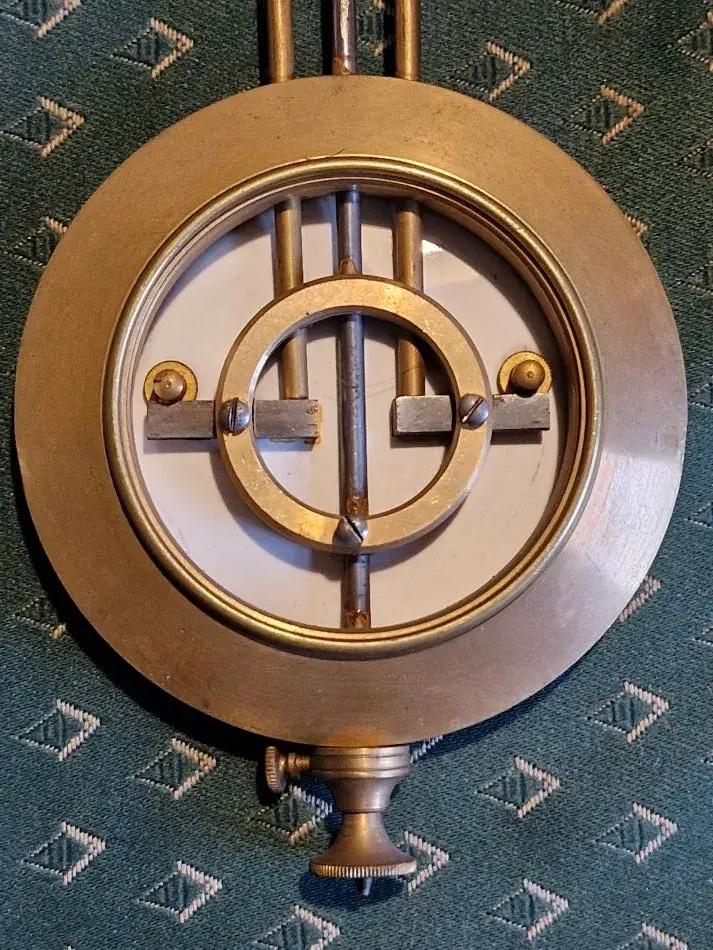
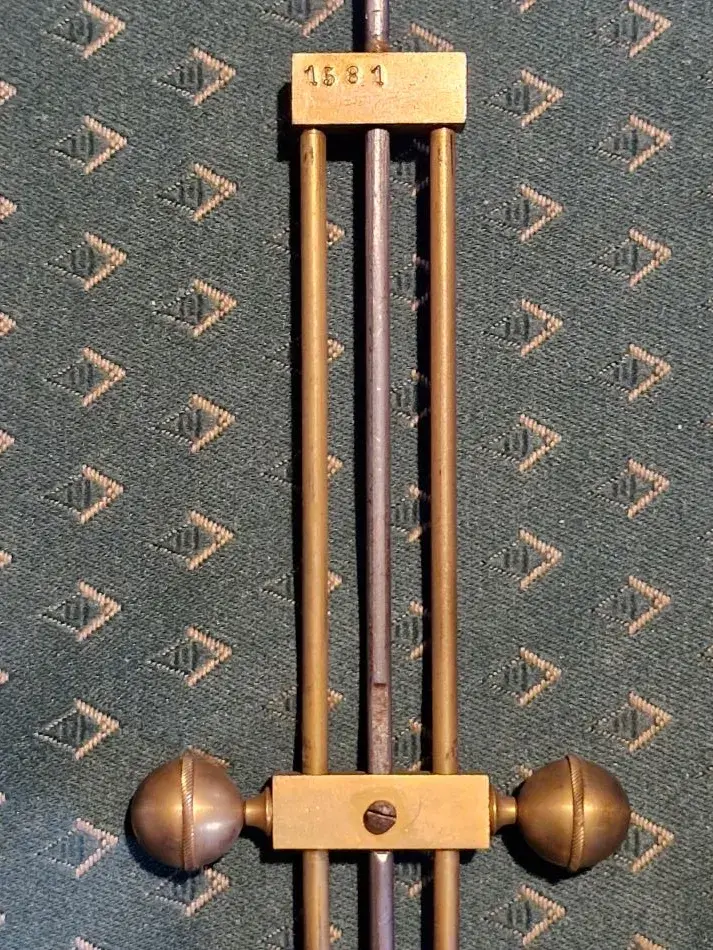
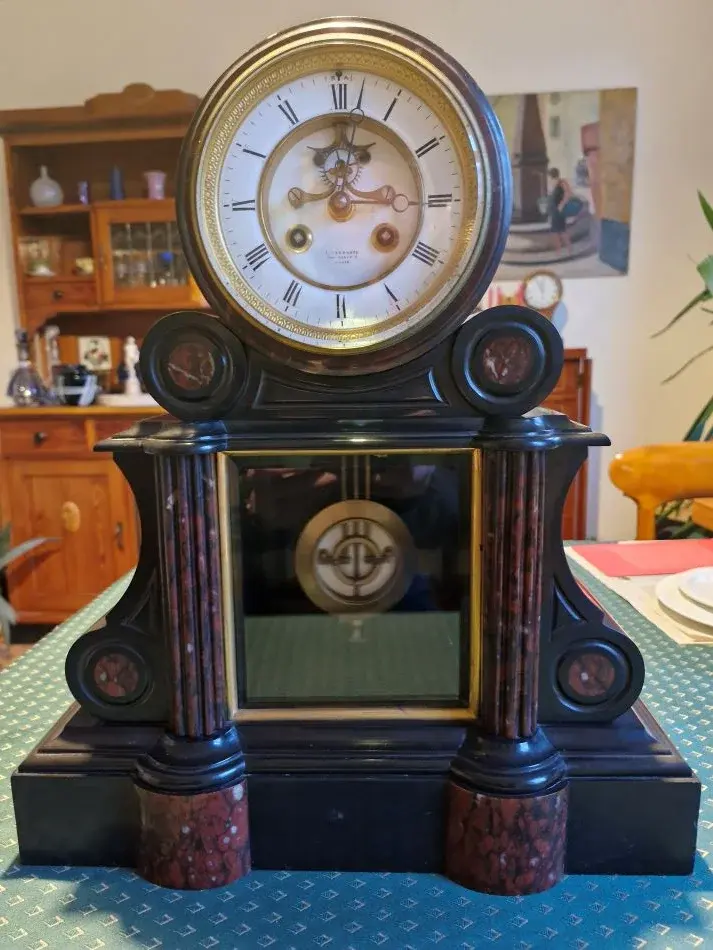
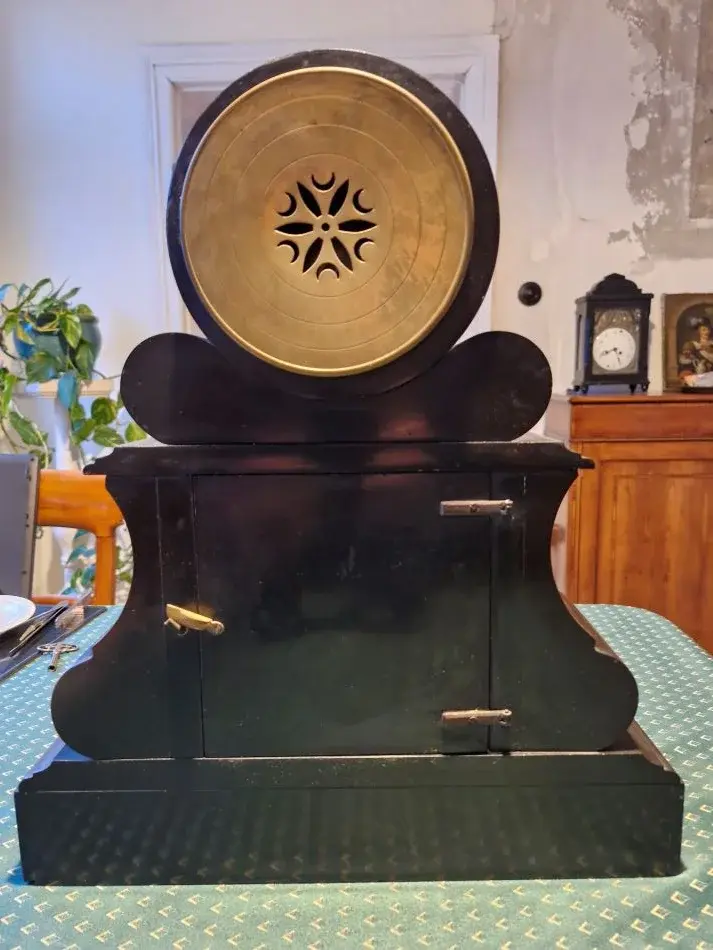
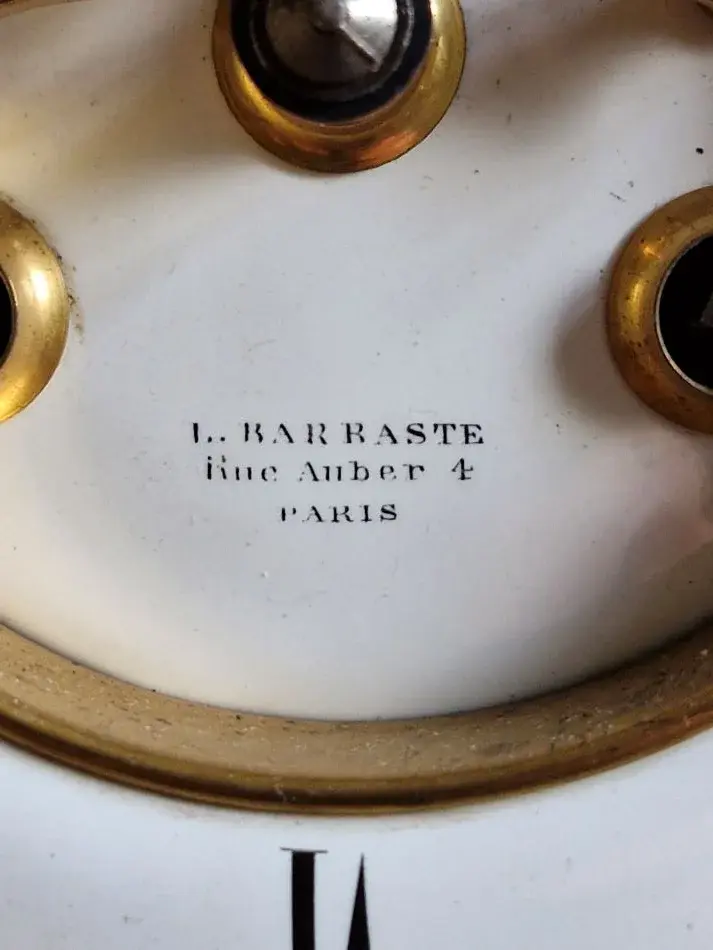
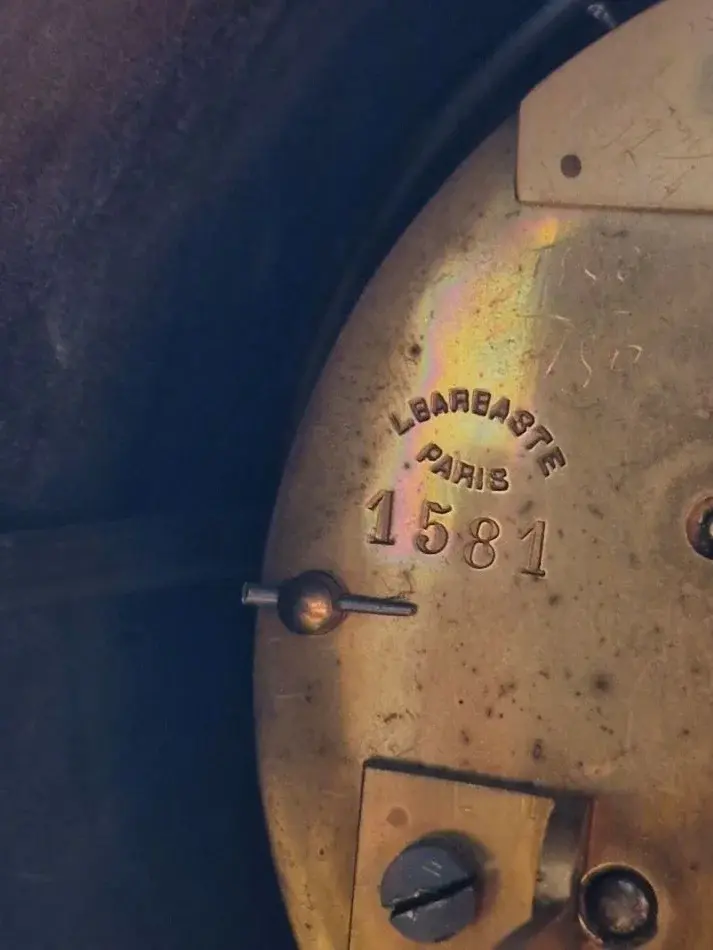
You might like this bracket clock. It raised my attention, as soon as I noticed that it has an Ellicott pendulum (a temperature compensated device invented by Ellicott). It was up for auction and nobody wanted it, since these French marble clocks are not really sought after in these times. So it was up for grabs. And they are really heavy. When fetching it, the surprise and joy was on my side. Really near perfect condition of case, dial and movement, of course working without any fault (a lubrication service always is a good idea), the movement numbered and even a numbered pendulum, the numbers matching. This is really rare.


And even with the original winding key! This was quite a struggle though, because it was not found initially and the folks at first seemed reluctant to search for it. But with gentle pursuation it was fould, it had been misplaced with another clock (neither fitting geometrically thereto, nor in style). Here it is.

 
Posts
15,477
Likes
45,824
You might like this bracket clock. It raised my attention, as soon as I noticed that it has an Ellicott pendulum (a temperature compensated device invented by Ellicott). It was up for auction and nobody wanted it, since these French marble clocks are not really sought after in these times. So it was up for grabs. And they are really heavy. When fetching it, the surprise and joy was on my side. Really near perfect condition of case, dial and movement, of course working without any fault (a lubrication service always is a good idea), the movement numbered and even a numbered pendulum, the numbers matching. This is really rare.


And even with the original winding key! This was quite a struggle though, because it was not found initially and the folks at first seemed reluctant to search for it. But with gentle pursuation it was fould, it had been misplaced with another clock (neither fitting geometrically thereto, nor in style). Here it is.

In an era before central heating in homes, the temperature compensating pendulum would have been a good feature to have. This clock is equipped with count wheel striking which likely dates it mid 19th century or earlier? Later French clocks of the style were updated with “rack and snail” striking.