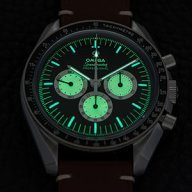
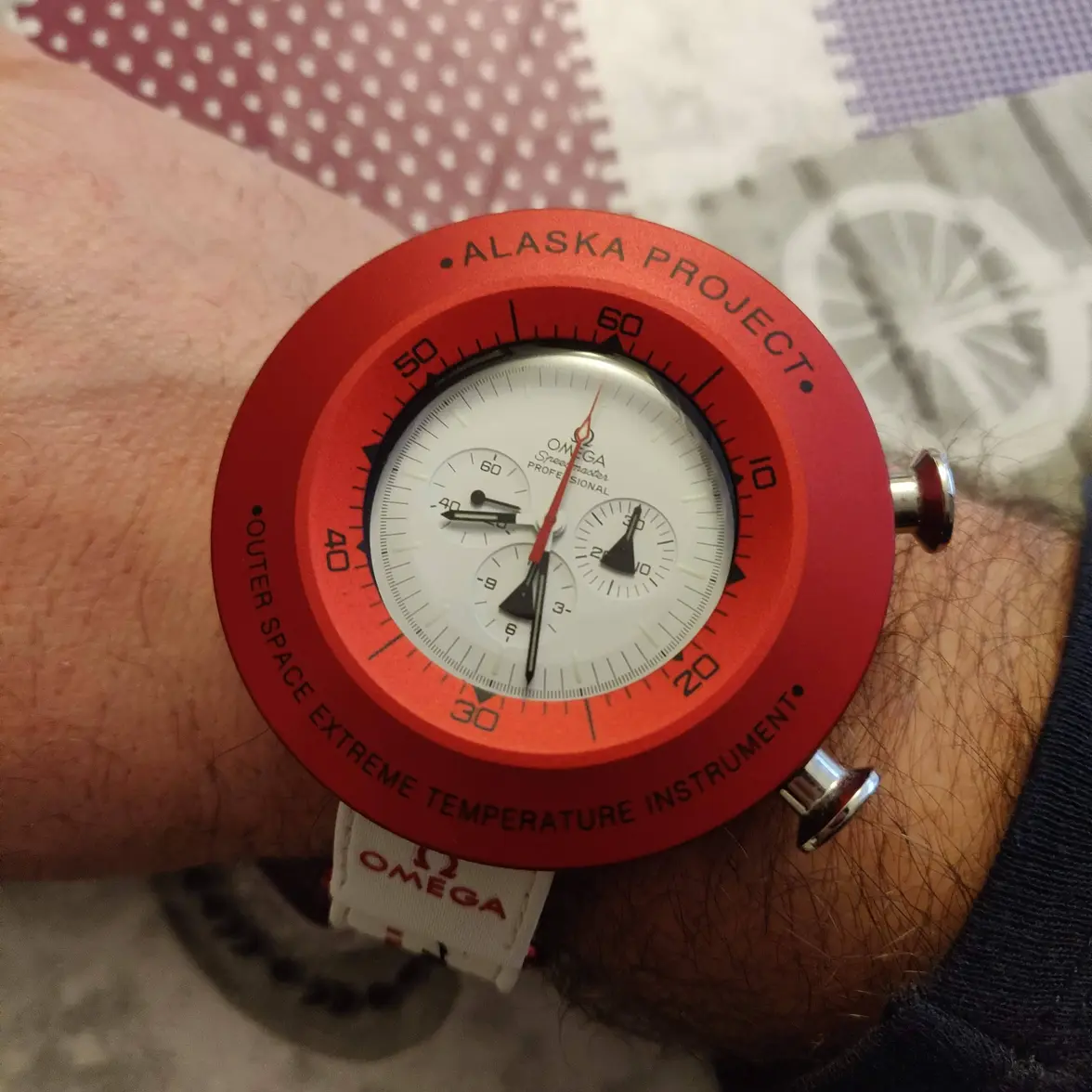
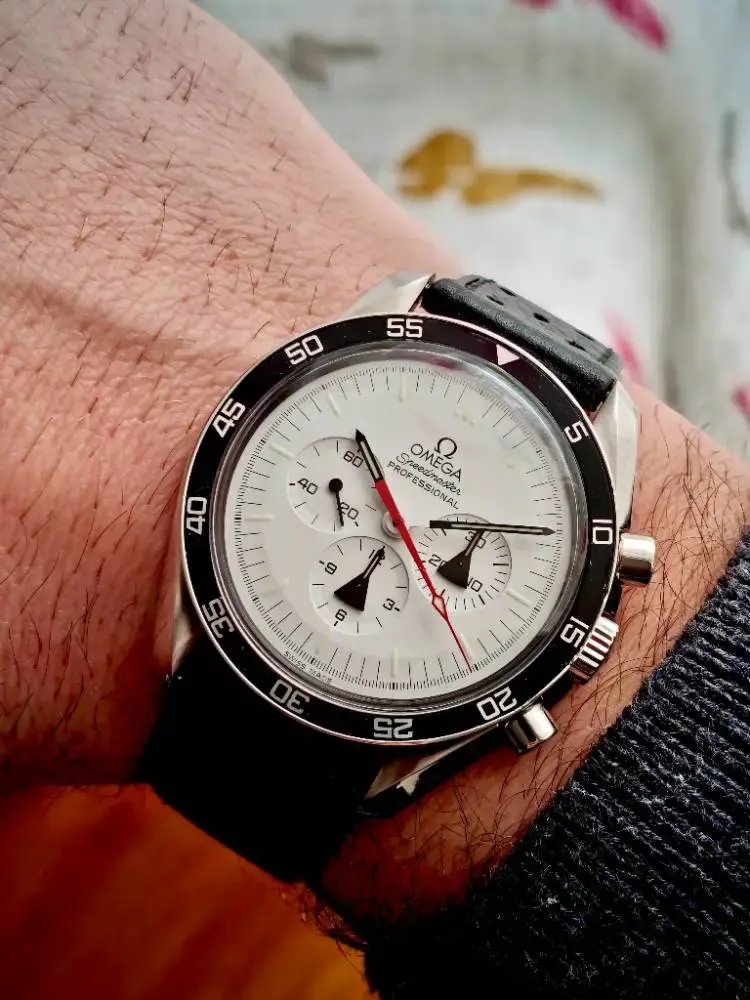
The history of Omega's Alaska Project is particularly interesting for both horology, Speedmaster & spaceflight aficionados:
During the Gemini flight, many astronauts wore two watches.
For Gemini III, NASA only had the Omega Speedmaster chronographs of the tests but both Grissom & Young wore one together with a battery-powered tuning fork movement Accutron Astronaut GMT pilot watch.
During Gemini IV, both McDivitt & White each wore two NASA-issued Speedmaster chronographs 105.003-63 (from the first batch delivered 23 April 1965, as it was the first mission with launch control in Florida (Eastern Time) and mission control in Texas (Central Time).
During Gemini V, 5 watches were worn 4 NASA-issued Speedmaster 105.003 with Cooper & Conrad each wearing a personal pilot watch, Cooper an Accutron Astronaut (worn on Faith 7) and Conrad an automatic Glycine Airman automatic pilot watch (which he would also wear on Gemini XI, exposing the automatic waqtch directly to outer space)
Long story short, during the post-Gemini review all procedures and hardware were discussed going from camera's to wrist watches.
NASA astronaut feedback on the Omega Speedmaster:
Brushed case to avoid reflections of Sunlight
More legible chronograph, both for the subdials and the bezel
☕
Time for Omega to design & produce the ultimate space watch, innovating the Speedmaster chronograph inside (new alloys, oils, etc...) and out (Titanium, new glass, bezel, outer case...)
However, US spaceflight history took a turn with the Apollo 1 fire (during which the Speedies coped well) and during the two-day Gemini summary review in February 1967, the focus turned to the future of Apollo with NASA Director Robert Gilruth urging to avoid "second-guessing" and speculation on what had happened.
Omega still had to deliver the 4th and 5th batch of Speedmaster chronographs to NASA
☕
By 1969, the Omega Speedmaster Alaska Project was ready but it came too late for the first Moon landings and by 1970, Apollo 18, 19 and 20 had been cancelled.
Moreover, after the Apollo 13 accident, NASA astronauts' feedback again asked for a legible "60 seconds" bezel and that's how the prime & back-up Apollo 15 crews got their NASA-issued Speedmaster 105.012 with "60 seconds" bezel (info firsthand from Alfred Worden with whom I've talked on the subject during the VIP event in Berlin Germany January 2019).
In 2026 I will be touring with a talk focusing on "Why these weren't used in flight during Apollo"
🧐
The story on how the Omega Speedmaster (flightmaster) got behind the Iron Curtain and how cosmonauts were introduced to the Alaska project can be read in two articles:
" To Russia With Love " and " Time Peace : Speedmaster on Apollo-Soyuz "
.