
60s DON bezel - authenticity confirmation?

Posts
128
Likes
112
Interesting, so if your DON is from a 145.022-69 and the OP's bezel is from the mid 60's then we already got the comparison and the fonts are the same. These AI chatbots just make stuff up sometimes.

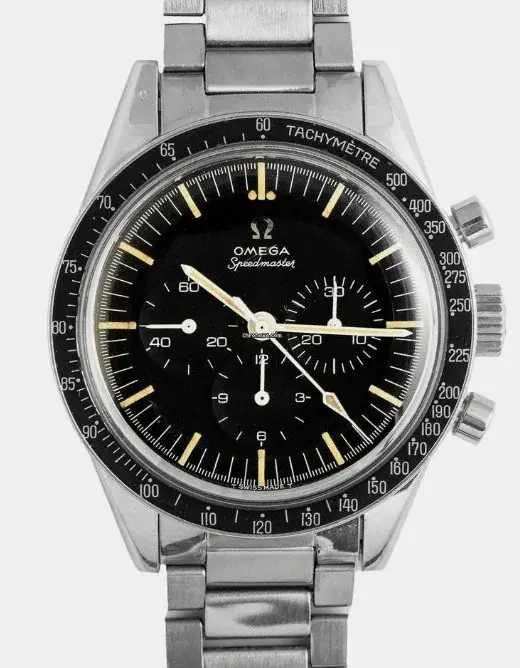
Here is a 105.003-63. Nice clean shot of the bezel from a straight angle. Maybe you could compare it to your DON in the same way?

Ya, AI chatbots make stuff up all the time, and at the moment introduces so much convolution and misinformation into the mix that I don't find it helpful for anything nuanced. They will get broad stokes right and make you feel comfortable, followed by confident misinformation.

The image you have provided unfortunately is too low resolution to be meaningful. Something like a minimum of 1280x1280 will give good results. I'll start my own thread soon and will create a set of parameters for users to submit images to soon 😀
 
Posts
128
Likes
112
Thanks again for all the analysis and time spent on the comparisons. Much appreciated.

I’ve definitely learned a lot from this thread. Looks like I’ll need to work on my photography skills before posting my 105.012 😄
You are most welcome! I do enjoy it 😀

One more note on the photography side of all of this when trying to study physically small high contrast details like bezel font features that are 0.001" in size -
Locking off and stabilizing your camera is key, along with good lighting so that your exposures can be as minimal as possible. The small serifs can get lost in "long" exposures.
Shooting orthogonal to the bezel will minimize differences in focus and allow for best alignment.
Additionally, many cameras, and phones will automatically post process your images and do things such as noise reduction that will drastically alter the very things you are trying to observe. In many or most cases (especially on phones), it is not even something you have control over.

Cheers!
ZWD
 
Posts
5,316
Likes
24,321
The bezel you are showing appears to be a genuine Omega DON bezel, albeit one with the thicker style font.

There has long been discussion about why some DON bezels show a noticeably thicker font than others, and whether there is any reliable correlation between font style and period of fitment. Some speculate that the thicker appearance is the result of wear in the manufacturing dies over time. Others suggest that different tooling or separate production batches may account for the variation. There is no definitive documentation evidence that settles this question.

Personally, I prefer to see the thinner font bezels - particularly on earlier references - with strong, well-defined serifs, for example at the centre of the “3” in 130. Those details tend to give a sharper, more refined appearance which I associate with earlier production.

The difficulty, of course, is that bezels are service items and have been changed frequently over the decades. In most cases we simply cannot know with certainty when a particular bezel was fitted to a given watch.

From my standpoint, I am less keen on the thicker font bezels on earlier watches, and for me the thinner font examples command a premium.
Edited:
 
Posts
9
Likes
2
The bezel you are showing appears to be a genuine Omega DON bezel, albeit one with the thicker style font.

There has long been discussion about why some DON bezels show a noticeably thicker font than others, and whether there is any reliable correlation between font style and period of fitment. Some speculate that the thicker appearance is the result of wear in the manufacturing dies over time. Others suggest that different tooling or separate production batches may account for the variation. There is no definitive documentation evidence that settles this question.

Personally, I prefer to see the thinner font bezels - particularly on earlier references - with strong, well-defined serifs, for example at the centre of the “3” in 130. Those details tend to give a sharper, more refined appearance which I associate with earlier production.

The difficulty, of course, is that bezels are service items and have been changed frequently over the decades. In most cases we simply cannot know with certainty when a particular bezel was fitted to a given watch.

From my standpoint, I am less keen on the thicker font bezels on earlier watches, and for me the thinner font examples command a premium.
Very interesting points regarding tooling wear and batch variation; I hadn’t thought about it that way.

It’s indeed surprising that no official documentation seems to settle the question.

Thanks for sharing your perspective.