(1970's) 7750 chrono-automatic movements used by omega

Posts
77
Likes
43
written by chuck maddox

Danish Mark IV Variant / Mark IV(b)
Mark4b.JPG Note: the "Danish" moniker is due to this piece being discovered on a Danish website, not because it was necessarily a model intended for Denmark...


As I have only seen this one picture of this variant it is hard to draw any solid conclusions about this variant. It appears to be the same watch as a Mark III(b) or a Seamaster c.1040 Cushion case counterpart described above but with a different dial. The case also appears like it might have been coated with a PVD-type material to make it a black cased chronograph that would later become in vogue with the introduction of Porsche Design "Black Watches" in the late 1970's although with digital photography, it's possible that lighting conditions could cause polished or brushed Stainless Steel to appear black. This particular watch is posted for sale on a Web page in Denmark priced at 7,800 Krones, an amount roughly exchanging to $1,035, at the writing of this section. Any additional information on this watch, including someone who could translate Danish into English would be greatly appreciated!
UPDATE: As of late Spring/Early Summer of 2003, two additional Mark IV(b)'s have shown up on the web both in the Denmark region of Europe. Fortunately Peter Bjerring had the foresight to contact me and I requested him to contact John Diethelm with Omega Vintage Information. The following is John's reply:

Following info from our archives :
OMEGA - SEAMASTER
Mvt. No. 34'680'xxx (I xxxed out the last three digits -- Chuck)
Automatic calendar chronograph of calibre 1040
Watch reference : ST 176.0007 - stainless steel case: diameter 38 x 38 mm
Strap lug-size: 22 mm
Armoured hesalite glass

Manufactured and delivered to Germany in August 1973 !
Therefore, the illustrated watch is correct, except the dial and hands are the wrong ones…
i.e. they should belong to another chronograph reference " ST 176.0009 " &endash; cal. 1040 &endash; barrel shaped steel case with " mineral flat glass" and having a diameter of 41.5 x 45 mm ! - collection Speedmaster Professional Mark IV (collection 1974)
Thus, we can lay to rest the Mark IV(b) as a misdialed Mark III(b) or Seamaster c.1040. It does not appear that this configuration is something that originated from Bienne originally in the mid-1970's...
 
Posts
1,819
Likes
5,923
so im now confused, (wich is not hard these days)
so unlike other watch companies omega did not use a 7750 in the 1970's in any form?
Correct. Omega was part of SSIH, as was Lemania. Lemania made all of Omega's chronograph movements until after the industry realigned in the 1980s.

As for the Chuck Maddox article, I have read it and am familiar. He clearly was convinced it was a put together watch after his correspondence with Omega. The case may have been PVD or DLC (or just a bad photo) but there's nothing to suggest that it was a factory finish. I'm not aware of that type of finish on any Omega watches in the early 70s when they were using cal. 1040.
 
Posts
77
Likes
43
Correct. Omega was part of SSIH, as was Lemania. Lemania made all of Omega's chronograph movements until after the industry realigned in the 1980s.

As for the Chuck Maddox article, I have read it and am familiar. He clearly was convinced it was a put together watch after his correspondence with Omega. The case may have been PVD or DLC (or just a bad photo) but there's nothing to suggest that it was a factory finish. I'm not aware of that type of finish on any Omega watches in the early 70s when they were using cal. 1040.

Thank you very much for taking the time to follow and give advice in this thread
the only curiosity with the case back is the 280 GX (or poss 260 6Xif badly stamped)
 
Posts
77
Likes
43
I was interested enough with this case that I bought it last night.

the coated case is interesting in its own right if its period.

This is all about knowladge, thank you for offering some of yours ,it is appreciated.
Edited:
 
Posts
77
Likes
43
I found this in the article

Watch Legends: The Calibre Lemania 5100
"Not beautiful but Rare"


Indeed, only a few integrated (as opposed to modular) automatic chronographs remain on the market. Nearly all of these are at least 20 years old.

It started with Zenith’s El Primero in 1969. The El Primero’s strongest rival was the calibre 11/12 from Breitling, Heuer, Hamilton and Buren that was released the same year. However, the El Primero is today, 20 years after the production of the calibre 11/12 ended, still in production.
In 1972, Lemania released the calibre 1340 that lives on today, albeit after a long hiatus, as the 1350.
Today’s ubiquitous ETA-Valjoux 7750 was released in 1973. Five years later, the 5100, the simplified successor to the 1340/1341 and the focus of this article, was released. (Actually, Omega produced Lemania 5100 movement based Speedmasters from 1974. This is exceedingly well documented, so the movement has to date from 1974 at the very latest, and may even have bowed in 1973)...
Edited:
 
Posts
77
Likes
43
Not a 1970s 7750. Per A Journey Through Time the earliest Omega use of cal. 7750 based caliber was 1150 in 1990, which was initially offered in 17J.
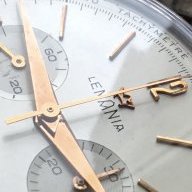
thank you for your help with this thread
 
Posts
77
Likes
43
even though this is about later changes with the 5100 and 7750 it doesn't dissmiss the possiblity that Omega could have been looking internally at this in the 70's ?

this is an extract from watch legends
In the late 1990's there seemed to be more firms who had previously produced automatic chronographs exclusively or primarily with the Lemania 5100 introduced new models with the Valjoux 7750 either in parallel with their 5100 offerings or to replace them. Bell & Ross introduced the Space 3 in two varieties of 7750, Revue Thommen replaced their Airspeed (5100 Based) with a Airspeed II (7750) line, and so on. So while Tutima, Sinn and others soldiered on the long-term viability availability of the Lemania 5100 seemed to be on shaky ground at best. Most of us who watch the currents of the Swiss watch industry while conceeding that some of this was probably attributible to firms wishing to keep their costs down in a world economy seemingly loosing steam since the "Asian Contagion" in 1997 and hence maintaining profits, the more open-minded of us would mention that perhaps the close shave the 5100 had with the executioner's block may have scared off firms who wished to produce 5100's, or perhaps a steady stream of supply wasn't as easy to obtain as the ETA/Valjoux 7750.
 
Posts
4,440
Likes
18,258
thank you very much for that

so im now confused, (wich is not hard these days)
so unlike other watch companies omega did not use a 7750 in the 1970's in any form?
Both Omega and Lemania was under the same ownership, SSIH, until SSIH sold Lemania in order to raise funds in the early 1980s.
You will not find Valjoux based 70s Omega. Valjoux was a competitor to SSIH at the time.
 
Posts
4,440
Likes
18,258
even though this is about later changes with the 5100 and 7750 it doesn't dissmiss the possiblity that Omega could have been looking internally at this in the 70's ?

this is an extract from watch legends
In the late 1990's there seemed to be more firms who had previously produced automatic chronographs exclusively or primarily with the Lemania 5100 introduced new models with the Valjoux 7750 either in parallel with their 5100 offerings or to replace them. Bell & Ross introduced the Space 3 in two varieties of 7750, Revue Thommen replaced their Airspeed (5100 Based) with a Airspeed II (7750) line, and so on. So while Tutima, Sinn and others soldiered on the long-term viability availability of the Lemania 5100 seemed to be on shaky ground at best. Most of us who watch the currents of the Swiss watch industry while conceeding that some of this was probably attributible to firms wishing to keep their costs down in a world economy seemingly loosing steam since the "Asian Contagion" in 1997 and hence maintaining profits, the more open-minded of us would mention that perhaps the close shave the 5100 had with the executioner's block may have scared off firms who wished to produce 5100's, or perhaps a steady stream of supply wasn't as easy to obtain as the ETA/Valjoux 7750.
The main reason most companies switched to the 7750 from the 5100 was because Swatch announced that they intended to cut of supplies to companies not part of the Swatch Group.
Lemania was back with Omega in the Swatch Group from the mid 90s.
 
Posts
77
Likes
43
Both Omega and Lemania was under the same ownership, SSIH, until SSIH sold Lemania in order to raise funds in the early 1980s.
You will not find Valjoux based 70s Omega. Valjoux was a competitor to SSIH at the time.

thank you
it looks more like that the case back of this watch is frankin
Edited:
 
Posts
77
Likes
43
That set was on Ebay in December. I was curious too, but I think the seller's "baggie" was someone's never-completed franken project. My best guesses:
-Mid-Case could be a custom-PVD case to a 176.007 or similar
-crystal/bezel could be from a 176.0010 or a Tissot Navigator
-Caseback =?? Who knows. I'm leaning fake.

Omega never branded it "7750", it was always modified and relabeled as an Omega calibre. Even so, the outside of the caseback is not marked in anyway similar to how Omega did in the past. And Omega using a Valjoux 7750, even in a prototype, makes no sense at all for the 1970s, as Valjoux and Lemania were rivals at this time.

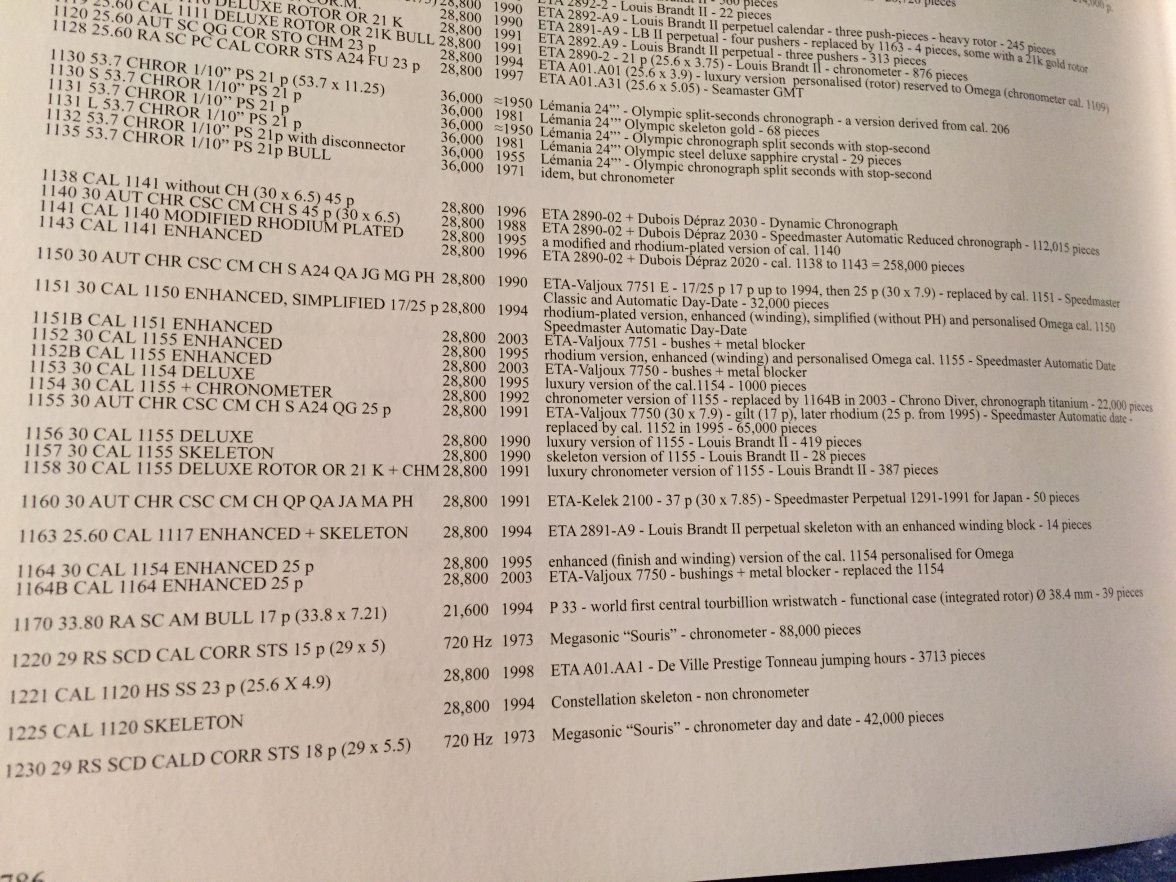
Thanks for your comments.
When the watch arrived you were right..... it was a frankin project. The case seemed to be a custom -PVD case. the bezel was from a tissot and the crystal was a mineral glass inserted to marry everything together. The case back????

I contacted the vendor and explained what was wrong he accepted the return of the watch case and to my knowladge has not put it up for sale again?
thank you very much for your help.
cheers
 
This website may earn commission from Ebay sales.