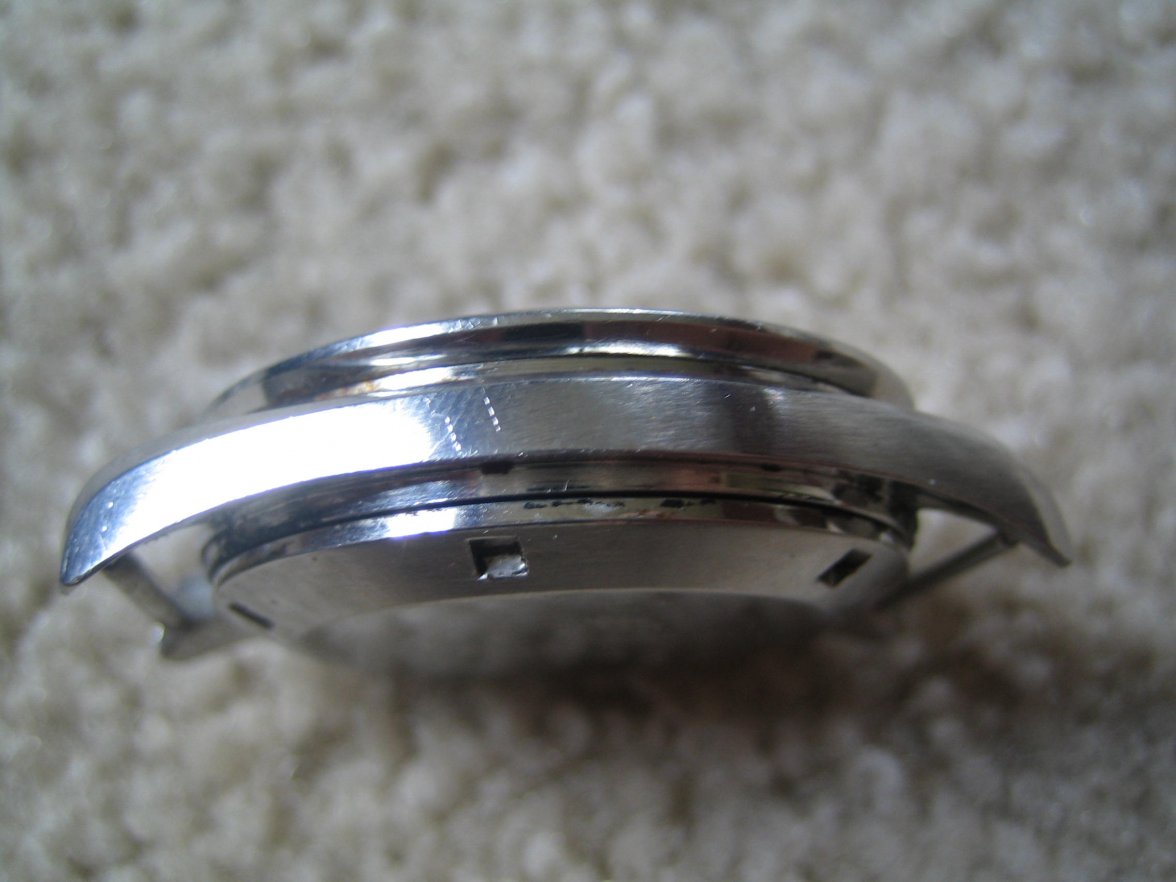
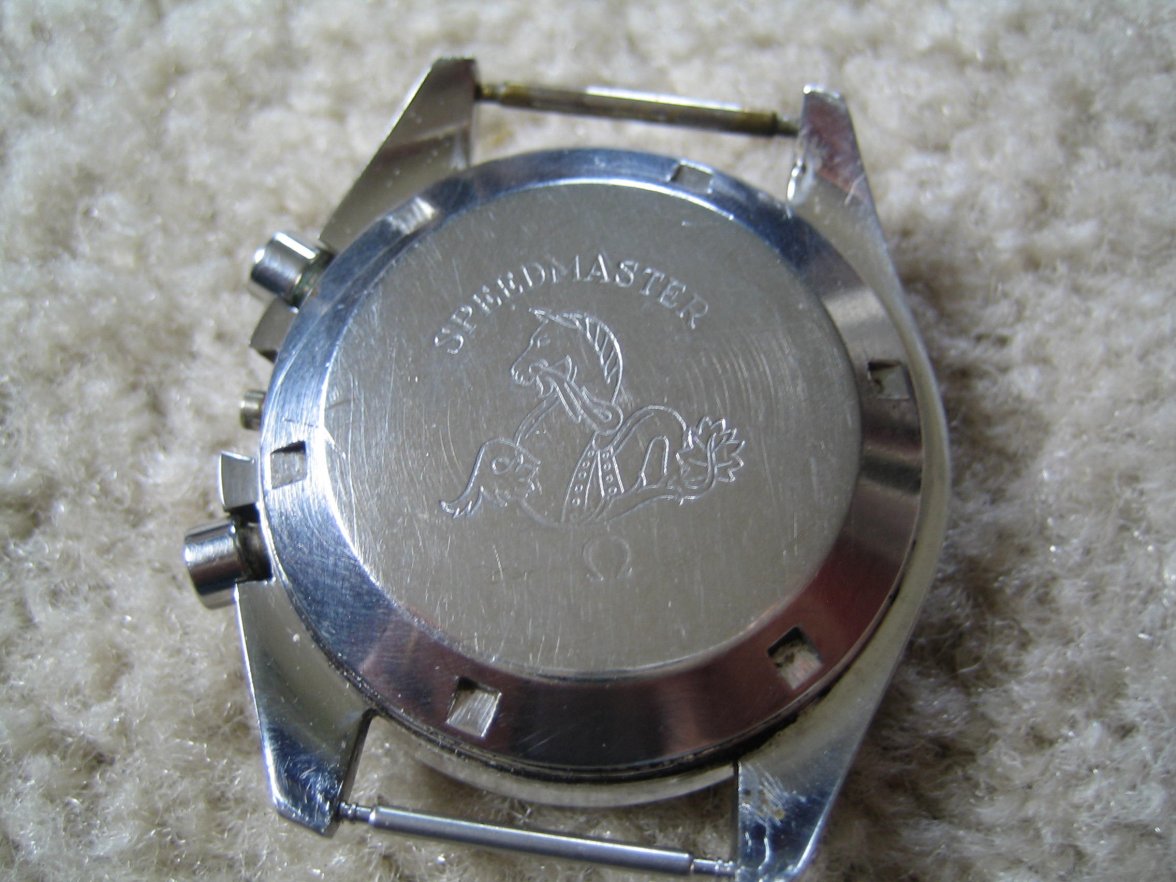
1967 Omega Speedmaster find

Posts
936
Likes
1,498
If you choose to put it through a cleaner, I'd be curious to know how much of that comes off / what percentage of the movement is irreparable.

Did the seller even know what it was? Regardless of the disappointing movement, the case and bezel are great, and the patina on the markers is great. As long as you paid next to nothing for it, I still say it's a good find.

yes, they had an idea as it was not given away. but obviously they really didn't care about too much since it was just in the bucket of junk. i'm going to take it to a watchmaker and see what he has to say about it.
 
Posts
586
Likes
655
True that the parts will still be pitted even after the rust is gone among other things I am sure. It's sad to see a nice watch end up like this.
 
Posts
936
Likes
1,498
As I've already said to the OP over some PM's we had about this watch, the movement will need a lot of parts replaced. Rust is not just something that forms on the surface of parts, but in forming it eats away material. Removing the rust, in particular rust this severe, will most certainly leave behind pitted and damaged surfaces. If I were to simply run the parts through the cleaning machine they would come out clean of oils and dirt, and still rusty.

Just getting the watch apart will be a challenge, because this rust is quite heavy. Most likely all the wheels will need replacing, so balance complete (lucky to find one under $600), escape wheel and pallet fork, which are both not available from Omega also. Then the chronograph parts like the springs etc. would all have to be looked at, and although you might be able to save the odd thing here and there, it won't be much in my view.

When doing a restoration like this, each part has to be looked at to make sure it's sound for it's intended purpose, so for something like a spring or lever, it has to not be weakened to the point it will break or fail to do the job. Then all rust must be removed - rust never sleeps as the saying goes.

Then if the parts has what I refer to as "operating surfaces" they have to be looked at to make sure they are in good shape. So on the hammer for example, where the flat polished surfaces meet the cams on the chronograph runner and minute recorder runner, those have to be flat, not pitted, and polished to a shine. Removing a lot of material to do this can cause problems, so if they are really bad, the piece must be replaced even if the rest looks good.

Donor movement is the way to go on this one.

Cheers, Al

Hi Al, I'll most likely do as you said and try to find a donor movement. I do have a 67 seamaster that has a 321 movement and try to swap out, but you mentioned it might not work as the height of the hands are different.
 
Posts
5,505
Likes
4,787
I think some of the parts can be saved like the bridges but the small parts will probably need full replacement
 
Posts
936
Likes
1,498
I think some of the parts can be saved like the bridges but the small parts will probably need full replacement

Do you think it's better to keep this whole movement and have for a few spare parts or sell it and let someone else have it who can try to salvage certain parts that knows what they are doing when disassembling. I think it comes down to cost and time and being able to disassemble it yourself if you can do it, rather than paying someone to do it and coming to the conclusion, there's not a lot that can be done.
 
Posts
5,505
Likes
4,787
Well you could strip the parts apart and clean them. The dial depending on how one cleans it might be worth something but as for the movement a case I would soak it in watchmaker rust removal liquid as soon as you can and then try to salvage the parts that are still usable. For me watches like this I tend to break them down and use them for the parts for other time period correct pieces but I find doing so part of my business so it may not apply to everyone.
 
Posts
29,246
Likes
75,639
I think some of the parts can be saved like the bridges but the small parts will probably need full replacement

Any brass parts like the bridges and main plate can be salvaged, but they will also require some work. If you look at this photo of a Cal. 321 movement with the chronograph parts removed, I have added a few red arrows to it:


The 9 arrows all point to steel items that are mounted on the 3/4 plate of the 321 movement. So yes, the brass plate itself can be used again, but likely all these steel items (tapped feet, posts, eccentrics, etc.) will have to be replaced. Some screw in, but others are pressed in place. And this isn't counting the obvious screws, or any parts on the underside of the bridge like the crown wheel and crown wheel core, click, etc.

I'll say it again - donor movement is the only reasonably economical way to go here...
 
Posts
29,246
Likes
75,639
Hi Al, I'll most likely do as you said and try to find a donor movement. I do have a 67 seamaster that has a 321 movement and try to swap out, but you mentioned it might not work as the height of the hands are different.

That isn't what I said...I said it would have to be looked at to make sure it would work or not.