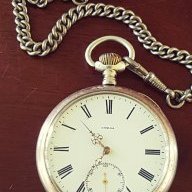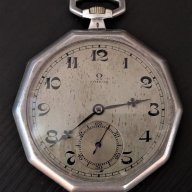
1947 Omega 37.5 T1 (Cal.140) in trouble...

Posts
9
Likes
0
Hi, I'm new to this forum but have recently, very slowly been getting to the watch refurbishment hobby. My interest is specifically in pocket watches. I have a few of them from Walthams, Elgins, Burlington, Ermano, Meda, Doxa, Omega. Just a small collection of what I'm able to find here and there.

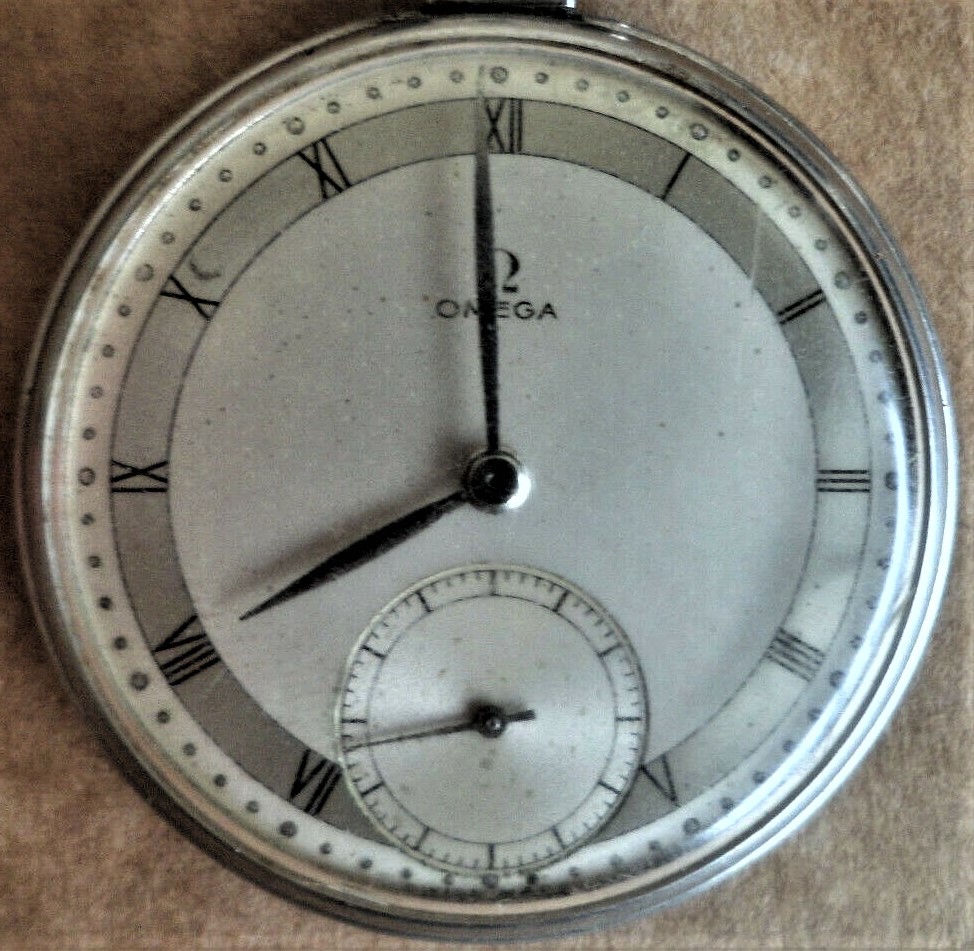
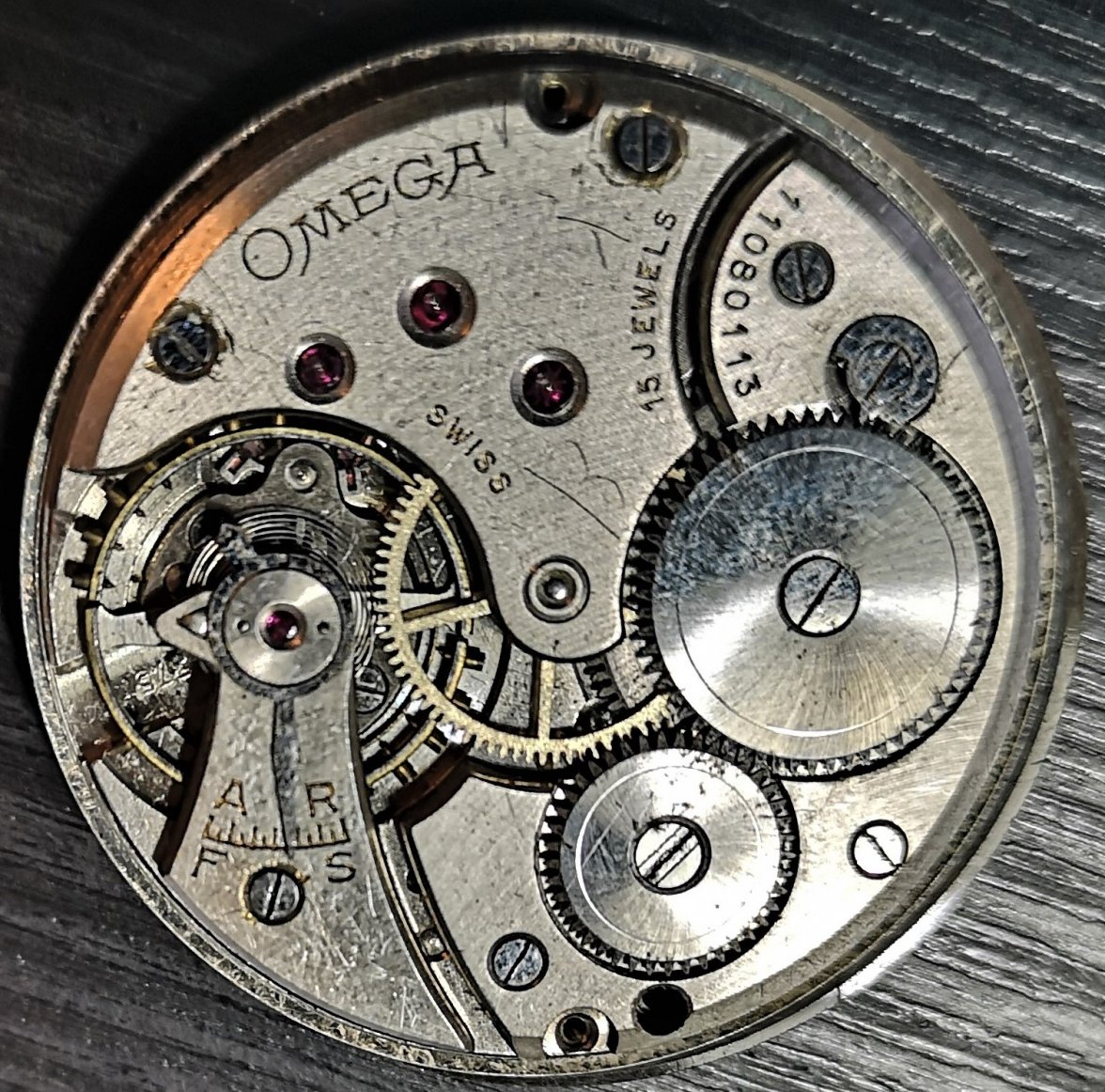
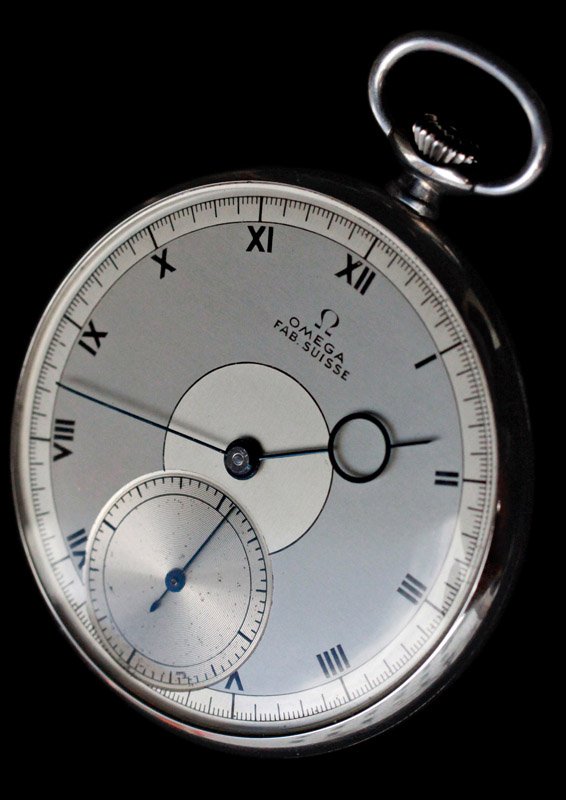
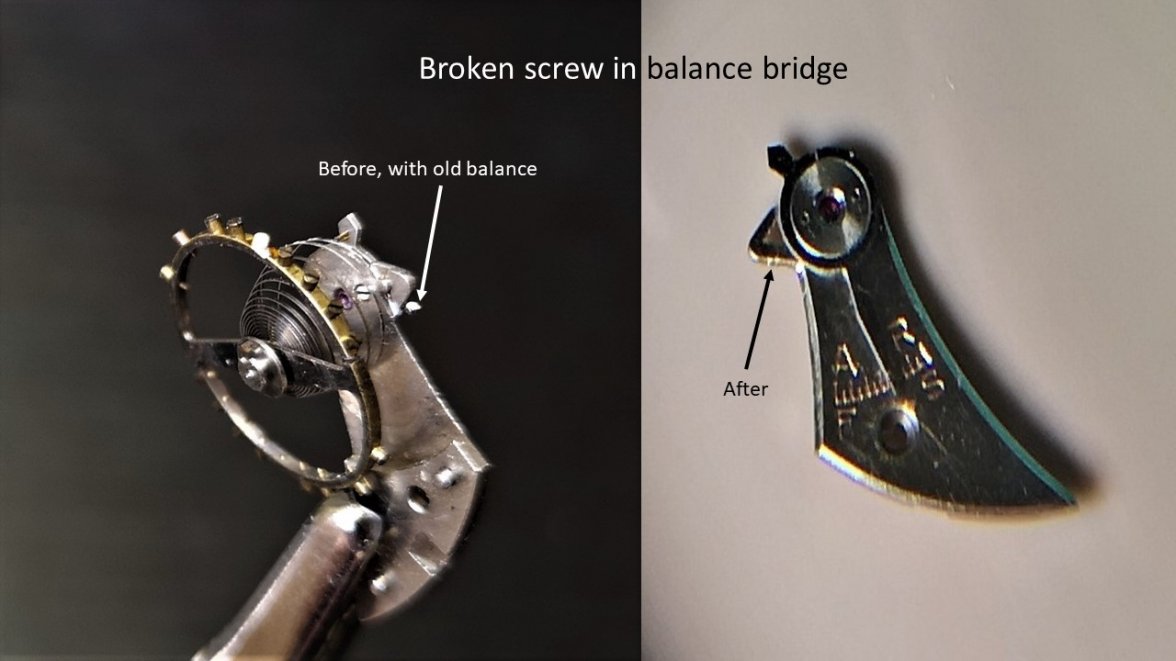
Hoping I can find someone on here that can help me with an issue I'm having on a 1947 Omega 37.5 T1 (15 jewels) I thin Cal 140 pocket watch that I bought with a broken staff balance and that I'm trying to rebuild/refurbish. A couple of weeks ago I was able to find a complete, used balance wheel with the hair spring for it. After removing and cleaning the balance bridge, I was ready to attach the hairspring with the balance wheel to the bridge part. However, after inserting the stud into the triangle-shaped hole in the bridge (a very tedious operation), the next step was to tighten the screw to secure both parts together, and just as I was about to make the last turn, bad luck struck...the tiny screw holding the stud broke.

And here comes my dilemma and I'm wondering how to move forward here. Should I:


  • Try to remove this broken part of the tiny screw from the bridge. I removed this screw a couple of times from this bridge before and had no issues.
  • Look for a new (used) balance bridge for this type and continue the process of attaching.
  • Look for a complete balance bridge - hairspring - balance wheel assembly which, I assume, would not be easy to find.


I would really appreciate anyone who has any advice to share their thoughts - thanks!
 
Posts
17,598
Likes
36,806
I think he may suggest removing the balance, regulator, cap jewels from the balance cock and soaking the cock in a saturated solution of alum which will dissolve the steel screw but not harm the brass balance cock.

Then again, he may suggest a new balance cock, we shall have to wait for him to wake up and have his morning coffee.
 
Posts
17,598
Likes
36,806
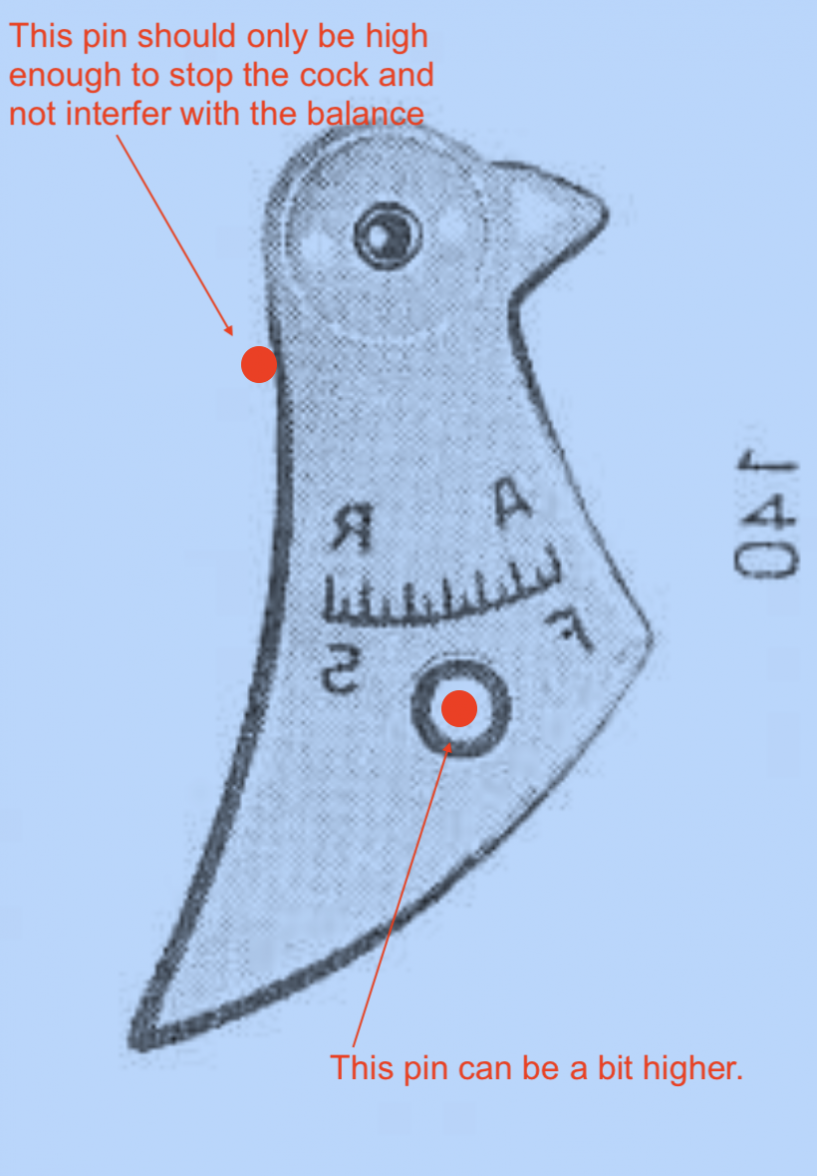
And a tip for replacing balance assemblies.

Lay the cock (less balance) upside down on a small piece of clean wood about credit card size or a bit longer.
Mark two positions on the wood toward one end so that your hand can steady the piece of wood. One where the screw hole is and on on the edge of the cock opposite the stud holder.
Fit two pins (pivot wire/old screwdriver) blade at this positions.
Place the cock onto one of the pins so that you will be pushing against the other pin when tightening the stud screw.
Put the balance over the cock and manipulate it so that the hairspring goes into the regulating pins and the stud goes over the stud holder and then gently lower the balance. Then GENTLY tighten the stud screw.

I found it quite easy to do it this way after one or two tries.

This is an example, please excuse my illustrative skills.

 
Posts
29,218
Likes
75,506
I think he may suggest removing the balance, regulator, cap jewels from the balance cock and soaking the cock in a saturated solution of alum which will dissolve the steel screw but not harm the brass balance cock.

Then again, he may suggest a new balance cock, we shall have to wait for him to wake up and have his morning coffee.

Yes, alum is the easiest way to handle this.
 
Posts
560
Likes
1,440
ZeKay, since you are new to OF, may I explain that Archer and JimInOz are both watchmakers - who are most generous with their time (in spite of being on opposite sides of the World!).

Archer has explained his use of Alum in several posts, here is one (he gets to Alum about one third of the way down Page 1):

https://omegaforums.net/threads/basic-watchmaking-tips-replacing-a-balance-staff.96778/#post-1539546

… but if you keep reading, you will find many absorbing tips! Good luck.
 
Posts
9
Likes
0
Thanks very much for all your thoughts. I will definitely wait for more, especially from members like Archer.
As per the use of Alum, it looks to me that this particular watch movement, especially bridges, is made of some kind of steel. I don't think it's nickel but I don't know...
I have removed broken screws, bolts of different sizes from many different instruments but not that small...
 
Posts
29,218
Likes
75,506
Thanks very much for all your thoughts. I will definitely wait for more, especially from members like Archer.
As per the use of Alum, it looks to me that this particular watch movement, especially bridges, is made of some kind of steel. I don't think it's nickel but I don't know...
I have removed broken screws, bolts of different sizes from many different instruments but not that small...

No, it's not steel. From your photos, the areas that are scratched up on the balance cock have yellow showing through (unless that is reflected colour from something in the room) so if that's the case, the bridge is made of plated brass, which is what most movement bridges and plates are made of. The other main material is German silver, or "silver steel", which has no silver or steel in it. It's a nickel alloy, and neither plated brass or nickel would be affected by alum. If you check with a magnet (on a bridge only when taken off the movement) it will be clear that the bridges are not steel.


.
 
Posts
9
Likes
0
Thanks
I am at work now, but I will check when I am back home - I think this a reflection of light on the part you pointing too...
The letters A, R, F, S and the adjustment markings are of the brass color (I don't know if this is a goldish paint or this whole part is plated brass )
I know from researching this particular type of pocket watch that 37.5 T1 movements were made of 2 different looking (color) metals - Brass (or brass like) and Steel color ( probably nickel alloy like you stated above)
 
Posts
29,218
Likes
75,506
Thanks
I am at work now, but I will check when I am back home - I think this a reflection of light on the part you pointing too...
The letters A, R, F, S and the adjustment markings are of the brass color (I don't know if this is a goldish paint or this whole part is plated brass )
I know from researching this particular type of pocket watch that 37.5 T1 movements were made of 2 different looking (color) metals - Brass (or brass like) and Steel color ( probably nickel alloy like you stated above)

Watch movement plates and bridges are not made of steel...it would be a horrible material for a watch movement.
 
Posts
15,234
Likes
44,729
Before you immerse the balance cock in alum, remember to remove the cap jewel screws, cap jewel, and regulator. Fail to do that and you’ll be in bigger trouble!
 
Posts
29,218
Likes
75,506
I think he may suggest removing the balance, regulator, cap jewels from the balance cock and soaking the cock in a saturated solution of alum which will dissolve the steel screw but not harm the brass balance cock.

Then again, he may suggest a new balance cock, we shall have to wait for him to wake up and have his morning coffee.


Before you immerse the balance cock in alum, remember to remove the cap jewel screws, cap jewel, and regulator. Fail to do that and you’ll be in bigger trouble!
 
Posts
9
Likes
0
Thanks again, Archer.
Btw: My statement on metals for these watch movements was strictly about visual appearance (color mainly).
I read your posting suggested by OMTOM (thanks)
I will submerge the bridge in Alum solution tonight, try to dissolve the screw leftover in this tiny hole and start from here.
I really want to save this balance cock.
 
Posts
9
Likes
0
Thanks. For sure, I will strip everything off the bridge before starting the Alum treatment.
 
Posts
5,636
Likes
5,800
I've had taps I've broken off in copper bus bars removed using an electric discharge machine.
 
Posts
9
Likes
0
Hi There
I would like to update you on the 1947 pocket watch balance cock. I was able to obtain a brass version of 37.5 balance cock (currently waiting for arrival). I am not giving up on the original though - eventually, I will remove what is left of this screw...
I have few questions about pocket watch hands:

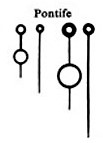
1) Do you have any ideas on how to obtain a set of Pontife pocket watch hands? Seems to me that these are the very difficult type to see on the market. These were quite popular in the 1940s, I have seen them on a different type of watches from that period.

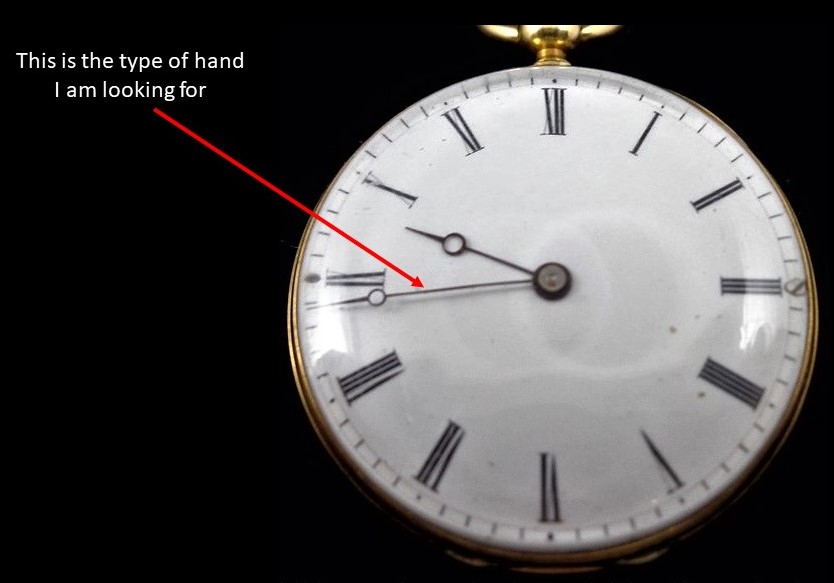
2) Breguet thin Moon type pinhole minute hand
I know that this is not the place to throw questions not related to Omega topics but I am also looking for a minute hand for my Breguet-type Jn. Ls. Robert Geneve pocket watch (as per the attached picture). These are not the regular Blue Moon type...
Thanks again
Z